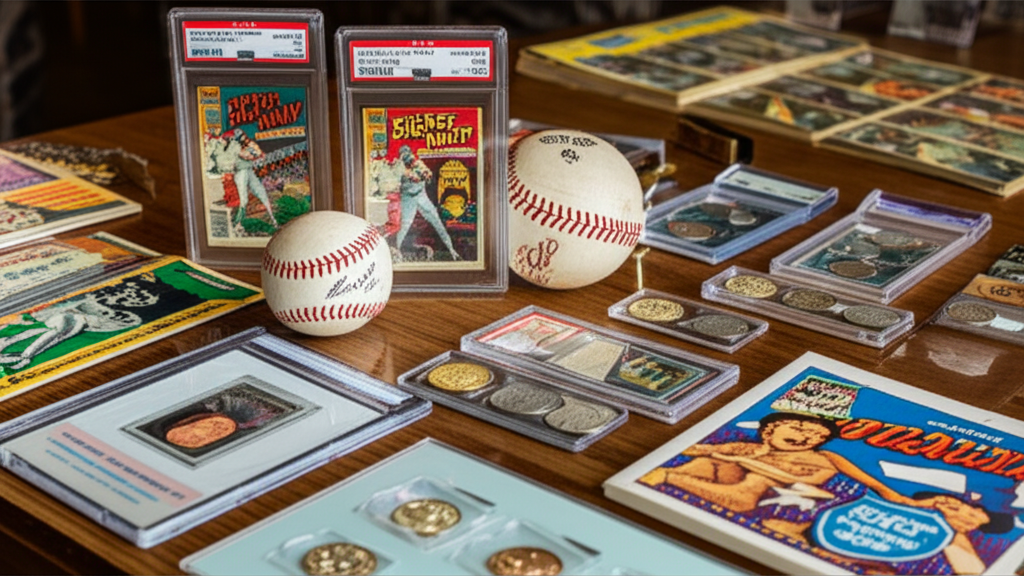
Before the gavels fall on one of the most culturally eclectic private collections ever assembled, the late Jim Irsay's most significant pieces are getting a public moment. A curated exhibition of items from the Indianapolis Colts owner's estate is on display ahead of this week's auction — giving collectors and the merely curious a rare chance to see artifacts that have spent years inside a billionaire's private world. Rock memorabilia, historic documents, and sports collectibles that span decades of American culture. All of it, soon, will have a new owner.
Irsay was a collector in the truest sense — acquisitive, passionate, and unconcerned with staying in one lane. His holdings ranged from Jack Kerouac's original scroll manuscript of On the Road to guitars owned by Jerry Garcia and Keith Richards to game-used NFL memorabilia. The breadth of the collection made it genuinely difficult to categorize, which is precisely what made it compelling. This isn't a sports card auction with a celebrity name attached. It's a legitimate cultural estate sale.
The pre-auction exhibition serves a practical purpose beyond spectacle: it lets serious bidders do due diligence in person. For items at this price tier — expect multiple lots to clear six figures — condition assessment and physical inspection matter enormously. Auction houses have learned that access drives confidence, and confidence drives paddles up.
The Parallel Problem Topps Built for Itself
Separate from the Irsay news, the hobby is having an overdue conversation about Topps parallels — and the numbers behind that conversation are genuinely staggering. What began as a smart premium-tier differentiator has metastasized into a system so complex that even veteran collectors struggle to track every variant within a single product release.
A flagship Topps baseball set today can carry anywhere from 15 to 25 distinct parallel versions of a single base card — rainbow foils, Independence Day variants, Memorial Day editions, Gold, Platinum, numbered to 299, numbered to 150, numbered to 99, numbered to 50, numbered to 25, 10, 5, and 1-of-1 Superfractors. Each layer is designed to create a chase within a chase. The strategy works — until it doesn't.
The market signal worth watching: low-numbered parallels of star players still command strong premiums, but the mid-tier numbered cards (serialized to 99 or 150) have seen softer secondary market performance over the past 18 months. The scarcity that once made a card numbered to 99 feel special has been diluted by sheer volume of parallel types. Collectors increasingly report feeling fatigued rather than excited when pulling what should feel like a hit.
This isn't an argument against parallels — they're not going anywhere, and the economics for Topps are obvious. But the hobby has a legitimate quality-versus-quantity tension here, and the brands that figure out restraint will build more durable long-term value in their products. Fewer tiers, sharper chase. The 2003-04 Exquisite Collection understood this. Modern products often don't.
Weekend Show Circuit Stays Busy
On the show floor, the weekend brought solid activity across both the U.S. and Canada, with dealers reporting steady foot traffic and healthy transactional volume on vintage material. Regional shows have quietly become one of the more reliable barometers of collector sentiment — less susceptible to the hype cycles of major auctions, more reflective of what the actual buying public wants to spend money on right now.
The consistent theme from dealers working these floors: pre-1980 vintage is holding firm, raw or graded. Buyers are showing up with specific want lists and real budgets. The speculative flipping energy that dominated 2020-2021 has largely drained out of the room, replaced by collectors who know what they want and are willing to pay fair market value to get it. That's a healthier dynamic, even if it's a quieter one.
This week's shop feature spotlights an operation that has been running cards and coins under the same roof for decades — the kind of establishment that predates PSA, predates eBay, and predates the hobby's transformation into an asset class. These shops are increasingly rare, and the ones that survive do so because they've built genuine community around them. The owner-operator model, the glass cases full of raw vintage, the regulars who come in on Saturdays — it's a different world from the breaker streams and investment platforms that dominate the hobby's current cultural conversation. Both worlds are real. Only one of them has been here the whole time.