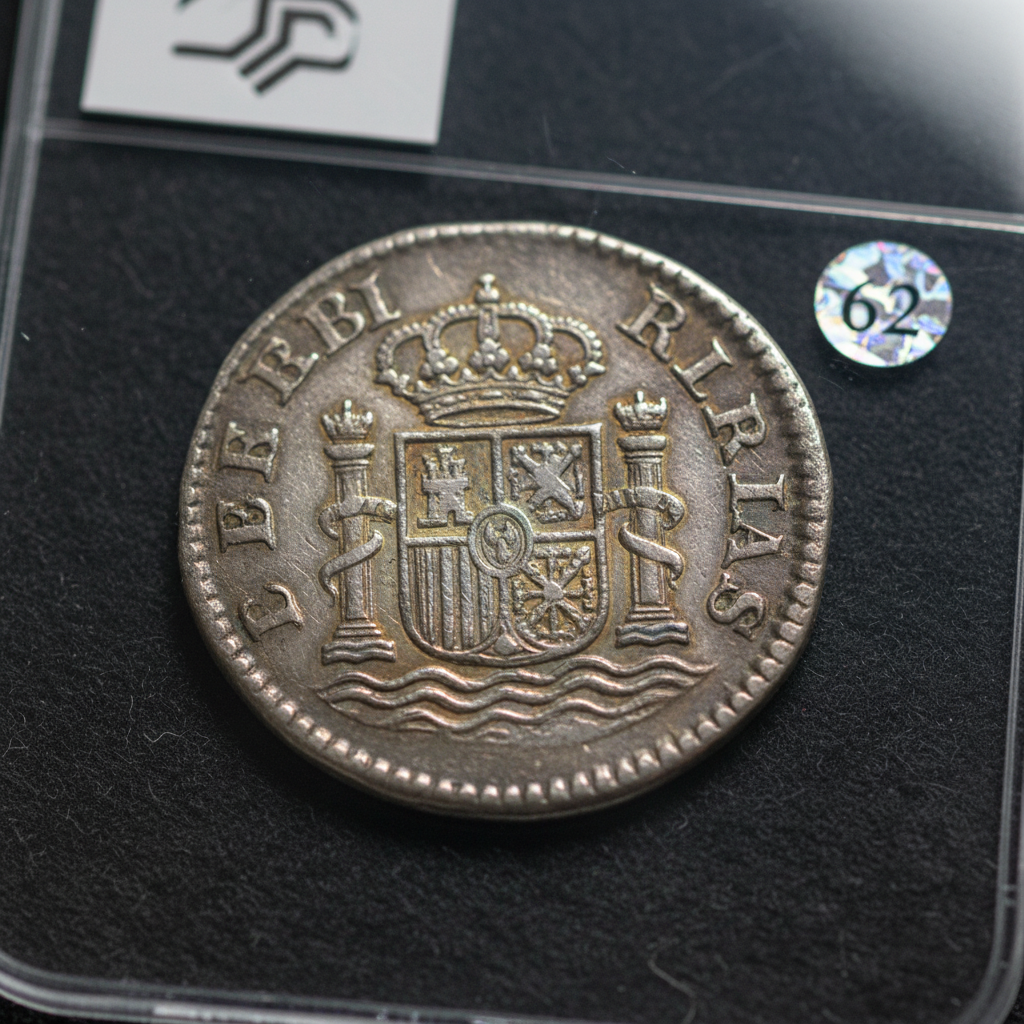
It wasn't supposed to exist. In 1569, the Lima Mint struck an 8 reales under King Philip II bearing the mark of assayer Alonso Rincón — and it did so without proper royal authorization. Authorities moved quickly to suppress it. But the coin survived, and today it stands as one of the most historically loaded pieces in all of Western Hemisphere numismatics.
Before Potosí became the thundering silver engine of the Spanish colonial economy, Lima was making moves on its own. The Rincón 8 reales predates the systematic coinage of the New World's most productive mint, which makes it not just a rarity — it makes it a founding document in metal.
A Coin Born Outside the Rules
The Spanish colonial minting system was rigidly hierarchical. Authorization flowed from the Crown. Assayers were licensed, accountable, and subject to severe penalties for malfeasance. Striking an 8 reales — the largest silver denomination, equivalent in trade weight to what would later be called a dollar — without proper sanction was not a clerical oversight. It was a significant breach.
Assayer Rincón, whose initial R appears on the coin, was operating at a mint that had only recently been established. Lima's mint opened in 1565, just four years before this coin was produced. The infrastructure was new, the oversight was inconsistent, and the demand for circulating silver was enormous. Whether the unauthorized striking was opportunistic, administrative, or something more calculated is a question the historical record doesn't fully resolve.
What the record does confirm: the coin was quickly condemned. That suppression is precisely why surviving examples are so scarce today.
Why Numismatists Treat This as a Benchmark Rarity
Cob coinage — macuquinas, the crude hand-struck silver pieces of the early colonial mints — is already a specialized and thinly traded market. Most collectors who pursue Spanish colonial material are chasing Potosí issues, which were struck in vastly greater quantities over a longer period. Lima cobs from the 1560s are a different category entirely.
The Rincón 8 reales occupies a position in that market roughly analogous to what a pre-federal American coin does in U.S. numismatics: it's a piece that serious collectors know by name, that auction houses treat with white-glove handling, and that surfaces rarely enough to make each appearance an event. Population data from major grading services on pieces this old and this obscure is thin — NGC and PCGS combined have certified only a handful of Lima cob issues from this era, and the Rincón specifically is among the most elusive.
When examples do appear at auction, they typically move through Heritage Auctions or Stack's Bowers, the two houses with the deepest bench of expertise in colonial coinage. Prices for authenticated, problem-free specimens of major Lima cobs from the 1560s have ranged from the low five figures into the mid-six figures depending on strike quality, surface preservation, and provenance. A coin with this much historical baggage — unauthorized, suppressed, singular in its place in the chronology — commands a premium that pure grade alone doesn't explain.
That's the nature of this corner of the market. Collectors aren't just buying silver. They're buying the story.
South America's Coinage Origin Point
The broader significance of the Lima Rincón piece is easy to understate if you approach it purely as a numismatic rarity. Approached historically, it's something more provocative: the earliest known large-denomination silver coin struck in South America, produced at a moment when the continent's monetary infrastructure was still being improvised.
Potosí's dominance came later. The Cerro Rico silver mountain in present-day Bolivia would go on to produce an estimated 45,000 metric tons of silver between the mid-16th and early 19th centuries, flooding European and Asian markets and reshaping global trade. But in 1569, that story was still being written. Lima was the administrative capital of Spanish South America, and its mint was the region's first serious attempt at producing standardized coinage.
The Rincón 8 reales, unauthorized and quickly suppressed, arrived at exactly that inflection point. It is, in the most literal sense, where South American coinage begins.
For a coin that wasn't supposed to exist, it has aged remarkably well.