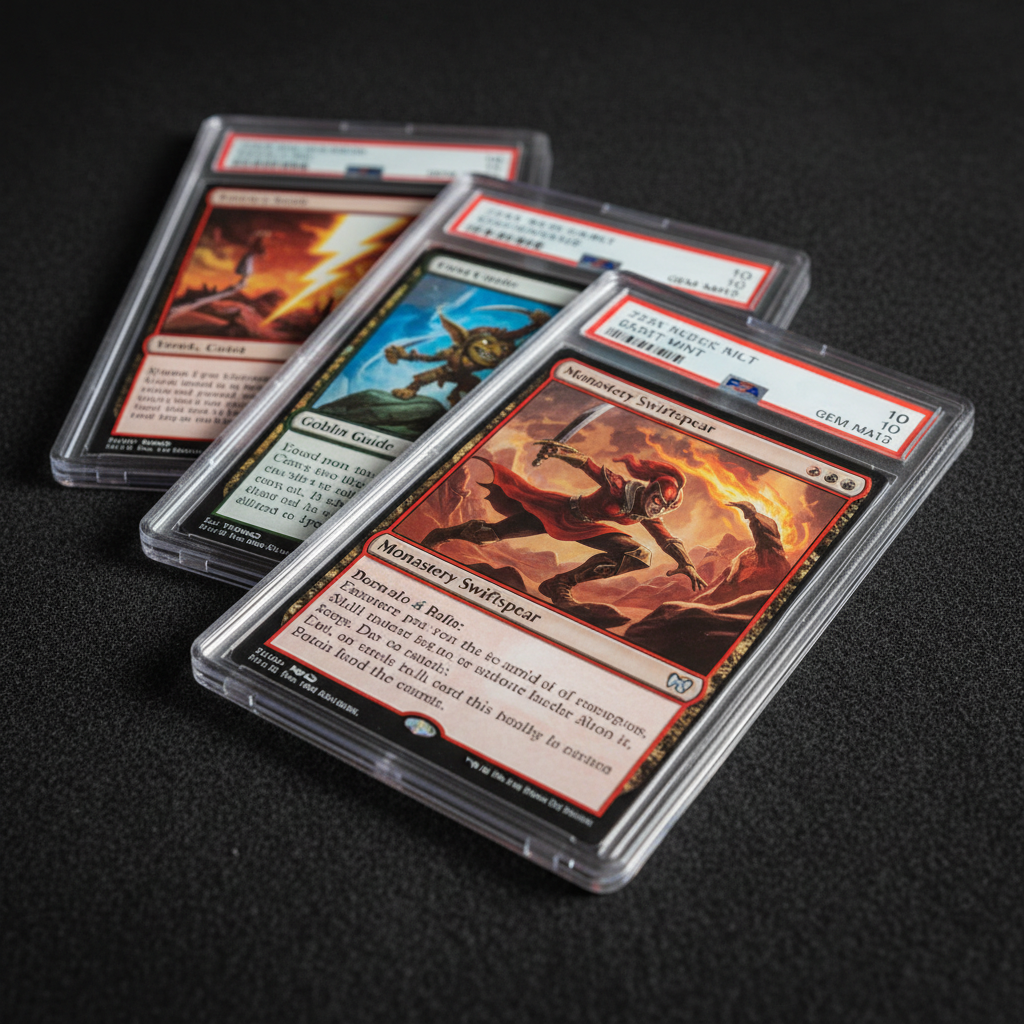
While the 2026 Magic: The Gathering Standard format has been largely commandeered by intricate spellslinger loops and high-ceiling combo engines, one archetype refuses to be theorycrafted out of relevance. Mono-Red Aggro is still here. Still winning. And in the hands of a disciplined pilot, still the fastest way to punish a slow draw.
That staying power isn't nostalgia — it's structural. Aggro decks function as a format's immune system. When combo and control strategies grow too greedy, too slow, or too reliant on hitting specific pieces by turn four, a resolved one-drop into a two-drop into a burn spell becomes the most efficient line in the room. The 2026 meta, dense with setup-heavy decks, is exactly the environment where all-in red thrives.
Speed and Warp: The Mechanics Reshaping the Archetype
The current build leans hard into two mechanics introduced in recent set releases: Speed and Warp. Speed functions as an evolution of the classic haste-adjacent effects that red has always weaponized — creatures that threaten damage the moment they hit the battlefield, leaving opponents with no safe turn to tap out. Warp introduces a tempo wrinkle, allowing certain spells to be cast at reduced cost under specific conditions, which in a red shell typically means punishing opponents who've already taken early damage.
Together, these mechanics compress the game's clock dramatically. The all-in variant isn't interested in card advantage or late-game inevitability. It's asking a single question on every turn: can you survive this? Most combo decks, still assembling their pieces through turns three and four, cannot answer that question fast enough.
The core of the 2026 Mono-Red list runs a playset of the format's premier one-drops, supplemented by two-cost threats with Speed, and a burn suite that splits between direct damage and spell-based reach. The mana curve tops out at three. Anything above that is a concession the archetype isn't willing to make.
Where This Fits in the Competitive Landscape
Standard as a format has seen significant price compression on staples over the past two rotation cycles, which matters for competitive accessibility. The current Mono-Red shell — depending on regional card availability and secondary market conditions — can be assembled for a fraction of the cost of the format's top combo decks, some of which demand four-of copies of rares and mythics pushing $30 to $45 per card on the secondary market.
That cost differential is not trivial. At Friday Night Magic level and through regional qualifier circuits, red aggro's budget-friendly construction means a wider player base can run a genuinely competitive list. That accessibility feeds into the archetype's persistent meta presence — when more players have access to a deck, more reps get logged, and the collective piloting skill of the archetype's community rises accordingly.
The matchup spread in the current meta skews favorably against the dominant combo strategies, particularly those relying on enchantment-based loops that require three or more pieces to go live. Red's ability to apply pressure before those pieces assemble is the entire game plan. The harder matchups are the mirror and any midrange strategy running cheap blockers with three or more toughness — the natural predators of a deck that wants to attack for two on turn one.
Sideboard construction is where experienced red pilots separate themselves. The 2026 environment rewards players who identify the two or three matchups they expect most and configure their fifteen accordingly, rather than hedging across every possible scenario. Graveyard hate, artifact removal, and the occasional pivot into a slightly slower burn-heavy configuration for the control matchup are all viable approaches — but the decision has to be made before round one, not during it.
The Collector and Competitive Crossover
For collectors tracking the MTG singles market, aggressive format staples have historically shown price volatility tied directly to tournament results. When a mono-red list posts a strong finish at a major event — a Regional Championship, a Pro Tour, or a high-profile MTGO league run — the key four-of uncommons and rares in that list can spike 30 to 60 percent within 48 hours, then stabilize or retrace depending on whether the result was a fluke or a trend.
The Speed and Warp-enabled pieces in the current build are worth watching from that lens. If the archetype posts consistent top-eight finishes through the spring circuit season, the market will notice before most casual players do.
Mono-Red Aggro has outlasted format rotations, power-level debates, and the endless cycle of combo decks being declared unbeatable. It will probably outlast this meta too — not because it's the most elegant strategy in the room, but because it asks the most honest question the game has to offer.