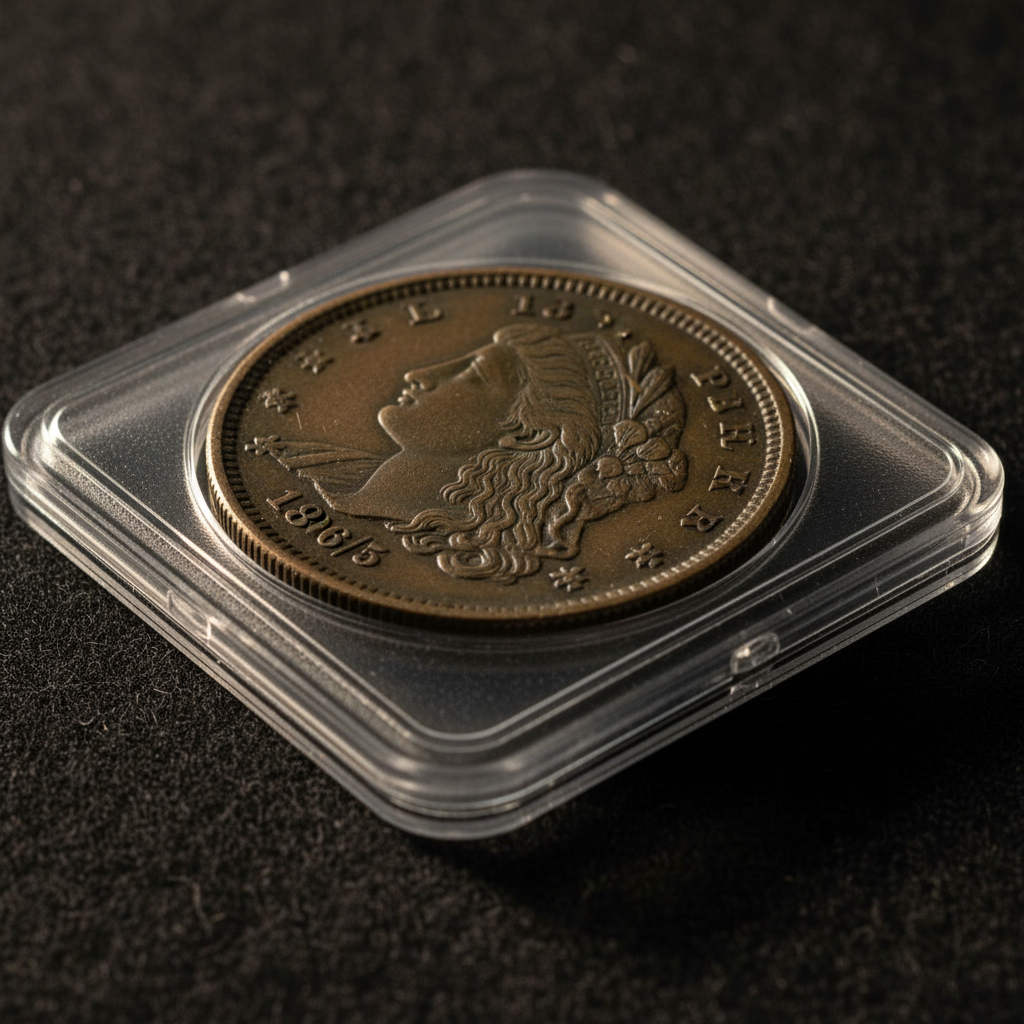
An 1806/5 Bust Half Dollar — one of early American numismatics' most coveted overdate varieties — anchors Morphy Auctions' Premier Coins sale scheduled for Tuesday, April 28, 2026, beginning at 10 a.m. Eastern at the company's Denver, Pennsylvania gallery. The auction spans a serious cross-section of American numismatic history: early copper, Carson City silver dollars, gold type coins, paper money, tokens, and bullion.
Morphy isn't a name that dominates the numismatic auction conversation the way Heritage or Stack's Bowers does, but the house has carved out a credible niche in premier single-owner and curated collection sales. An event headlined by a genuine early American rarity signals that this particular catalog is punching above the house's typical weight class.
Why the 1806/5 Overdate Commands Attention
The 1806/5 Bust Half Dollar is not a footnote variety. It is a recognized die marriage within the Overton reference — the standard attribution guide for Bust Half collectors — and represents one of the most visually dramatic overdates in the entire early American series. The underlying 5 punched beneath the final 6 in the date is clear and unmistakable on well-preserved examples, which is precisely why strong survivors command outsized premiums.
Bust Halves from this era were struck at the Philadelphia Mint under conditions that produced remarkable die variety diversity, and the collector base for early American silver is deep, serious, and willing to pay. At Heritage's 2024 FUN Signature Sale, a PCGS-graded AU-55 example of the 1806/5 brought over $14,000. Specimens in EF-40 to AU-50 territory have consistently cleared $4,000 to $9,000 depending on eye appeal and die state. Anything approaching Mint State is a different conversation entirely — and a different price tier.
The specific grade and certification of Morphy's example hasn't been disclosed in advance materials, but the coin's placement as the marquee lot speaks to its quality. Auction houses don't lead with mediocre examples of important varieties.
The Supporting Cast Is Legitimate
Beyond the headliner, the catalog's composition is worth taking seriously. Carson City silver dollars are perennial blue-chip performers — the CC mintmark carries a premium that has held across multiple market cycles, driven by collector romanticism around the Nevada mint's brief 1870–1893 lifespan and the genuine scarcity of high-grade survivors in several key dates. A strong run of CC dollars in a single sale is a draw in its own right.
Gold type coins round out the offering. Classic American gold — Liberty Head double eagles, Saint-Gaudens issues, early quarter eagles and half eagles — has been one of the more resilient corners of the rare coin market over the past 18 months as bullion prices elevated the floor value on lower-grade examples while collector demand pushed certified high-grades to fresh benchmarks. PCGS and NGC population reports for many pre-1933 gold issues remain thin in grades above MS-63, which keeps auction competition fierce when quality material surfaces.
Early cents and paper money add breadth. The large cent series — particularly Sheldon varieties from the 1790s through the 1850s — has its own obsessive collector base, and a curated run in a single sale often produces results that surprise observers unfamiliar with how seriously that community bids. Early American paper money, meanwhile, has seen renewed institutional interest as financial historians and museum-adjacent collectors have entered the market alongside traditional numismatists.
Logistics and What to Watch
The sale takes place at 2000 N. Reading Road, Denver, Pennsylvania — Morphy's home gallery — with bidding available in person and through the house's online platform. April 28 is a Tuesday, which typically means less casual foot traffic and more focused, professional bidding. That dynamic tends to benefit serious consignors: the room skews toward dealers and committed collectors rather than opportunistic walk-ins.
For collectors targeting this sale, the 1806/5 Bust Half will almost certainly attract phone and absentee bids from specialists who won't be in the room. The Carson City dollars and any high-grade gold type pieces will draw similar remote interest. Early preview access and lot-by-lot condition notes from Morphy's numismatic staff will be essential due diligence before committing to a bid strategy.
Morphy has been building its coins and currency program steadily, and a catalog of this caliber — early American rarities, CC silver, gold type, paper money — is the kind of event that either cements a house's reputation in a category or reveals where the gaps are. Based on the headliner alone, this one looks like a statement sale.