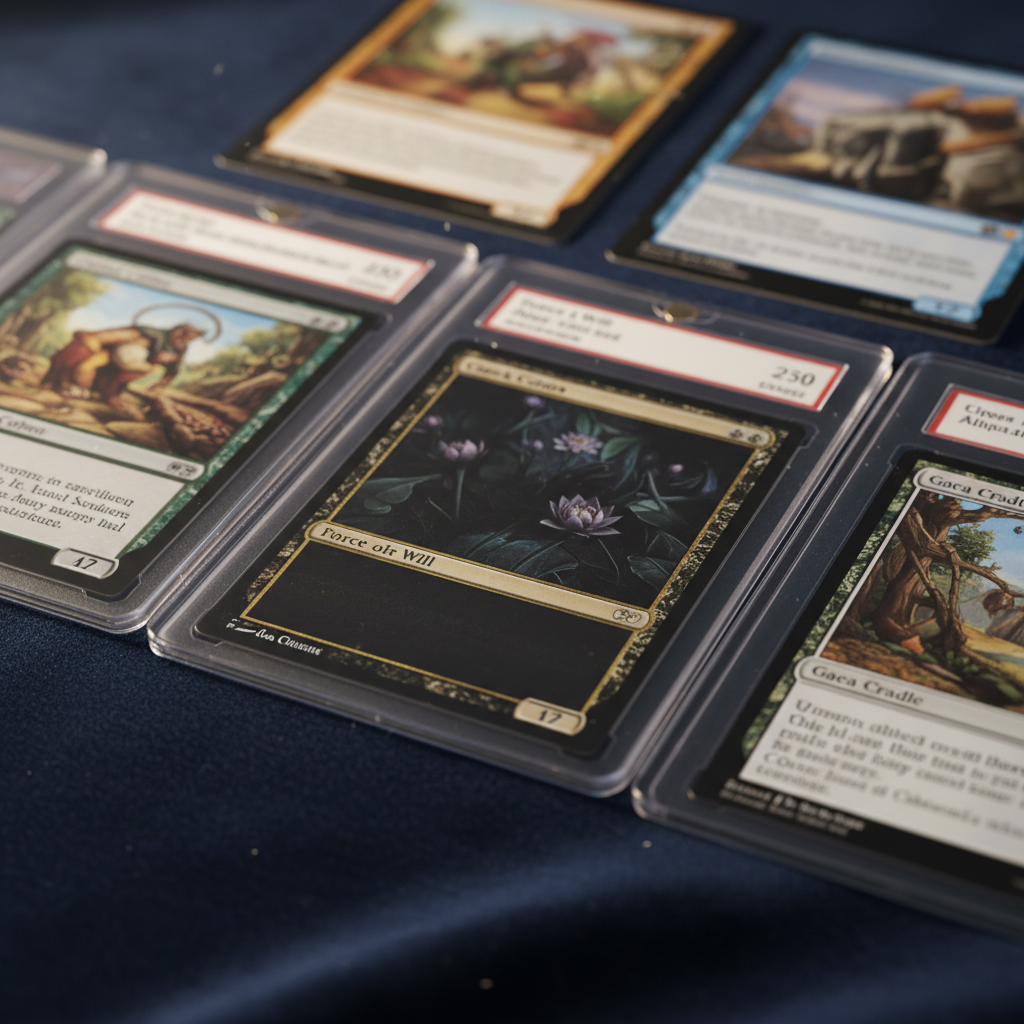
The Pro Tour Secrets of Strixhaven in Las Vegas just handed the Magic: The Gathering secondary market one of its more interesting weeks of 2026. Tournament results are doing what they always do — repricing staples overnight — but the more durable story this week is structural: the Premodern format is no longer a fringe curiosity. It's moving cards, and moving them fast.
Five cards define the week's action, and they split cleanly into two narratives: tournament-driven spikes and format-driven revivals. Both matter. Neither is going away.
Premodern Is the Real Story Here
The winter-art Mishra's Factory and Shadowmage Infiltrator are the week's most telling data points, and not because of a single spike. These are cards that had settled into deep discount territory — nostalgic assets that casual players remembered fondly but competitive demand had largely abandoned. Premodern changed that calculus entirely.
Mishra's Factory in its winter-art variant has always carried a premium over the other seasonal printings, but that premium is widening. The card originally appeared in Antiquities (1994) and was later reprinted across multiple sets, but the winter-art version — associated specifically with the fourth-edition printing cycle — carries visual distinction that Premodern players are actively seeking out. Collectors who bought PSA 8s and 9s at depressed prices six months ago are sitting on meaningful gains right now.
Shadowmage Infiltrator is a different kind of story. The Odyssey rare, designed as a player-named card for Jon Finkel, has always had collector cachet attached to it. But Premodern legality gave it competitive utility to match the lore. Finkel remains the most decorated player in the game's history, and any card bearing his name and likeness carries a floor that pure playability cards don't. That combination — format relevance plus provenance — is exactly the kind of asset profile that holds value through downturns.
The broader Premodern trend deserves more attention than it typically gets from mainstream MTG coverage. The format restricts legal sets to 1995 through 2003, which means it draws directly from the most nostalgia-dense era of Magic's history. Older players are returning to the game specifically for this format. That's new demand entering a fixed supply of original printings — a dynamic that tends to end one way.
Displacer Kitten and the Accidental Loop Problem
On the tournament side, Displacer Kitten is the week's most urgent mover. The card found what the community is describing as a high-tier accidental loop with the new Prepared mechanic introduced in Secrets of Strixhaven. The interaction wasn't anticipated during development — these things rarely are — and the competitive implications surfaced in real time during the Pro Tour.
Accidental combo discoveries at major events are among the most reliable price catalysts in the entire MTG secondary market. The pattern is consistent: card is undervalued, interaction surfaces publicly at a high-profile event, coverage amplifies it, buyouts begin within hours. Displacer Kitten followed the script precisely. Players who recognized the interaction before coverage caught up had a narrow window, and that window has largely closed.
The question now is durability. If the Prepared interaction survives without an emergency ban — and Wizards of the Coast has shown increasing willingness to act quickly on broken combos — Displacer Kitten holds its new price floor. If a ban drops, expect a sharp correction. That binary outcome is the risk buyers are taking at current prices.
For graded copies specifically, BGS 9.5 and PSA 10 examples were already thin on the market before this week. Post-spike, the population of high-grade copies available through major platforms like PWCC and Goldin is essentially depleted. Anyone chasing a pristine copy right now is competing in a very thin market, which historically pushes prices beyond what fundamental playability alone would justify.
Reading the Week's Signal
What this week's list actually illustrates is a secondary market operating on two different timescales simultaneously. Tournament spikes like Displacer Kitten are fast money — high volatility, short windows, real downside risk if the metagame shifts or a ban lands. The Premodern revival is slow money — lower volatility, longer horizon, but compounding as the format grows its player base.
Smart positioning right now probably involves more exposure to the latter than the former. Premodern staples in high grade are still discoverable at reasonable prices. The winter-art Mishra's Factory in PSA 9 is not a card most investors were watching six months ago. Some of them are watching it now. The ones who were watching it then already won.
The Pro Tour will fade from the headlines by next week. The Premodern format will still be growing.