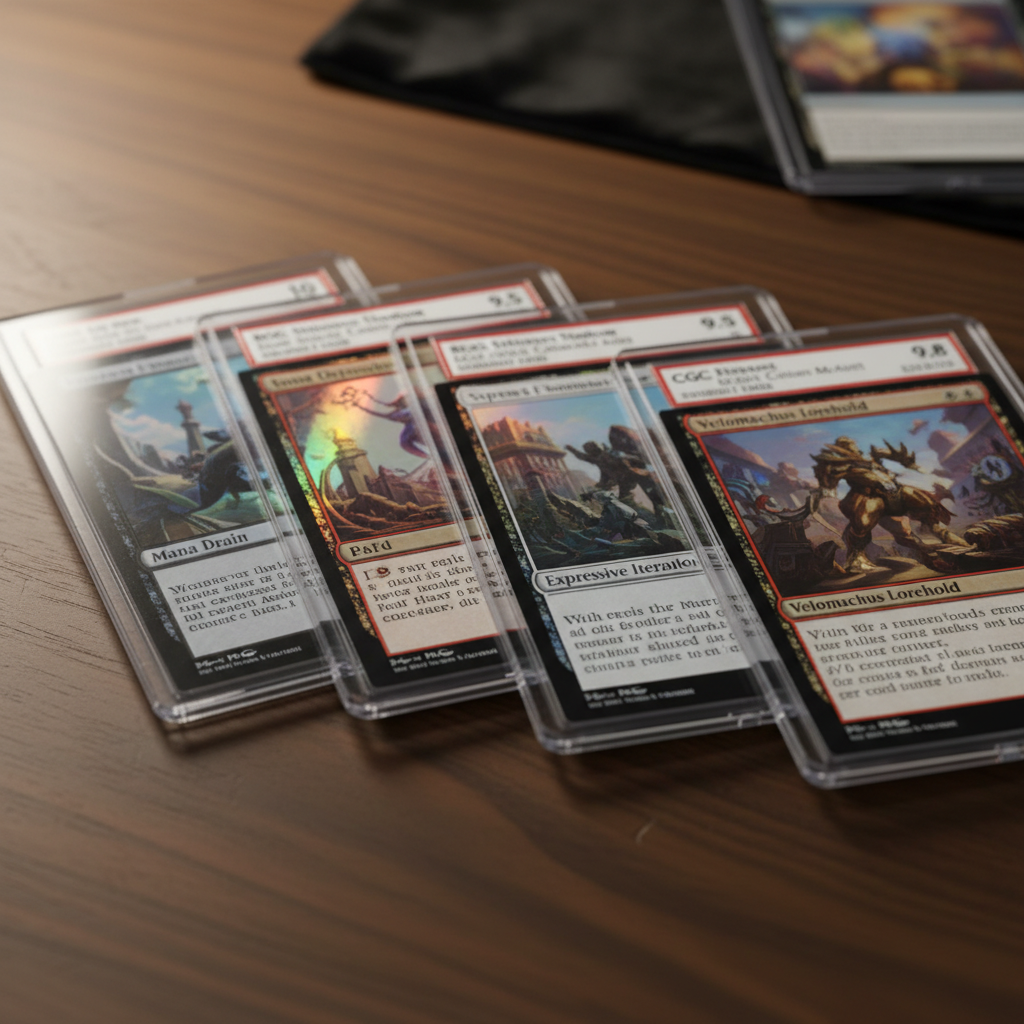
The clock is running out. With Magic: The Gathering's Secrets of Strixhaven spoiler season officially kicking off on March 31 and the set dropping April 24, 2026, the arbitrage window for savvy speculators is measured in days, not weeks. Once Wizards of the Coast starts revealing mechanics, the market will price in synergies almost instantly — and the easy money evaporates.
This is how MTG finance has always worked. A card that sits at $3–$5 for eighteen months suddenly hits $15–$25 the moment a new commander or archetype validates it. The players who got there first made four times their money. The players who bought after the reveal paid retail on someone else's speculation.
Why Strixhaven Is a Particularly Interesting Setup
The original Strixhaven: School of Mages dropped in April 2021 and left a complicated legacy. Powerful Magecraft cards like Archmage Emeritus and Witherbloom Apprentice built real Commander followings, while the modal double-faced card cycle drove secondary market prices well above pack value. The set also introduced the Mystical Archive — reprints of iconic instants and sorceries that briefly tanked prices on staples like Demonic Tutor and Swords to Plowshares before the market stabilized.
Secrets of Strixhaven is returning to the plane of Arcavios to revisit all five colleges — Lorehold, Prismari, Quandrix, Silverquill, and Witherbloom — in the aftermath of the Phyrexian Invasion. That narrative framing matters for collectors and speculators alike. Post-war storylines in MTG have historically produced mechanically pushed cards designed to reflect a world rebuilding itself. Early leaks suggest the set is targeting both Standard and Commander audiences aggressively, which is the combination that drives the broadest secondary market demand.
Commander demand, in particular, is what sustains long-term price floors. Standard cards spike and rotate. Commander staples compound. The distinction between the two is the most important variable in any MTG spec.
The Pre-Spoiler Buying Window, Explained
The strategy here is straightforward: identify cards that are likely to synergize with mechanics the new set is expected to support, buy them before the spoiler debut confirms the connection, and sell into the spike — or hold if the card has genuine long-term Commander upside.
Based on what's known about the returning college mechanics and the Phyrexian aftermath storyline, a few categories warrant attention:
- Magecraft payoffs — Any card that triggers off casting instants and sorceries. If Secrets of Strixhaven leans back into Magecraft as a returning mechanic, existing payoffs from the original set and beyond will see renewed demand. Cards like Archmage Emeritus are already Commander staples; a new Magecraft-heavy environment pushes them further.
- Learn/Lesson synergies — The original set's signature mechanic. If Lessons return or are referenced, the entire Lesson package becomes relevant again in formats that allow it.
- Spell-copy effects — Historically, any set that rewards casting spells multiple times creates demand for cards that copy spells. Blue and red staples in this category tend to move first and fastest.
- College-specific commanders — Each college has an existing commander identity. If new legendary creatures are previewed for each college, the supporting cast for those archetypes will spike within 24 hours of the reveal.
The window to act on any of these is before March 31. After the first day of spoilers, the market adjusts in real time. TCGPlayer and Card Kingdom update pricing continuously during spoiler season, and buylist prices at major dealers like ABUGames and StarCityGames reflect new information within hours.
Reading the Market Before the Market Reads the Set
The MTG secondary market in 2025 and into 2026 has been shaped by two competing forces: the continued dominance of Commander as the format driving long-term card values, and Wizards' increasingly aggressive reprint strategy, which has compressed the price ceiling on anything that makes it into a Commander precon or a Masters set.
That reprint risk is real and has to be factored into any pre-spoiler spec. A card sitting at $12 with genuine synergy upside can just as easily get reprinted in a Secrets of Strixhaven Commander deck and crater to $4. The safest pre-spoiler buys are cards with existing demand, modest reprint risk, and clear mechanical overlap with what the new set is doing.
The other variable is timing on the exit. If you're buying now to sell into a spoiler spike, the peak window is typically 24–72 hours after the relevant card is previewed. After that, supply catches up, hype normalizes, and prices drift back toward equilibrium — sometimes lower than where you bought in, if the card turns out to be less impactful than anticipated.
Spoiler season speculation is not a passive play. It rewards collectors who are watching the reveals in real time and willing to move quickly. For those with longer time horizons, the more durable approach is identifying Commander staples that a new set validates rather than creates — cards with established demand that simply get a second wave of attention when a new archetype arrives to support them.
April 24 is close. March 31 is closer. The players who do their homework before the first card flips will be the ones setting prices, not chasing them.