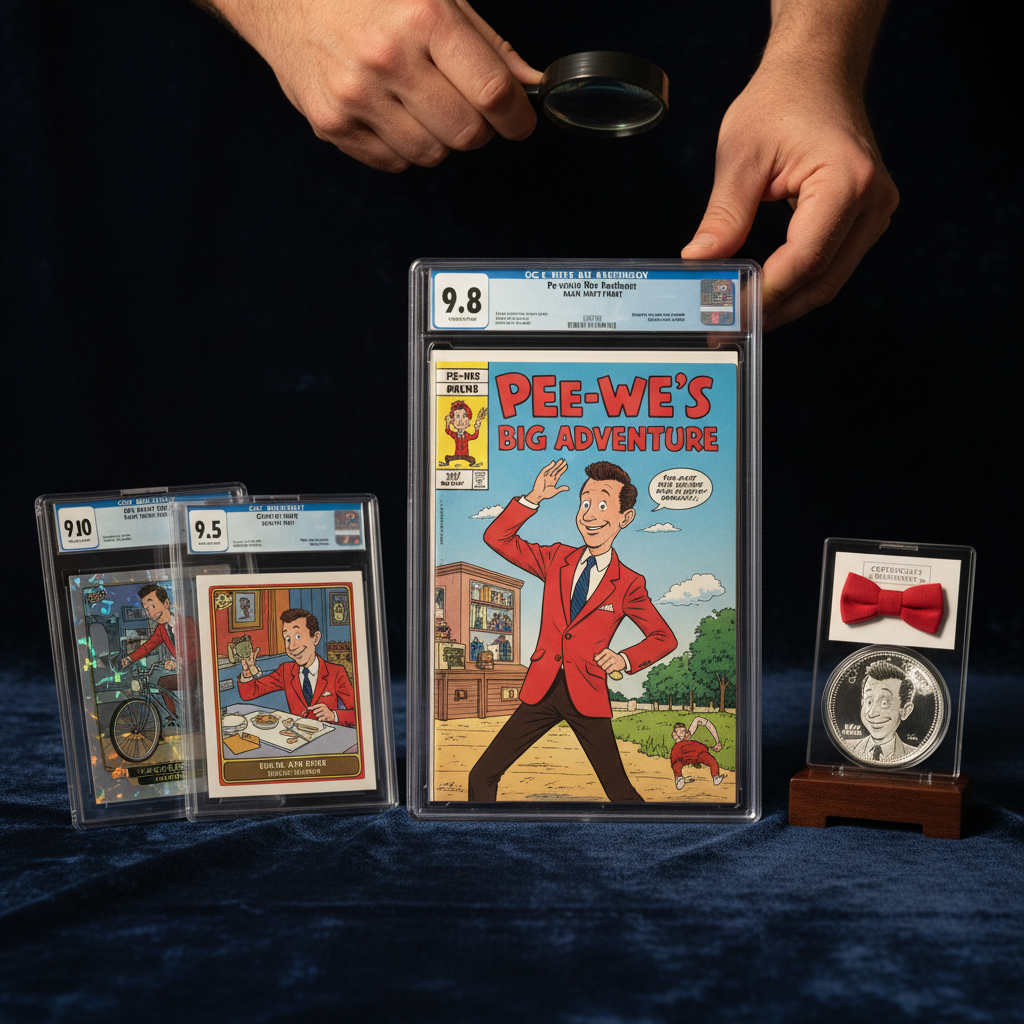
It started with a T-shirt. It ended — if it has ended — with more than 1,200 pieces of Pee-wee Herman memorabilia occupying what can only be described as a shrine to one of pop culture's most singular characters. The collection, profiled by Antique Trader, is the kind of obsessive, decades-long accumulation that serious collectors recognize immediately: not a hobby, a pursuit.
Pee-wee Herman — the creation of comedian Paul Reubens, who died in July 2023 — occupied a strange and lucrative corner of American pop culture from the mid-1980s through the early 1990s. Pee-wee's Big Adventure landed in 1985. Pee-wee's Playhouse ran on CBS from 1986 to 1990. That five-year window of peak cultural saturation generated an enormous volume of licensed merchandise, and the collectibles market for that era of character-driven toys and ephemera has been quietly appreciating for years.
What 1,200 Pieces Actually Means
A collection of this scale isn't just a number — it's a taxonomy problem. Pee-wee merchandise spanned virtually every product category of the late-1980s licensing boom: action figures, board games, lunchboxes, iron-on patches, breakfast cereals, Halloween costumes, View-Master reels, pressed tin toys, and enough paper ephemera to fill a small archive. The Matchbox toy line alone produced multiple vehicle and figure sets that now command serious secondary market prices in high-grade examples.
Vintage Pee-wee Playhouse action figures from the Matchbox 1988 series — carded, near-mint examples — routinely fetch between $75 and $200 per figure on eBay and at specialty auction, with complete carded sets occasionally clearing $500 to $800. Sealed cereal boxes from the era, when they surface, can push past $150 depending on condition. Lunchboxes in excellent condition with intact thermoses have sold in the $100–$300 range at Heritage Auctions and similar venues.
The rarer production pieces — promotional materials, screen-used props, signed photographs with provenance — are where a collection of 1,200 items gets genuinely interesting from a valuation standpoint. Even a single authenticated prop from the Playhouse set would represent a significant anchor piece for any collection.
The Reubens Effect on the Market
Paul Reubens' death last summer had a measurable, if modest, impact on Pee-wee collectibles pricing. This is a well-documented pattern across pop culture memorabilia — the passing of a creator or performer typically triggers a short-term price spike of 15–40% on the most recognizable items, followed by a plateau that often settles above the pre-death baseline. Think of the post-death market behavior around items tied to Robin Williams, Carrie Fisher, or more recently Bob Barker — brief surges, then a new floor.
For Pee-wee specifically, the character's cultural cachet had already been rehabilitated by the 2016 Netflix film Pee-wee's Big Holiday, which reintroduced the property to a younger audience and nudged collector interest upward before Reubens' passing. That layered demand — nostalgia buyers from the original 1980s era plus newer fans — gives the category more pricing stability than a single-generation fandom typically enjoys.
The broader vintage toy and character merchandise market has also been running hot. 1980s licensed character toys in general have outperformed expectations over the past three to four years, driven by millennial collectors entering their peak earning years and chasing the properties of their childhood. Masters of the Universe, Ghostbusters, and Teenage Mutant Ninja Turtles have all seen graded examples and sealed specimens reach new highs. Pee-wee sits in this same nostalgic cohort, if at a lower volume and visibility tier.
The Case for Niche Depth Over Breadth
What makes a collection like this one compelling — beyond the sheer accumulation — is the argument it makes about collecting philosophy. Depth beats breadth, almost always, when it comes to long-term value and cultural significance. A collector with 1,200 pieces of a single property doesn't just own objects; they own institutional knowledge. They know which variants exist, which regional releases are genuinely scarce, which items were recalled or produced in limited runs. That expertise is itself an asset.
The most serious single-property collectors in any category — whether it's a specific athlete's rookie cards or a particular toy line — tend to be the market makers for that niche. Dealers call them when something surfaces. Auction houses consult them on provenance. Their collections, when they eventually come to market, don't just sell — they set the reference prices for everything that follows.
A 1,200-piece Pee-wee Herman archive, properly documented and condition-graded, would be a significant event at auction. The question isn't whether there's a market. It's whether this collector ever lets go.