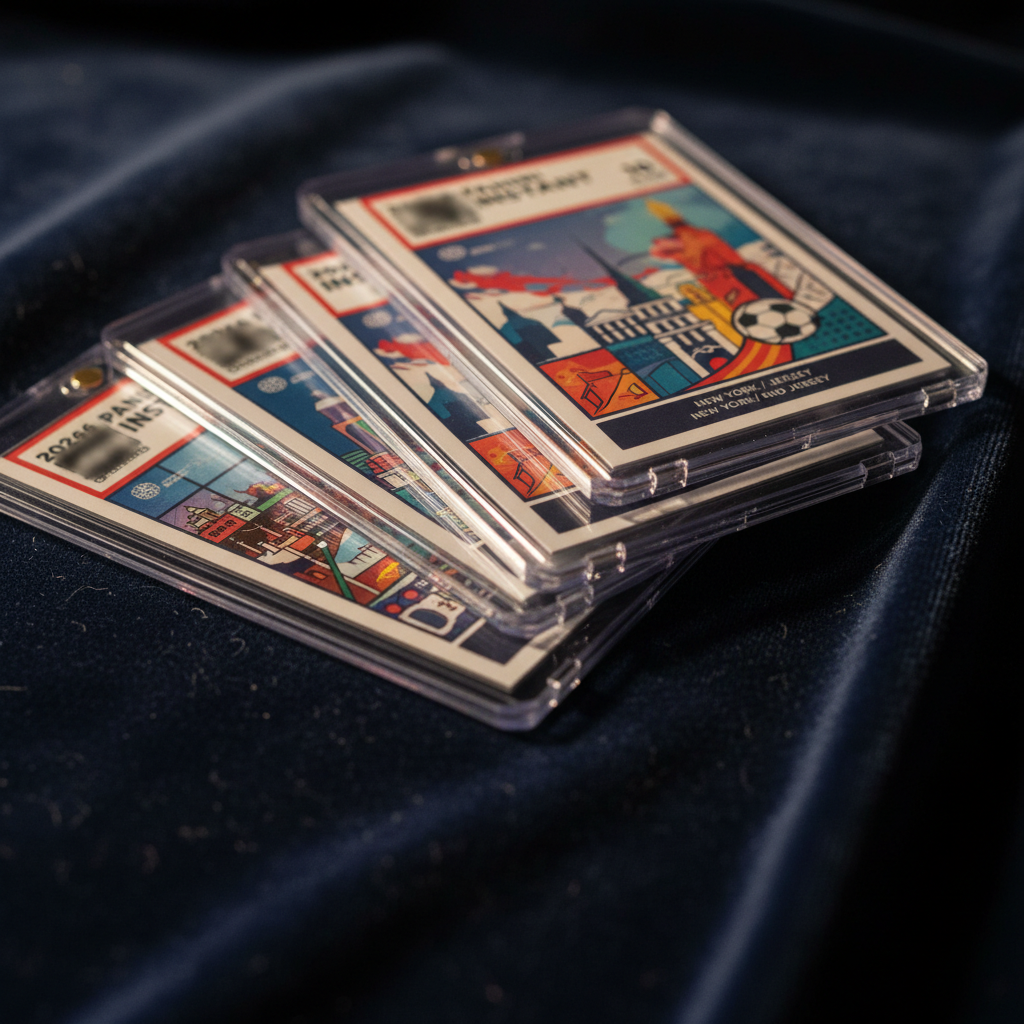
Panini Instant is going geographic. The print-on-demand brand has unveiled its 2026 FIFA World Cup Host City Poster Cards set, a checklist built around the 16 North American venues hosting the most-watched sporting event on the planet. With the tournament split across the United States, Canada, and Mexico, the product leans hard into location — giving collectors a stadium-centric alternative to the player-driven releases that dominate the soccer card market.
The timing is deliberate. Panini has been methodically building out its World Cup 2026 print-on-demand catalog well ahead of the June 2026 kickoff, and the Host City series is one of the more conceptually distinct drops in that pipeline. Rather than chasing Mbappé or Haaland pulls, this set is selling geography, architecture, and civic pride. It's a different pitch — and for a certain segment of the collector base, it's a compelling one.
What's in the Checklist
The base set covers each of the 16 official host cities, with individual cards designed as stylized poster art — think retro travel print meets modern sports branding. The confirmed venues span the continent: New York/New Jersey, Los Angeles, Dallas, San Francisco Bay Area, Seattle, Kansas City, Boston, Philadelphia, Atlanta, Miami, Houston, Guadalajara, Mexico City, Monterrey, Toronto, and Vancouver.
As with virtually every Panini Instant release, the set ships with a parallel structure. Collectors can expect the standard tiered rainbow — Blue, Gold, and Red parallels with print runs descending into single-digit territory at the top end. The base cards are numbered to /99, which has become something of a house standard for Panini Instant's non-player sets. Parallels typically run /25, /10, and 1/1 for the Printing Plate variants.
Orders are fulfilled on demand through Panini's direct platform, meaning there's no pack-ripping, no box breaks, no secondary market arbitrage on sealed product. You pick your card, you pay, you wait. The model strips out the gambling element entirely, which purists either love or find completely unexciting depending on their collecting philosophy.
The Print-on-Demand Market Reality
Panini Instant has been running this format since 2017, and the secondary market for these cards tells a nuanced story. Base cards — especially those numbered to /99 — rarely command significant premiums over issue price on the resale market. The economics are simple: if anyone can order the card during the window, scarcity is artificial at best.
Where Panini Instant does generate genuine secondary market heat is at the top of the parallel ladder. 1/1 Printing Plates and low-numbered Reds have moved for multiples of issue price on eBay and through smaller auction platforms when attached to star players or marquee moments. A host city card, however, is a different proposition. The collector pool for venue-specific memorabilia is real — stadium collectors, city-proud fans, travel enthusiasts — but it's narrower than the player card market by a significant margin.
For context, Panini Instant's 2022 FIFA World Cup releases saw base cards of major players like Lionel Messi and Kylian Mbappé holding modest premiums post-window, while lower-profile sets struggled to clear issue price on the secondary market. The Host City concept is novel enough to attract attention, but novel doesn't always translate to liquid.
That said, the 2026 World Cup is genuinely unprecedented in scale. Eighty games across three countries, the largest field in tournament history at 48 teams, and a North American audience that has been primed by the 2024 Copa América and a surging MLS footprint. If there's a moment for a host city collectible to find its audience, this is it.
Who's Actually Buying This
The collector profile for a set like this skews toward completionists, World Cup enthusiasts building tournament-specific collections, and local fans who want a card representing their city's moment on the global stage. The Dallas card, for instance, will host the Final — which makes it the most narratively significant card in the checklist by a considerable margin. Whether that translates to a price premium depends entirely on how the broader market receives the set.
Serious investors chasing ROI should probably look elsewhere in the 2026 pipeline. Autographed rookies, short-printed stars, and graded vintage soccer cards have historically delivered stronger returns than print-on-demand stadium art. But collecting has never been purely financial, and there's something refreshing about a product that isn't trying to be a speculative vehicle.
The window to order will be limited — Panini Instant sets typically close within days to a few weeks of launch — so collectors with genuine interest in the concept shouldn't assume the opportunity will sit open indefinitely. The Dallas Final card, in particular, seems worth a closer look before the window closes.