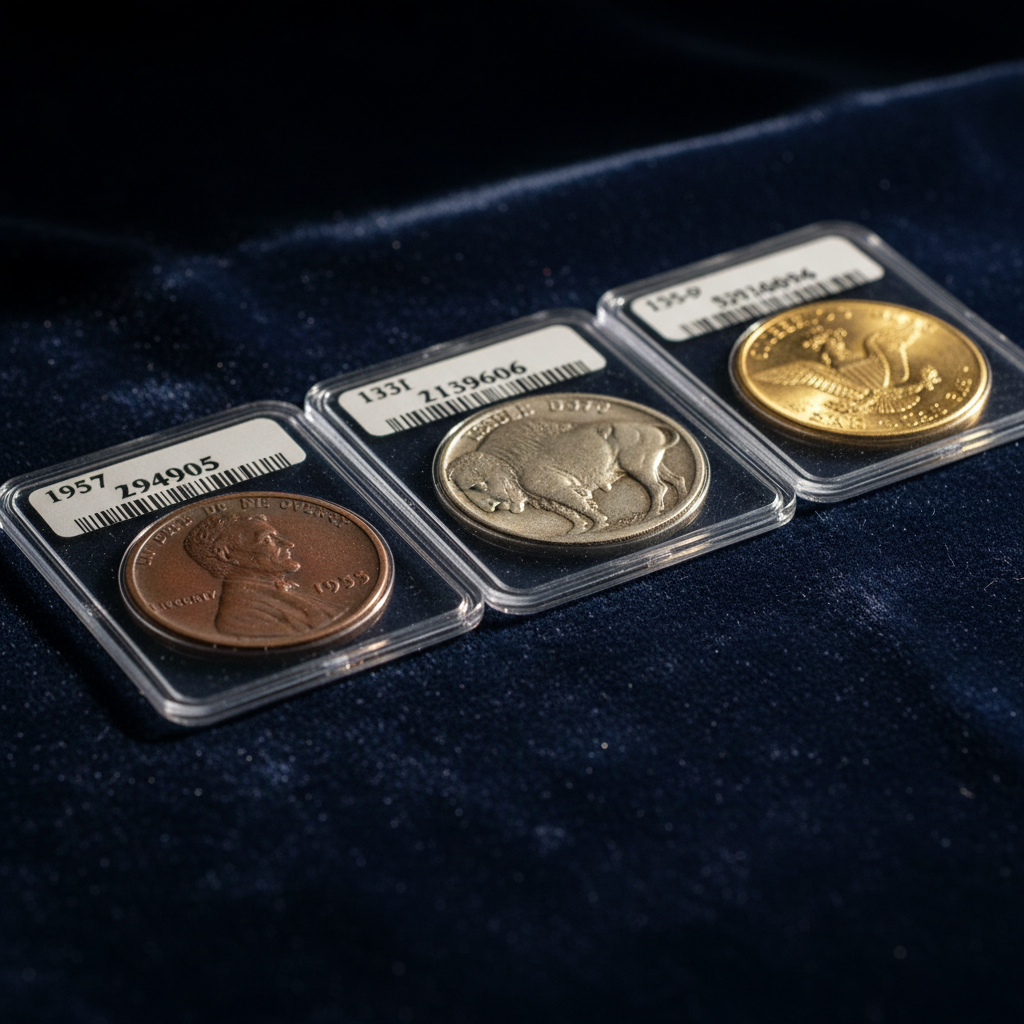
The numbers don't lie, and for error coin collectors, they tell a story that fundamentally reshapes how you should be hunting. A 2011–2026 frequency survey of U.S. Mint error and variety listings reveals that Philadelphia Mint coins account for 85% of feeder-related errors — a gap so wide it can't be explained by production volume alone.
This isn't a minor statistical quirk. It's a structural bias baked into how the Philadelphia Mint operates, and understanding it is the difference between a collector who gets lucky and one who builds a systematically strong error set.
The Die Curve That Changes Everything
Philadelphia has always been the senior facility — the original U.S. Mint, operating continuously since 1792. But seniority alone doesn't explain the error disparity. The more compelling explanation lies in die preparation and press configuration differences between the Philadelphia and Denver facilities.
Philadelphia runs a higher volume of experimental and transitional die runs, particularly during annual design changeovers and commemorative production cycles. That elevated throughput, combined with legacy press equipment that hasn't been uniformly modernized, creates more mechanical opportunity for the kinds of errors — doubled dies, repunched mintmarks, die caps, and off-center strikes — that drive the error coin market.
Denver, by contrast, has operated with tighter tolerances on its production lines in recent decades. The result is a cleaner output — which is great for circulation quality, but genuinely bad news for variety hunters. Fewer mechanical anomalies mean fewer collectible errors making it into the wild.
The survey data reinforces this at every major error category. Philadelphia dominates not just in feeder errors but across the full spectrum of die-related varieties. That's a consistent signal, not noise.
What the Market Is Paying
Error coins have been one of the steadier performers in numismatics over the past five years, largely immune to the speculative volatility that hit raw bullion and modern commemoratives hard in 2022–2023. A 1955 Doubled Die Lincoln Cent in NGC MS-64 Red sold through Heritage Auctions for $21,600 in 2023 — a Philadelphia Mint product, naturally. The same coin in circulated grades still commands four figures without breaking a sweat.
More recent Philadelphia errors have also found strong footing. Off-center Washington quarters and Roosevelt dimes from Philadelphia with dramatic percentage shifts — 50% or more off-center — routinely clear $300–$800 in mid-grade slabs at Stack's Bowers and Goldin, depending on the coin's date and strike quality. Denver equivalents in the same error category typically land 20–35% lower at comparable grades, a pricing gap that directly mirrors the supply imbalance in the survey data.
PCGS and NGC population reports quietly confirm the same story. Search any major doubled die variety from the modern era — post-1980 Lincoln cents, Jefferson nickels, Washington quarters — and Philadelphia coins outnumber Denver coins in certified populations by ratios that frequently exceed 3-to-1. For some specific varieties, Denver examples are genuinely rare, but that rarity hasn't always translated into premium pricing because collector demand is anchored to the Philadelphia versions that established the variety's identity in the first place.
Building a Philadelphia Error Set With Intent
For collectors looking to build a focused error set, the Philadelphia dominance actually simplifies the strategy. Concentrating on P-mint coins from 1980 onward — the period covered most comprehensively by the frequency survey — gives you the deepest pool of documented varieties, the most robust comparables at auction, and the strongest long-term liquidity if you ever need to sell.
The categories worth prioritizing:
- Doubled die obverse and reverse varieties — the most documented and most liquid error type across all Philadelphia denominations
- Die cap and brockage errors — dramatic, visually striking, and consistently strong at Heritage and Stack's Bowers
- Off-center strikes above 25% — the threshold where collector interest and pricing premium kick in meaningfully
- Clashed dies — underappreciated relative to doubled dies, with growing collector awareness pushing prices higher in the last 18 months
One caveat worth keeping in mind: the same factors that make Philadelphia errors more common also mean the market is more competitive for premium examples. A Philadelphia doubled die in NGC MS-65 or higher will attract serious bidder depth at major auction houses. The same coin in MS-63 has a narrower audience. Grade matters more in this category than almost any other area of U.S. coinage.
Denver's relative scarcity in error coins is a double-edged sword — the population is lower, but so is the established collector base for most varieties. Philadelphia errors have the documentation, the auction history, and the collector infrastructure behind them. In numismatics, that infrastructure is worth something.
The 85% figure isn't just a data point. It's a collecting thesis.