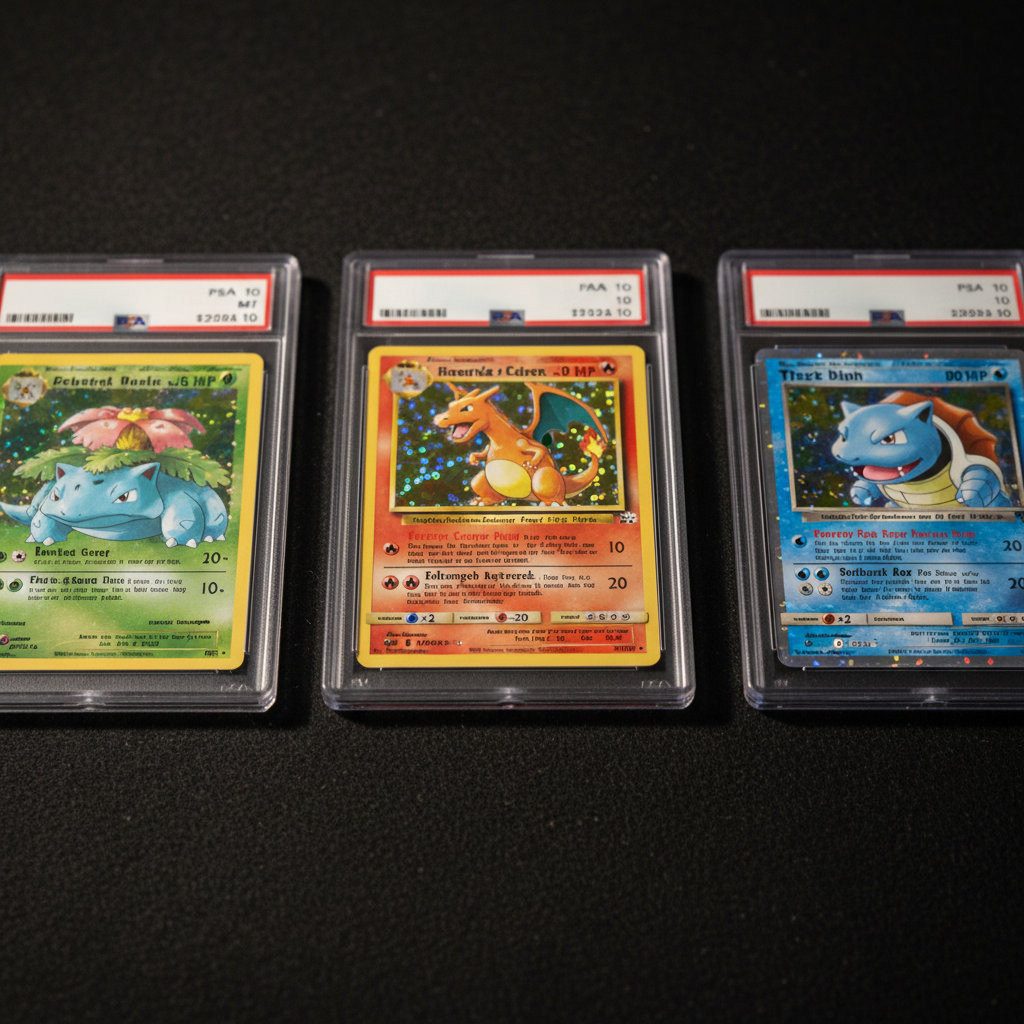
With Chaos Rising hitting shelves on May 22, the Pokémon TCG market is about to shift — and the collectors who move now, before the set lands, are the ones who historically come out ahead. New expansions don't just introduce new cards; they redistribute attention, pull buyers toward fresh chase pieces, and leave previously hot singles either forgotten or quietly appreciating while everyone else is ripping packs.
This isn't speculation. It's a pattern the market has repeated across every major Pokémon release cycle for the better part of a decade.
How Set Releases Reshape the Secondary Market
When a major Pokémon expansion drops, secondary market attention fractures. Buyers flood into new product. Pack prices spike on the secondary market during the first two to four weeks. Grading submission volume for new pulls surges — PSA and BGS both see intake spikes following high-profile releases — and that increased submission load creates backlogs that delay returns on recent pulls for months.
Meanwhile, singles from the previous meta cycle tend to see a temporary softening. Sellers anticipating that attention is moving on will list aggressively. Buyers are distracted. That window — the two to three weeks before a major release — is historically one of the cleaner entry points for established cards with genuine long-term demand.
The dynamic is especially pronounced in Pokémon compared to sports cards because the TCG audience skews heavily toward product collectors and competitive players, not just investors. When a new set drops, a meaningful portion of the buyer pool temporarily exits the vintage and modern singles market entirely. Prices for older chase cards don't collapse, but they soften enough to matter if you're buying in size.
The Cards Worth Watching Before May 22
The most defensible pre-release buys are cards that sit at the intersection of nostalgia, scarcity, and graded population constraints. These aren't cards that will spike because of Chaos Rising specifically — they're cards that may dip slightly as attention shifts, then recover as the new-set hype cycle runs its course, typically within 60 to 90 days of release.
Vintage Wizards of the Coast holos — particularly Base Set, Jungle, and Fossil era cards in PSA 9 and PSA 10 — fit this profile precisely. A PSA 10 Charizard from the 1999 Base Set (Unlimited) has traded anywhere from $7,000 to over $400,000 depending on the specific variant and grader, but the more accessible Holo Rares from the same era in PSA 9 — Blastoise, Venusaur, Ninetales, Gyarados — represent a far more liquid tier of the market that tends to move in lockstep with broader sentiment shifts.
On the modern side, the Alternate Art and Special Illustration Rare categories from sets like Paldea Evolved, Obsidian Flames, and Paradox Rift have shown consistent demand from both graders and raw collectors. These cards are old enough that PSA population reports are stabilizing — meaning the ceiling on graded supply is becoming clearer — but recent enough that condition-sensitive buyers are still active. A PSA 10 Charizard ex Special Illustration Rare from Obsidian Flames, for instance, has held in the $300 to $500 range through multiple market cycles, with spikes tied to tournament results and content creator attention.
The Tera Staples from the competitive meta are also worth a look. Cards that see heavy tournament play tend to hold value independent of set release cycles because demand is functional, not purely speculative. If Chaos Rising introduces new meta staples, older competitive pieces may temporarily soften as players chase the new tools — which creates a buying window.
Reading the Chaos Rising Effect
Chaos Rising appears positioned as a high-chase set based on pre-release marketing and community response. That means the post-release grading rush will be significant, and the secondary market for its key singles will be volatile for the first 30 to 60 days — graded prices in particular tend to be unreliable until PSA population data catches up to actual print run realities.
Experienced collectors know not to chase PSA 10 prices on brand-new cards in the first month after release. Pop reports are thin, which makes prices look artificially strong. By month three, when submissions start returning in volume, the population often doubles or triples and prices correct accordingly.
That correction is the other side of the opportunity. Cards from Chaos Rising that survive the population surge with prices intact — those are the ones worth grading and holding. Everything else is noise.
The smart money isn't in the pack rips. It's in the cards sitting quietly on the secondary market right now, waiting for everyone else to get distracted.