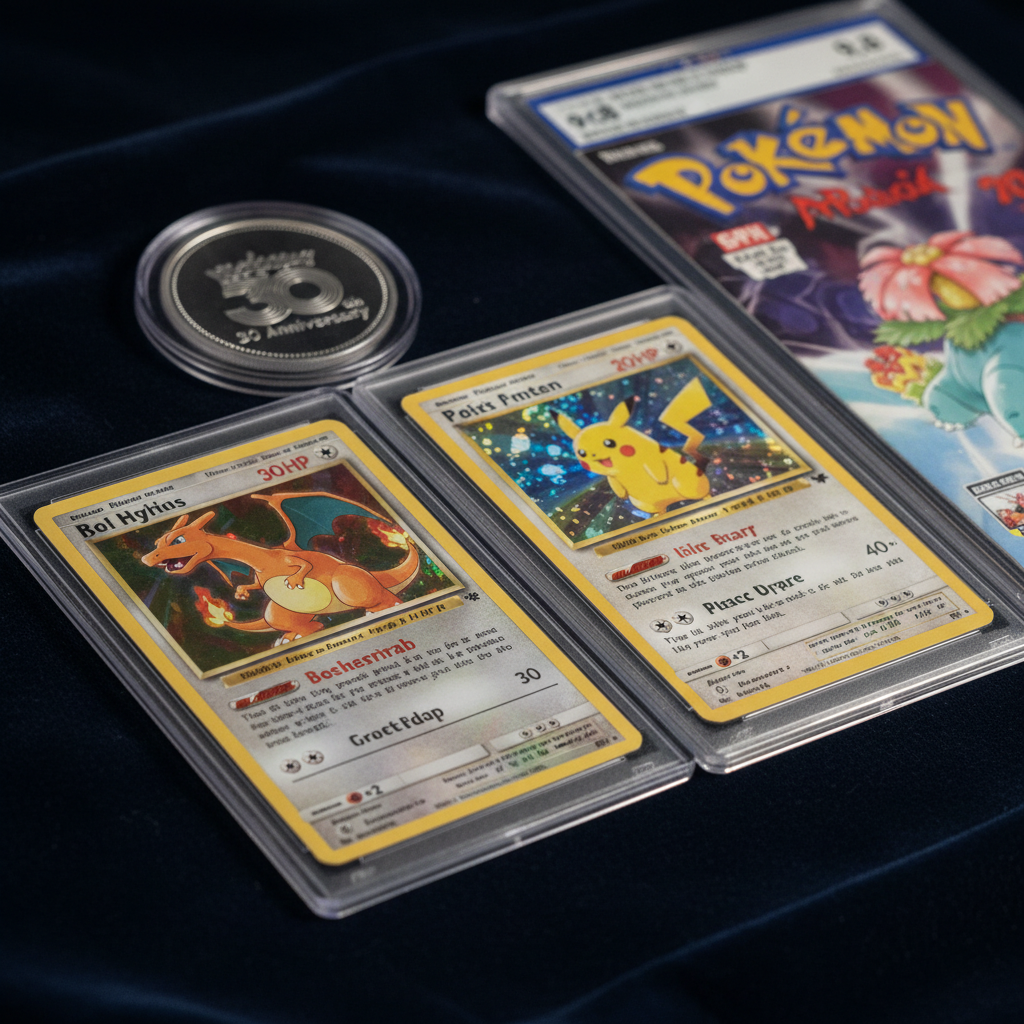
The Pokémon TCG secondary market didn't ease into March 2026 — it detonated. Between the 30th-anniversary celebrations reshaping collector sentiment and the Perfect Order (ME03) set dropping on March 27, the month has produced the kind of sustained secondary-market volatility that dealers haven't seen since the pandemic-era boom. The difference this time is that the fundamentals are stronger, the buyer pool is more global, and the hobby's projected valuation is tracking toward multi-billion-dollar territory.
Perfect Order is the third installment in the current Mega Evolution block, and it has done something the prior two sets only partially managed: it has restructured how the market thinks about rarity. The Mega Evolution block introduced tiered pull rates that make traditional ultra-rare chasing feel almost quaint by comparison. The result is a secondary market where the gap between mid-tier hits and true chase cards has widened dramatically — and where knowing which five cards to target this month is worth real money.
The Mega Evolution Block Is Rewriting the Rarity Playbook
For most of Pokémon's modern era, rarity was a relatively linear conversation: Secret Rares sat above Full Arts, Full Arts above standard holos, and so on. The Mega Evolution block has collapsed that hierarchy and rebuilt it with sharper edges. Certain cards in Perfect Order carry pull rates that make them functionally scarcer than anything the base Scarlet & Violet series produced, and the market has priced accordingly.
This matters for graders and investors, not just pack-rippers. When a card is scarce enough that population reports become a live competitive tool — where knowing whether PSA has certified 40 or 400 copies of a given card changes your buy decision in real time — you're operating in a different market than the one that existed three years ago. The Mega Evolution block has pushed Pokémon into that territory.
The five chase cards defining March span both ends of the collector spectrum: newly released Perfect Order pulls that are still finding their price floor, and established blue-chip singles that the anniversary cycle has re-energized. That combination is unusual. Typically, a major new set release suppresses demand for older cards as capital rotates. The 30th-anniversary tailwind is strong enough that both categories are appreciating simultaneously.
What the Anniversary Effect Is Actually Doing to Prices
Thirty-year milestones in any collectible category tend to produce a predictable pattern: a spike in nostalgia-driven demand, a wave of new entrants, and a corresponding lift in prices for iconic legacy cards. The Pokémon 30th is executing that playbook — but with a scale that reflects just how much the hobby has grown since the 25th anniversary in 2021.
The 2021 celebrations, which included the high-profile McDonald's promo cards and a series of anniversary sets, briefly overwhelmed the grading infrastructure at PSA and BGS. Turnaround times ballooned. Populations for certain cards swelled faster than the market expected, compressing grades and softening prices on cards that new submitters assumed were scarce. The 30th anniversary is playing out differently. Grading volumes are high, but the infrastructure has scaled. More critically, the collector base has matured — there's less panic buying and more strategic accumulation.
For the five March chase cards specifically, that maturity shows in how quickly the market established price consensus after Perfect Order's release. Within 72 hours of the March 27 launch, eBay sold listings for the set's top pulls were already clustering around consistent price bands rather than the wild variance that typically marks a new set's first week. That kind of rapid price discovery signals a liquid, sophisticated market.
The blue-chip legacy cards on this month's list — the ones benefiting from anniversary energy rather than new-set hype — are a different story. These are cards with established PSA and BGS population data, known auction comps through Heritage and Goldin, and collector bases that have held through multiple market cycles. The 30th anniversary isn't creating demand for these cards so much as it's reminding a new generation of buyers that they exist.
Where the Smart Money Is Watching
The most interesting dynamic in March's chase card landscape isn't the top pull from Perfect Order, impressive as it is. It's the convergence of new product excitement and legacy appreciation happening at the same time, in the same hobby, funded by the same collector dollar.
When capital doesn't have to choose between chasing new product and accumulating vintage — when both are rising — it usually means the hobby is in a genuine growth phase rather than a speculative bubble. Bubbles are characterized by rotation: money floods into one category and abandons another. What March 2026 looks like, at least right now, is expansion.
That could change. New set hype is inherently temporary, and anniversary cycles eventually exhaust themselves. But for collectors positioned in the right five cards this month, the timing is as good as it's been in years. The Mega Evolution block has given serious buyers a new rarity framework to work with, and the 30th anniversary has handed the entire hobby a moment of cultural visibility that no marketing budget could manufacture. The secondary market is doing exactly what it does when both conditions align at once: it runs.