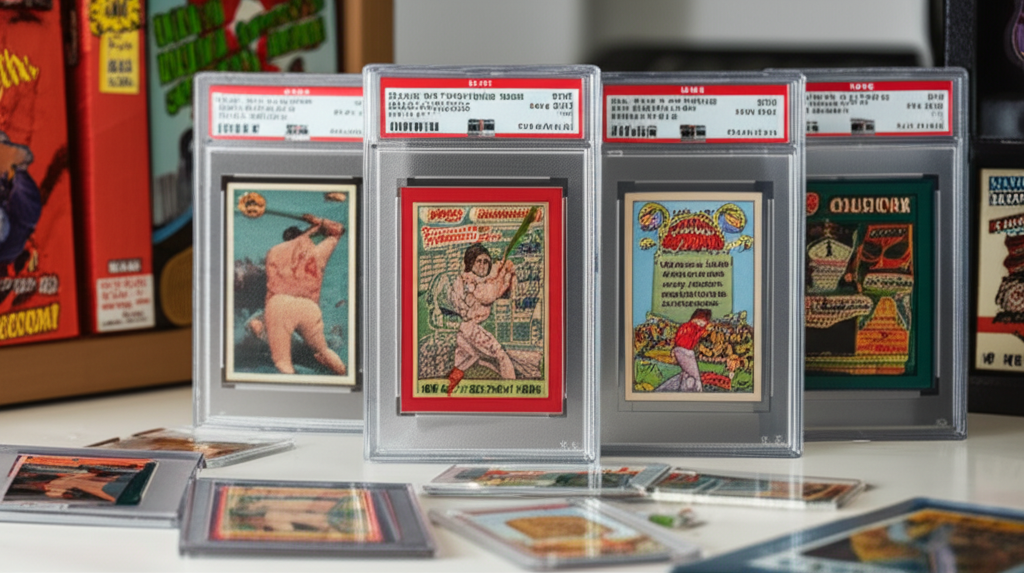
They don't come fresher than this. A collection of 1909-1913 Sporting News Supplements — described as a genuine find untouched by the hobby until now — landed in All-Sports Auctions at the last minute, the kind of late addition that has serious pre-war collectors stopping mid-scroll.
Fresh-to-the-hobby material from this era is genuinely rare. The Sporting News Supplements represent one of the most visually striking and historically underappreciated issues of the Dead Ball Era. These large-format, sepia-toned player portraits were distributed as newspaper inserts, which is precisely why so few survived in collectible condition. They were meant to be read, folded, and discarded — not preserved. The ones that weren't are the ones that matter now.
What the Supplements Are — and Why Condition Is Everything
The Sporting News Supplements were issued across several years between 1909 and 1913, featuring prominent major leaguers of the period in a format closer to a broadsheet illustration than a traditional tobacco card. Think M101-series aesthetics but printed on newsprint stock, which makes high-grade survivors almost comically scarce.
PSA's population data for this issue reflects exactly that scarcity. Graded examples at the PSA 5 or above level are legitimately difficult to locate across the checklist, and anything approaching PSA 7 or better on a key subject commands serious attention. The paper stock doesn't forgive — toning, foxing, fold lines, and edge wear accumulate fast, and the large format means corners take damage that a standard-sized card might absorb without penalty.
That's what makes a fresh-to-the-hobby find so significant. Material that has spent a century outside dealer inventories and auction rotations hasn't been cleaned, pressed, or otherwise manipulated. What you see is what the original owner left behind. For grading purposes, that provenance carries weight — not officially on the label, but practically in the confidence a buyer brings to the submission.
The Market for Pre-War Newspaper Supplements
Pre-war newspaper and magazine inserts have been on a sustained upward trajectory for the better part of a decade, driven partly by the broader vintage card boom and partly by a collector base that has exhausted the easy finds in tobacco and caramel issues. The T206 set remains the gravitational center of pre-war collecting, but sophisticated buyers have been moving outward — into M101s, W-series strips, and exactly the kind of large-format supplements represented here.
Heritage Auctions and Goldin have both moved notable Sporting News Supplement lots in recent years, with key Hall of Famers in mid-grade condition regularly clearing four figures. A Ty Cobb or Honus Wagner subject from this run in PSA 4 or better is a legitimate trophy piece. Even lesser-known players from the period carry collector interest simply by virtue of the format's rarity and visual appeal.
The all-at-once nature of this particular consignment is notable. When fresh material surfaces as a cohesive group rather than single lots filtered through a dealer's inventory over years, it creates a genuine market event. Buyers who've been hunting specific subjects get a concentrated window. Completionists — and this is an issue with a loyal completionist following — can potentially check multiple boxes in a single auction cycle.
All-Sports Auctions operates in a tier below the marquee houses but has built a reputation for exactly this kind of regional find. The last-minute nature of the addition suggests a walk-in consignment or estate discovery, the sort of origin story that adds texture to the material even if it complicates catalog preparation.
What Bidders Should Know Going In
A few practical considerations for anyone planning to bid on this material:
- Condition assessment on large-format newspaper supplements requires scrutiny beyond what you'd apply to a standard card. Request high-resolution scans of the reverse — the back of newsprint-based issues reveals toning and brittleness that the front image can obscure.
- Ungraded examples from a fresh find represent a gamble with upside. If the collection was stored flat and cool, grades may surprise. If it was folded or rolled, expect structural issues regardless of surface appearance.
- Comparables from Heritage's and Goldin's recent auction archives are the right benchmark. Don't let starting bids anchor your ceiling — fresh-to-hobby material with strong provenance has historically outperformed estimate on pre-war supplements.
- Subject matters enormously. A Cobb, Wagner, Walter Johnson, or Christy Mathewson from this run operates in a completely different demand tier than a journeyman infielder, even in equivalent condition.
The Dead Ball Era doesn't get the mainstream attention of the post-war boom years, but among collectors who know the material, a genuine fresh find of 1909-1913 Sporting News Supplements is the kind of thing that gets circulated in private messages before the auction even opens. That's the real signal here. The catalog addition was last-minute. The collector interest will not be.