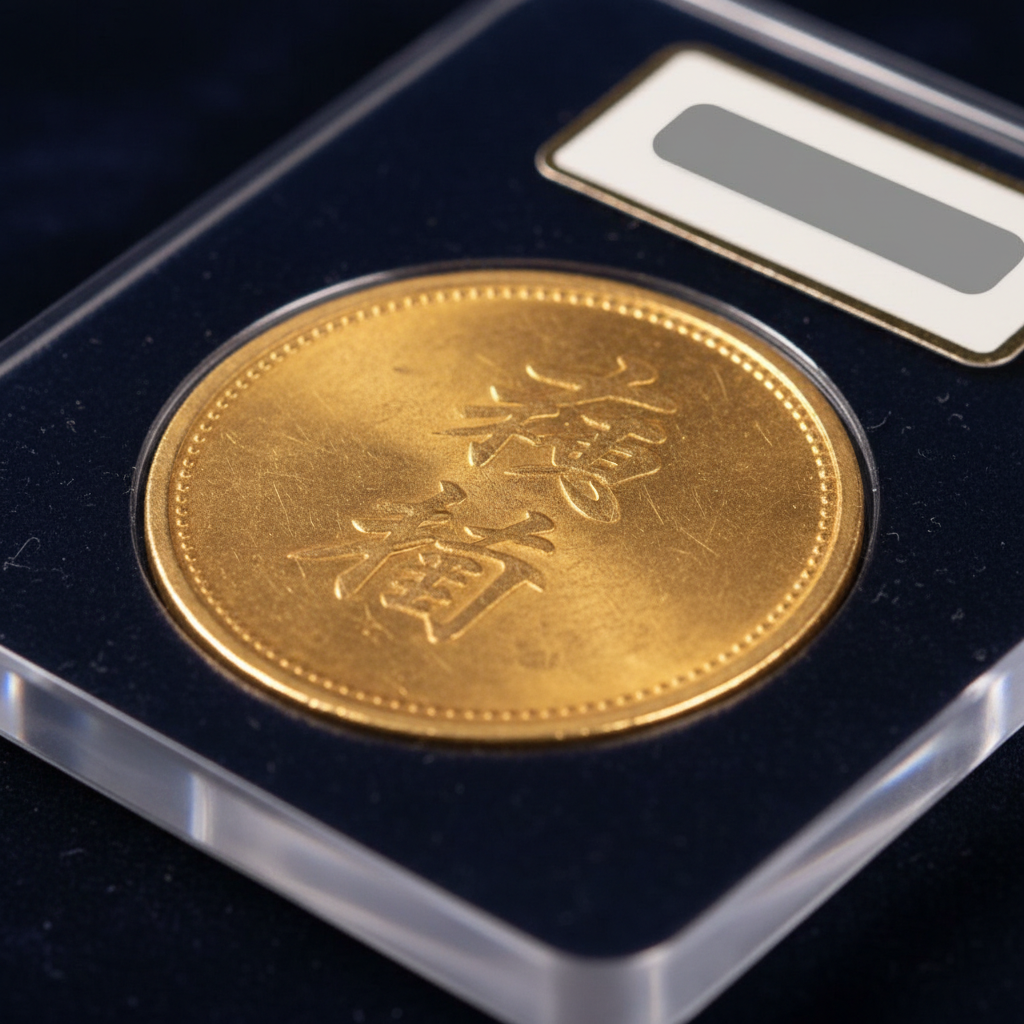
The finest certified example of a Genroku-era Oban (10 Ryo) is heading to the block at Stack's Bowers Galleries' April 2026 Hong Kong Showcase Auction, carrying a pre-sale estimate of $350,000. For world coin collectors, this is the kind of consignment that redefines what a single auction can mean for an entire category.
The coin grades PCGS MS-63 — and not just the finest in that holder. It is the finest certified example of its era, full stop. In a market where population reports routinely drive bidding psychology, holding the top spot on a coin of this age and cultural weight is an almost incalculable advantage at auction.
What the Genroku Era Actually Means
The Genroku period (1688–1704) occupies a singular place in Japanese history. Under the fifth Tokugawa shogun Tsunayoshi, Japan experienced an explosion of cultural production — kabuki theater, ukiyo-e woodblock prints, haiku poetry. It was the Edo period at its most refined, and the coinage issued during those years reflects that ambition in physical form.
The Oban was never a coin in the transactional sense. These massive gold pieces — measuring roughly 150mm in length and weighing approximately 165 grams of high-purity gold — functioned as ceremonial gifts exchanged between the shogunate and feudal lords, marks of political favor rendered in precious metal. They weren't circulated. They were displayed, presented, and preserved. That context matters enormously when evaluating survivorship: Oban that reached MS-63 did so not by accident but because they were treated as objects of reverence from the moment they were struck.
The Genroku Oban is distinguished from earlier and later issues by its specific gold content, the calligraphic inscriptions applied by the Goto family of official assayers, and the distinctive oval form that was hand-hammered and finished by artisans rather than mechanically produced. Each piece is, in a meaningful sense, unique.
The Market Case for $350,000
Stack's Bowers has built a formidable presence in Asian numismatics through its Hong Kong Showcase series, and placing this coin there rather than in a domestic U.S. sale is a deliberate strategic call. The collector base for Japanese imperial and Edo-period coinage skews heavily toward Asia-Pacific buyers, and the Hong Kong venue maximizes competitive tension among the bidders most likely to understand — and pay for — what this coin represents.
Comparable Oban sales give the estimate real grounding. Earlier-era Oban in lower grades have cleared six figures at major auction houses, and the premium commanded by finest-known status in world coins is well-documented. A PCGS MS-63 designation on a Japanese gold piece of this antiquity — we are talking about a coin that is over 320 years old — is extraordinary. Most survivors of the Genroku Oban issue exist in heavily circulated or cleaned states, if they exist at all. The certified population for this specific type in Mint State is, by any measure, vanishingly small.
Gold coin markets have shown resilience through broader collectibles volatility, and world gold in particular has benefited from diversification interest among collectors who built their portfolios on U.S. type coins and are now reaching outward. Japanese numismatics remains underpenetrated relative to its historical depth, which is precisely the kind of asymmetry that serious collectors and investors have learned to identify early.
- Coin: Genroku-era Oban (10 Ryo)
- Grade: PCGS MS-63 — Finest Certified
- Era: Genroku period, 1688–1704
- Estimate: $350,000
- Sale: Stack's Bowers Galleries Hong Kong Showcase Auction, April 2026
- Weight: Approximately 165 grams gold
A Coin That Outlasted an Empire
There is something worth sitting with here. This piece was struck during the reign of a shogun who banned Christianity, sponsored the arts, and presided over one of the most creatively fertile decades in Japanese history. It survived the fall of the Tokugawa shogunate, the Meiji Restoration, two world wars, and three centuries of economic upheaval — and it did so in Mint State condition.
PCGS certification doesn't manufacture that story. It just confirms what the coin already was.
Whether $350,000 proves conservative or aspirational will depend on who shows up in Hong Kong next April. Given what's on offer, the smart money says the room gets competitive fast.