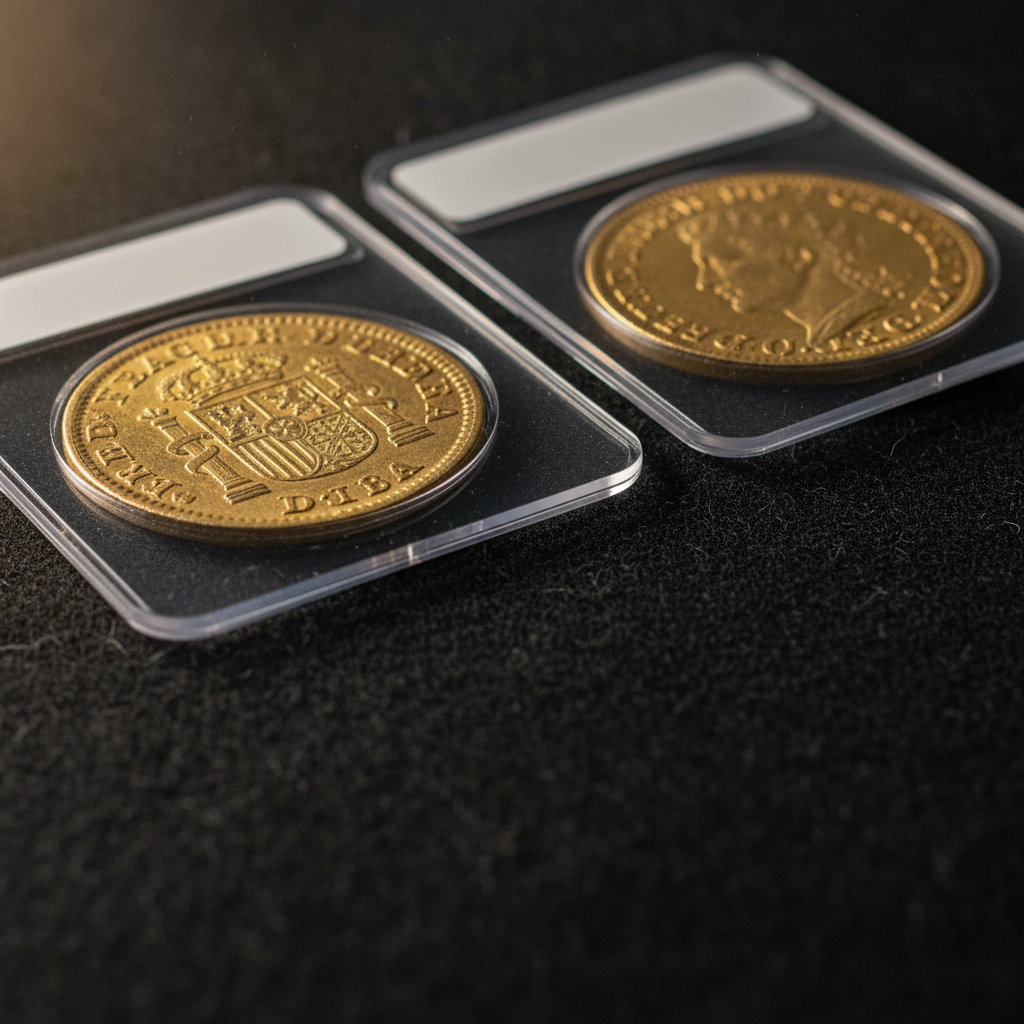
Before the first U.S. Mint struck a single coin in 1792, American commerce ran on improvisation. Merchants in Boston, Philadelphia, and Charleston accepted whatever gold crossed their counters — Spanish doubloons, Portuguese johannas, Brazilian moidores, French louis d'or — and prayed the weight was honest. Most of the time, it wasn't.
Enter the regulated gold coin: one of the most historically significant and criminally underappreciated categories in early American numismatics.
These weren't coins minted by a government. They were foreign gold pieces — already in circulation — physically altered by trusted silversmiths and merchants who stamped, clipped, or countermarked them to verify weight and fineness. The act of regulation was a private guarantee in the absence of a public one. A respected merchant's mark on a coin was, functionally, a credit rating.
A Monetary System Built on Trust, Not Law
The colonial and early federal economy operated under chronic coin shortages. Britain deliberately restricted hard currency exports to its American colonies, which meant commerce depended on whatever foreign specie happened to arrive by ship. The Spanish milled dollar — the famous piece of eight — became the de facto standard, but even those coins varied wildly in actual silver and gold content depending on which colonial mint struck them.
Gold was worse. A Portuguese half-johannes, known colloquially as a half-joe, might weigh correctly or might have been sweated, clipped, or filed by a previous handler. Without assay equipment, a merchant had no way to know. So they turned to men whose word meant something.
Silversmiths like Joseph Richardson Sr. of Philadelphia and John Burt of Boston built reputations over decades on the precision of their work. When they stamped a coin, they were staking that reputation on its weight. Their marks — small, often initials-only punches — transformed a suspect foreign coin into a trusted instrument of trade. In a pre-central-bank world, that was everything.
The practice was widespread enough that regulated coins appear in probate inventories, merchant ledgers, and estate records throughout the mid-18th century. They weren't curiosities. They were working money.
What Survives — and What It's Worth
Surviving regulated gold coins are genuinely rare. Most were eventually melted once U.S. Mint coinage became available and reliable, which didn't happen practically until well into the early 19th century. The coins that escaped the melting pot did so largely by accident — buried, lost, or squirreled away in estate collections that sat untouched for generations.
When they do appear at auction, the results reflect both their scarcity and the depth of serious collector interest in early American monetary history. Heritage Auctions and Stack's Bowers have both handled examples with prominent silversmith marks, with finer specimens — those retaining original surfaces and legible countermarks — regularly commanding prices well into the four and five figures depending on the maker's attribution and the host coin's condition.
Grading these pieces requires a different framework than standard U.S. coinage. NGC and PCGS both encapsulate regulated coins, typically with details grades that acknowledge the intentional alterations to the coin's surface. A coin stamped by Richardson or Burt isn't damaged — it's documented — but the technical grade will reflect the marks regardless. Collectors who understand the category buy on attribution and historical provenance, not on the numeric grade alone.
Population data for certified regulated gold is thin by design. These coins were never common, and the collector base, while passionate, is specialized. That scarcity cuts both ways: the market is illiquid compared to, say, early U.S. gold eagles, but when a strong example surfaces, competition among advanced collectors can be fierce.
The Bigger Picture for Serious Collectors
Regulated gold coins occupy a unique position in the American collecting landscape. They predate U.S. coinage entirely, yet they're inextricably part of the American monetary story. They're artifacts of private enterprise solving a public problem — which, depending on your perspective, is either a historical footnote or a founding principle.
For collectors building early American type sets or colonial-era holdings, regulated gold represents one of the last genuinely underexplored frontiers. The academic literature is thin. Auction appearances are infrequent. Attribution research — matching a countermark punch to a specific silversmith's documented tools — is still an active area of numismatic scholarship, which means the field rewards the kind of deep-dive expertise that serious collectors actually enjoy developing.
The irony is that these coins, which once kept commerce moving precisely because people trusted the men who marked them, now derive their value from that same trust — centuries removed, filtered through auction catalogs and certification holders, but fundamentally unchanged.
The mark still means something. It always did.