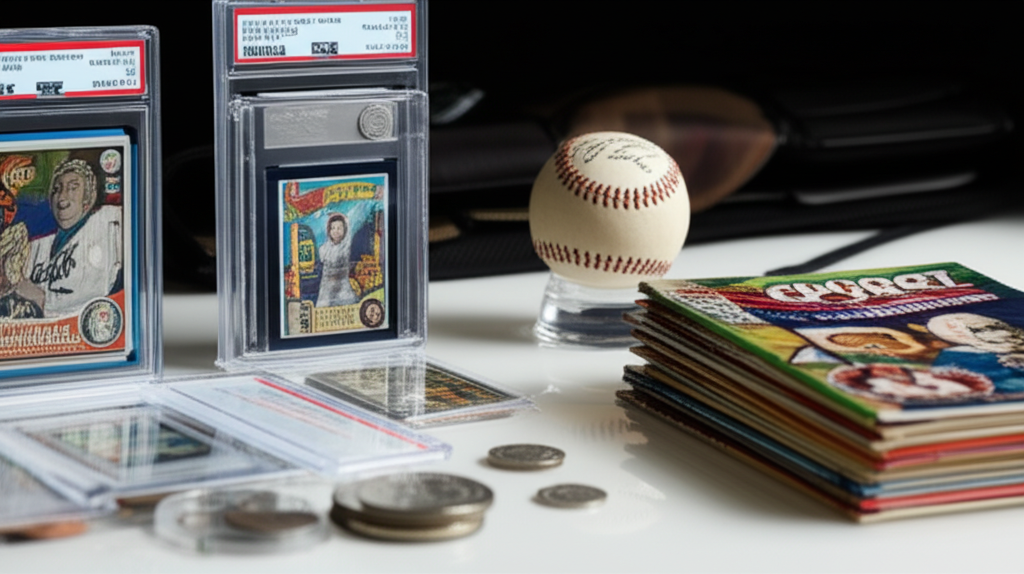
A mid-grade Babe Ruth card just punched above its weight class at Mile High Card Company's latest sale, signaling that demand for the Sultan of Swat remains stubbornly resilient even as the broader vintage baseball market navigates a choppy correction. That result — combined with a live MeiGray NHL goal puck auction, the storied fate of a gold-medal-saving hockey stick, and Dale Earnhardt Jr. going on record about his collecting habits — makes this one of the more eclectic weeks the hobby has seen in recent memory.
The Week's Biggest Moves: Ruth, Pucks, and a Famous Stick
Mile High's latest catalog sale delivered a headline result when a mid-grade Babe Ruth card — think PSA 4 to PSA 5 territory — cleared a price that turned heads among vintage dealers. While Mile High has not yet published final hammer totals at press time, early reporting from the floor and online bidding logs suggests the Ruth lot outperformed pre-sale estimates by a meaningful margin, continuing a pattern that has seen even well-worn Ruth material command premiums over comparable contemporaries. Ruth's cards, particularly his 1933 Goudey issues (cards #53, #144, #149, and #181), have long been the anchor of any serious pre-war collection, and mid-grade examples have increasingly become the entry point of choice for collectors priced out of gem-mint territory.
Meanwhile, MeiGray Group — the official memorabilia partner of the NHL — has opened bidding on its latest NHL goal puck auction, and this cycle carries extra weight: several of the authenticated pucks were scored by players who also competed at the Winter Olympics, adding a dual-provenance angle that collectors have historically rewarded at auction. MeiGray's direct chain of custody from the ice surface to the winning bidder, documented with photo-matched authentication, remains one of the gold standards in game-used memorabilia. Separately, the hockey world is still buzzing about the stick used in a pivotal moment during last month's Olympic gold medal game — a piece of lumber that has since been authenticated and is now in the hands of a private collector, with its public auction fate still undetermined.
On the show circuit, the Philadelphia Sports Card & Memorabilia Show is set for this weekend, drawing regional dealers and national-level buyers to one of the East Coast's most reliable mid-tier venues. The Philly Show isn't the National, but it consistently surfaces undervalued regional finds and serves as a real-time barometer for street-level market sentiment — the kind of ground truth that no auction archive can fully replicate. And in a candid interview making rounds across hobby media, Dale Earnhardt Jr. opened up about his personal collecting philosophy, touching on everything from the NASCAR cards he chased as a kid to the memorabilia categories he actively pursues today. Junior's crossover appeal — racing royalty with genuine hobby credibility — gives his commentary unusual weight in a market where celebrity collector endorsements can meaningfully move prices.
Why It Matters: Ruth's Floor Holds, Game-Used Gets a Boost
The Ruth result at Mile High is more than a one-off data point — it's a confirmation that pre-war blue-chip material is holding its floor even as post-war and modern cards face valuation pressure. PSA population data underscores the scarcity argument: across Ruth's four primary 1933 Goudey cards, combined PSA-graded examples in the PSA 4 to PSA 6 range number in the hundreds, not thousands, making every auction appearance a genuine market event. When mid-grade copies outperform estimates, it typically signals one of two things: either new money is entering the pre-war space, or existing collectors are upgrading and willing to pay for the privilege. Either dynamic is constructive for the category.
The MeiGray goal puck auction taps into a broader momentum shift in game-used hockey memorabilia, a category that spent years in the shadow of baseball and basketball collectibles but has quietly posted consistent gains over the past 18 months. Olympic provenance is the accelerant here — dual-sport athletes who medal and then return to NHL play create a documentation narrative that resonates with both hockey collectors and Olympic memorabilia specialists, expanding the buyer pool beyond a single collecting vertical. The authenticated Olympic stick story follows the same logic: provenance is the product, and when the chain of custody is airtight, the ceiling on game-used pricing becomes genuinely difficult to predict. For dealers and auction houses, this is the kind of consignment that justifies a dedicated marketing push rather than a catalog line item.
Dale Jr.'s public engagement with the hobby is worth tracking for a more subtle reason. NASCAR collectibles have historically underperformed relative to the sport's television ratings and fan base size, partly due to a lack of high-profile collector advocacy. When a figure of Earnhardt's stature talks openly about what he buys and why, it creates permission for casual fans to take the category seriously — and that kind of cultural legitimacy has a documented history of preceding price appreciation in adjacent sports collectibles markets.
Collector Takeaway: Buy the Ruth Dip Before It Disappears
If you've been sitting on the sidelines waiting for a better entry point on mid-grade pre-war Ruth material, the window may be narrowing. The Mile High result suggests the market is not capitulating on Ruth even as other segments soften — and with PSA registry competition intensifying at every grade level, mid-grade examples are increasingly being absorbed by collectors who can't compete for the top-pop copies. Our read: accumulate PSA 3 to PSA 5 Ruth Goudeys on any weakness, because the floor appears well-supported and the upside on a broader vintage recovery is asymmetric.
On the game-used side, keep a close eye on the MeiGray Olympic puck lots and monitor whether the gold medal stick surfaces publicly. If it does hit a major auction house — Heritage, Goldin, or RR Auction are the most likely venues — expect a bidding war that resets comps for high-provenance Olympic hockey material. The Philly Show this weekend is worth a visit for anyone in the region: bring your want list, bring cash, and pay attention to what the dealers are actually moving. That intelligence is worth more than any price guide.