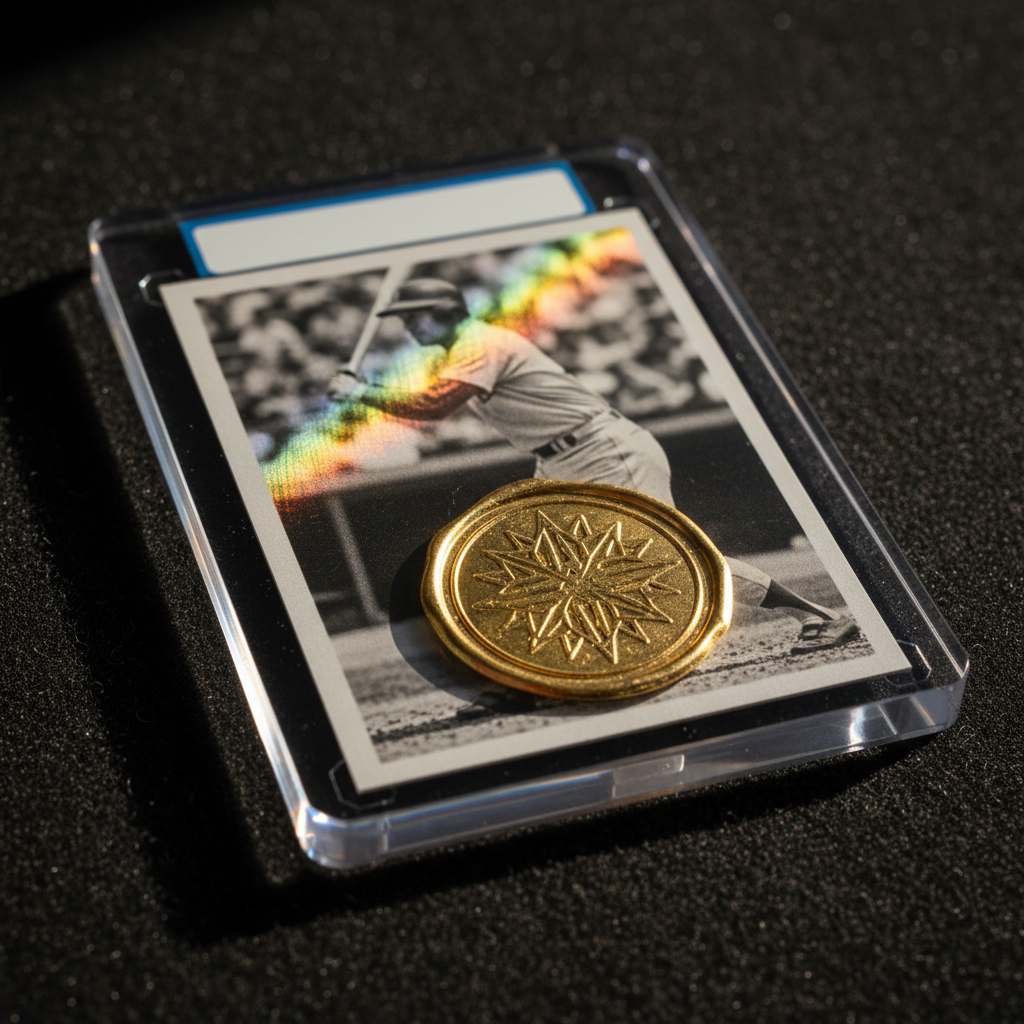
A secret compartment inside the Resolute Desk — the iconic piece of Victorian-era furniture that has anchored the Oval Office for decades — has yielded what may be the most politically charged numismatic discovery in American history. During a routine restoration last week, conservators uncovered a previously unknown gold-core die trial linked to the Trump administration, a piece whose very existence raises profound questions about provenance, authorization, and the murky boundary between official coinage experiments and private political mementos.
The numismatic community is still processing the implications. Die trials — test strikes produced during the development of a coin design, typically on off-metal planchets — are among the rarest and most coveted artifacts in American coinage. A gold-core specimen, meaning a planchet with a gold center bonded to an outer metal layer, would represent an extraordinary departure from standard trial protocol. The U.S. Mint does not produce gold-core experimental pieces as a matter of routine. If authenticated, this coin didn't follow the rulebook.
What Makes This Piece Extraordinary — and Suspicious
Die trials in any form command serious money. A standard aluminum or copper die trial for a 20th-century U.S. coin in NGC or PCGS MS-64 condition routinely clears $15,000 to $40,000 at Heritage or Stack's Bowers. Unique political-era specimens with documented White House provenance? The ceiling disappears entirely. The 1964 Peace Dollar pattern — itself a coin whose very existence was long disputed — fetched $1.175 million at Stack's Bowers in 2015. That's the neighborhood we're potentially talking about here.
But provenance is everything, and this is where the story gets complicated. A coin discovered inside a desk compartment — however storied that desk may be — arrives with a chain of custody that is, at best, irregular. The Resolute Desk was a gift from Queen Victoria to President Rutherford B. Hayes in 1880, built from the timbers of the HMS Resolute. It has been used intermittently by presidents ever since, and it famously conceals a modesty panel added for President Franklin D. Roosevelt. Whether it conceals additional compartments has never been publicly documented. That alone makes the discovery structurally credible, even if everything else about the coin invites scrutiny.
The design details of the alleged gold-core piece have not been fully disclosed, but early descriptions from sources close to the restoration team suggest imagery consistent with Trump-era commemorative aesthetics — bold portraiture, nationalist iconography, the kind of visual language that defined the wave of semi-official Trump gold coins and medallions that flooded the private mint market between 2017 and 2021. Those pieces, produced by private mints and sold aggressively through television and digital advertising, have essentially zero secondary market value. This is categorically different, if it's what it appears to be.
The Authentication Gauntlet Ahead
Before any valuation conversation becomes meaningful, this coin faces the most rigorous authentication process in the hobby. PCGS and NGC both maintain specialized authentication protocols for pattern coins and die trials, and both services have access to metallurgical analysis, die-marriage research, and Mint archive consultation that can either confirm or destroy a coin's claimed identity within weeks.
The gold-core construction itself will be the first forensic battleground. X-ray fluorescence and cross-section analysis can precisely characterize the metal composition and bonding method. If the gold layer was applied post-strike — a technique used to fake trial coin status — that's detectable. If the planchet construction matches known Mint production methods for experimental coinage, that's a significant point in the coin's favor.
Die analysis is equally critical. Every working die used by the U.S. Mint carries identifiable characteristics — tool marks, polish lines, clash marks — that can be cross-referenced against known die marriages from the relevant era. A die trial struck from an unregistered or unattributed die would raise immediate red flags, while a confirmed match to a documented Mint die would dramatically strengthen the case for authenticity.
Population context matters too. If this is a unique piece — a one-of-one experimental strike that never entered any official record — it exists outside the normal grading population framework entirely. PCGS and NGC would almost certainly designate it as a Specimen or Proof strike with a details qualifier pending full provenance documentation. The politics surrounding its alleged origin will make no grading service move faster than the evidence warrants.
A Market That Loves Controversy
Here's the uncomfortable truth about numismatic markets: controversy sells. The 1913 Liberty Head Nickel — a coin that almost certainly shouldn't exist, produced under circumstances that have never been fully explained — is worth north of $4 million. The 1974-D aluminum cent, an experimental piece that was supposedly never authorized to leave the Mint, sold for $250,000 at auction despite its legally ambiguous status. Coins with complicated stories don't scare serious collectors. They attract them.
If this gold-core die trial clears authentication, the auction result will be one for the record books — not just because of what it is metallurgically, but because of the story wrapped around it. A coin hidden in the most famous desk in the world, connected to one of the most polarizing political figures in American history, discovered during a restoration of a piece of Victorian maritime history that has witnessed a century and a half of American power. That's not a coin. That's a time capsule with a melt value.
The authentication process is expected to take several months. Until then, the numismatic world waits — and the Resolute Desk, which has kept its secrets for 145 years, has apparently decided it's done keeping this one.