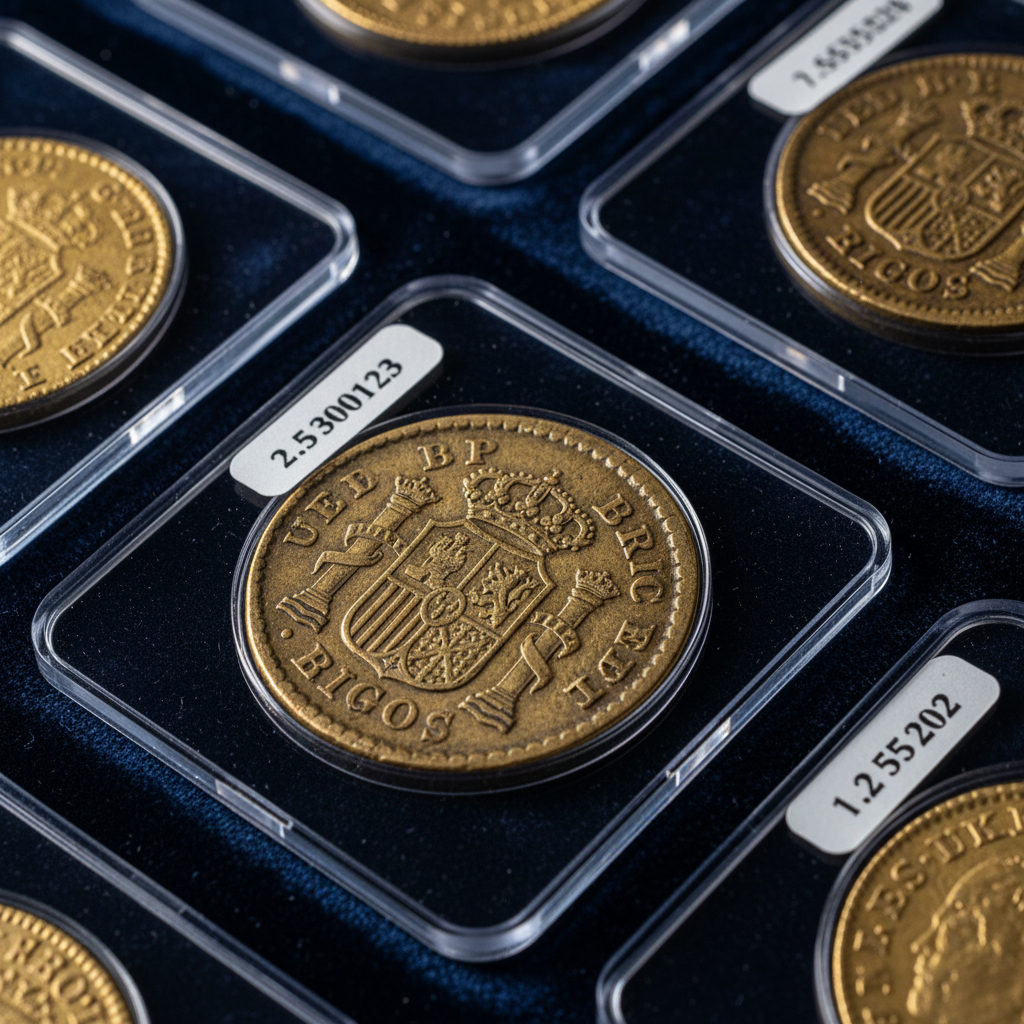
The romance of sunken treasure dies fast when you're staring at a federal forfeiture notice. Shipwreck coins occupy one of the most fascinating — and legally treacherous — corners of the numismatic market, where a single piece can command six figures at auction while simultaneously sitting at the center of an international sovereignty dispute.
The fantasy version is well-worn: a galleon loaded with Spanish reales, a storm off the Florida coast, centuries of saltwater burial, and then a lucky diver hauling up history. The reality involves admiralty law, the UNESCO Convention on the Protection of the Underwater Cultural Heritage, state and federal salvage permits, and, increasingly, foreign governments asserting ownership over coins minted on their soil hundreds of years ago.
What Shipwreck Coins Are Actually Worth
When legitimate, well-documented shipwreck coins reach auction, the premiums are real and substantial. Heritage Auctions has handled individual pieces from the SS Central America — the 1857 California Gold Rush–era steamship lost off the Carolinas — that cleared $50,000 to $150,000 per coin, with the most exceptional examples pushing well beyond that. A NGC-certified specimen from that wreck carries provenance documentation that functions almost like a chain-of-custody record, and that paper trail is a meaningful portion of the value.
PCGS and NGC both offer shipwreck attribution labels, and those designations matter to buyers. A coin graded NGC MS-62 with a verified SS Central America pedigree will outperform a comparable uncertified example by a factor that has, in strong market cycles, exceeded 300%. The population of certified Central America gold is finite and well-documented — the recovery operation, led by Tommy Thompson's Columbus-America Discovery Group starting in 1988, is one of the most studied salvage efforts in U.S. history, which means collectors have unusually strong provenance chains to lean on.
Other notable wrecks feeding the numismatic market include the Atocha (a 1622 Spanish galleon recovered by Mel Fisher off Key West), the SS Republic (an 1865 paddle steamer recovered by Odyssey Marine Exploration in 2003), and the Nuestra Señora de las Mercedes — the last of which became the center of a decade-long legal battle between Odyssey Marine and the Spanish government that ended with Spain reclaiming roughly 594,000 coins in 2012.
The Legal Minefield Beneath the Surface
The Mercedes case is the clearest modern illustration of what can go wrong. Odyssey recovered the coins, transported them to the United States, and then watched a federal court — affirmed by the 11th Circuit — rule that Spain held sovereign immunity over the wreck. The entire haul was repatriated. That ruling reshaped how salvage companies, insurers, and collectors think about provenance risk on any coin with an ambiguous recovery history.
The legal framework is genuinely complex. In U.S. waters, the Abandoned Shipwreck Act of 1987 gives states title to most wrecks within three miles of shore. Beyond that, federal admiralty law applies, but so can foreign sovereign immunity claims if the vessel belonged to a nation-state. International waters introduce a separate set of considerations under UNCLOS — the United Nations Convention on the Law of the Sea — which the U.S. has signed but never ratified, creating further ambiguity.
For collectors, the practical implication is straightforward: provenance documentation is not optional. A shipwreck coin without a clear, verifiable recovery record — ideally tied to a licensed salvage operation with court-approved distribution rights — carries title risk that no grade from NGC or PCGS can eliminate. The certification label authenticates the coin. It does not authenticate your right to own it.
Collecting Shipwreck Coins the Right Way
The market for properly documented shipwreck coins remains robust. Goldin and Stack's Bowers have both handled significant shipwreck material in recent years, and collector demand has held firm even as broader rare coin markets have seen softness. Part of that resilience comes from the storytelling premium — these are objects with a specific, dramatic, verifiable history — and part comes from genuine scarcity. The SS Central America gold is not coming back in larger quantities. What exists is what exists.
Buyers entering this market should prioritize pieces with:
- NGC or PCGS certification with explicit shipwreck attribution on the label
- Documented recovery from a licensed, court-supervised salvage operation
- Published auction or dealer history establishing a clean ownership chain
- No active or historical legal disputes tied to the recovery operation
The ethical dimension is real, too, and increasingly scrutinized. Archaeological purists argue that any commercial salvage disrupts the historical record. That debate isn't going away, and legislative pressure — both domestically and through international bodies — has been moving toward tighter restrictions on commercial recovery operations for years.
The most valuable shipwreck coins in the world aren't the ones with the highest grades. They're the ones whose entire story, from the ocean floor to the auction block, can be told without a single gap.