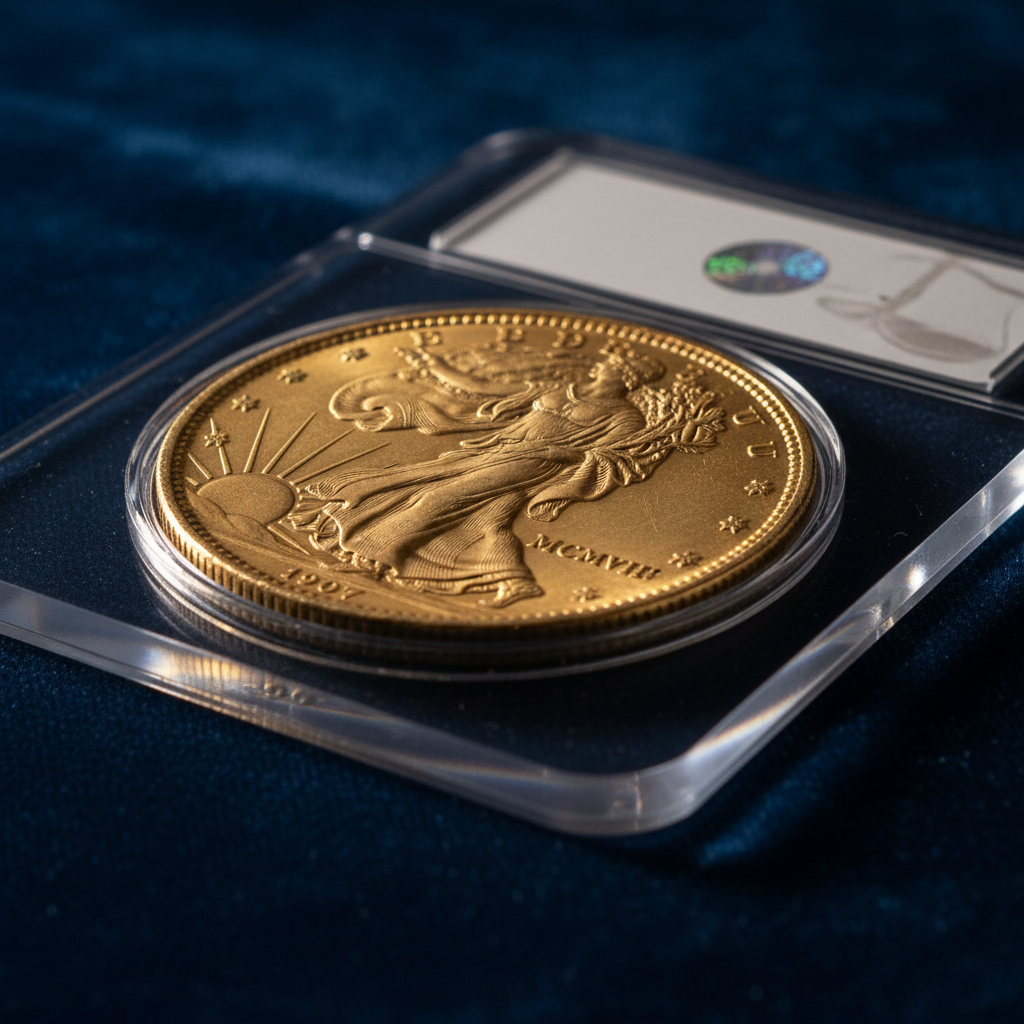
Most collectors lose money early in the hobby for the same reason: they buy on instinct and sell on regret. Understanding why a coin is worth what it is — not just what it sold for last Tuesday — is the difference between building a collection and burning through a budget.
The numismatic market is not random. Prices at Heritage Auctions, Stack's Bowers, and PCGS-tracked dealer transactions follow patterns rooted in a handful of core variables. Master those variables, and the noise starts to make sense.
The Fundamentals Haven't Changed in 150 Years
Rarity is the variable everyone talks about, and for good reason. A coin with a mintage of 500 will always command more attention than one struck by the millions — all else being equal. The 1913 Liberty Head Nickel, with only five known examples, routinely clears $4 million or more at major auction. That's rarity doing its work at the extreme end of the spectrum.
But rarity without demand is just obscurity. A coin can be genuinely scarce and still sit in a dealer's case for years if collectors don't want it. Demand is driven by series popularity, historical significance, and the size of the collector base chasing a particular type. Morgan Dollars have a massive following; certain 19th-century territorial issues do not, despite lower surviving populations. Popularity matters as much as scarcity.
Condition — or grade, in the modern professional sense — is where casual collectors most often leave money on the table. The spread between a PCGS MS-63 and an MS-65 on a common-date Morgan can be $50 versus $400. On a key date like the 1893-S Morgan, that same two-point grade difference can represent a swing of tens of thousands of dollars. The third-party grading services — PCGS and NGC being the dominant two — exist precisely because condition is so consequential and so subjective without a standardized framework.
The Variables Dealers Watch That Beginners Ignore
Strike quality and eye appeal sit just below condition in practical importance, and they're often underdiscussed. Two coins can carry identical grades from PCGS and still look dramatically different in hand. A weakly struck 1921 Morgan graded MS-64 will trail a sharply struck, lustrous example at the same grade in a competitive bidding environment. Experienced dealers call this the difference between a coin that grades well and one that looks well — and the market increasingly rewards the latter, particularly in registry-set competition.
Mintmark and variety are the rabbit holes that can define entire collecting careers. The 1955 Doubled Die Lincoln Cent — one of the most famous varieties in American coinage — trades at a massive premium over a standard 1955 cent in any grade. In PCGS MS-64 Red, a regular 1955 Philadelphia cent might bring $100. A certified 1955 Doubled Die in the same grade has sold for $30,000 or more. That's the same year, the same denomination, and a difference that's invisible to the untrained eye until you know what you're looking for.
Provenance — the ownership history of a specific coin — is the sixth factor and the one most undervalued by newcomers. A coin that appeared in a landmark auction, belonged to a famous collection, or carries documentation tying it to a significant historical moment carries a premium that transcends its physical attributes. The Eliasberg Collection, the Norweb Collection, the Bass Collection — coins from these legendary holdings routinely outperform comparable examples at auction, sometimes by 20 to 40 percent. Pedigree is real, and it compounds over time.
Putting It Together at the Auction Block
These six factors — rarity, demand, condition, strike quality, variety, and provenance — don't operate in isolation. They stack. A rare coin in exceptional condition with a famous pedigree and strong collector demand is the formula for a record result. A coin that checks only one or two boxes will find its ceiling quickly.
The practical application for buyers is straightforward: before placing a bid at Heritage or Stack's Bowers, work through each factor deliberately. What's the certified population at this grade level? Is demand for this series growing or contracting? Does the coin have any pedigree documentation? Is the strike typical for the issue or exceptional?
For sellers, the same framework identifies where to invest in presentation. Getting a raw coin certified before sale is almost always worth the submission fee when the grade differential is meaningful — and on key dates or popular series, it nearly always is. A PCGS or NGC holder doesn't just authenticate; it communicates condition in a language every serious buyer understands.
The collectors who build real value over time aren't the ones who buy the most coins. They're the ones who understand exactly why each coin is worth what it is — and buy accordingly.