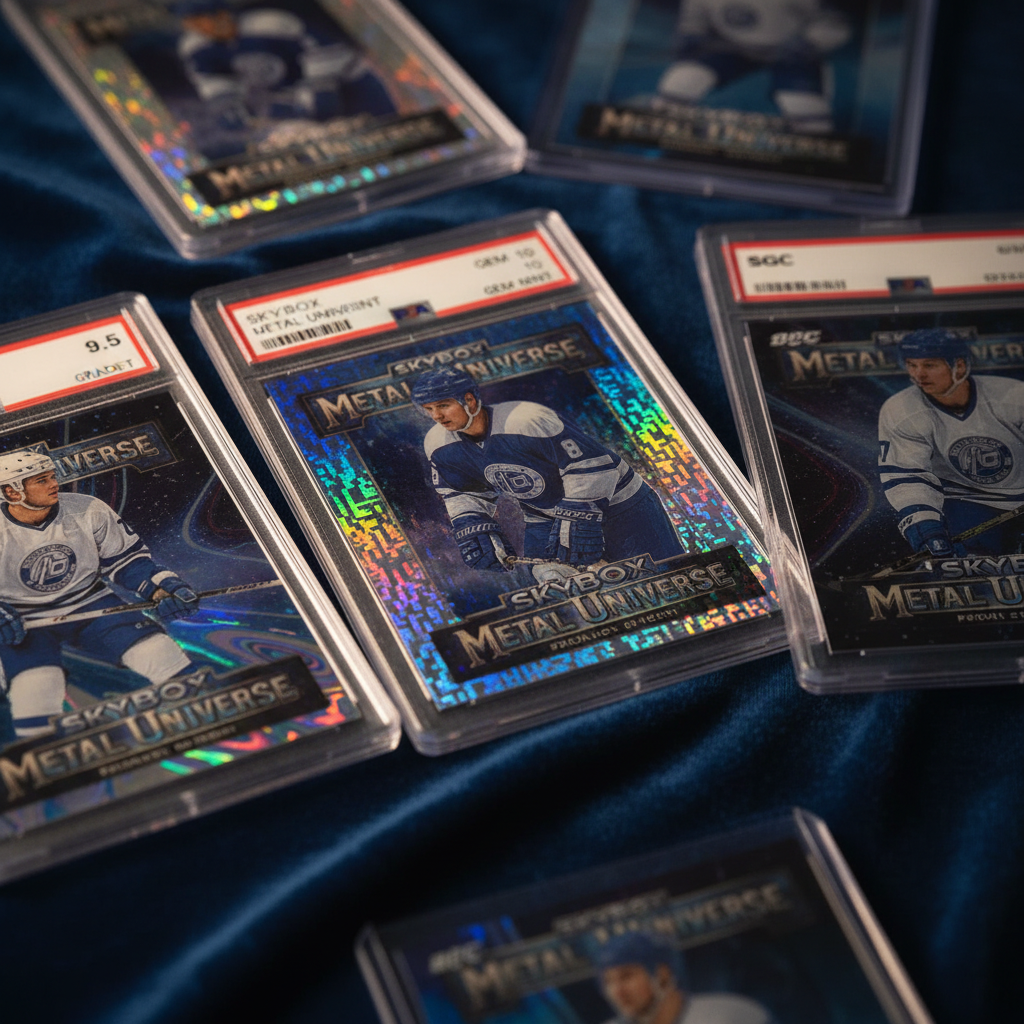
SkyBox Metal Universe is back on ice. Upper Deck's nostalgia-fueled brand — built on the chromium-heavy, hyper-stylized aesthetic that made the mid-1990s releases cult objects — is getting a 2025-26 hockey installment, and the checklist details are now out ahead of its release.
For collectors who weren't around the first time: Metal Universe debuted in the mid-90s as one of the most visually aggressive products on the market. Foil stamping, cosmic backgrounds, and designs that looked like they were conceived during a fever dream at a laser tag arena. They were polarizing then. Today, raw copies of the 1997-98 Metal Universe hockey commons sell for $3–8 on eBay, and the PMG parallels — graded by BGS or PSA — routinely clear $50–$200 depending on the player and grade. The Hockey PMG Gold examples of top stars have hit four figures. That kind of secondary market heat is exactly what justified bringing the brand back.
What's in the Box
Hobby boxes for the 2025-26 release are structured to deliver autographs and a mix of the metal-stock base cards that define the brand's identity. The checklist spans current NHL stars and includes the kind of insert architecture that made the original run memorable — layered parallels, short-printed subsets, and foil-heavy chase cards designed to photograph well and hold attention in a break.
The base set covers the full NHL roster landscape, with team sets distributed across all 32 franchises. Insert lines include multiple tiers, with autograph content spread across on-card and sticker formats — a distinction that matters more than ever to the graded card market, where on-card signatures consistently command a 20–40% premium over sticker autos at auction.
Parallels are tiered by print run, with the lowest-numbered versions positioned as the primary chase. In the current hockey card market, numbered-to-10 or lower parallels of Connor McDavid, Nathan MacKinnon, or Auston Matthews reliably generate competitive bidding on Goldin and PWCC, regardless of the product. The Metal Universe aesthetic adds a visual hook that photographs exceptionally well for social media breaks — a factor that's become a legitimate commercial driver in the modern hobby.
Where This Fits in the Hockey Card Market
Hockey remains the most undervalued of the four major North American sports in the graded card market — and that gap is narrowing. Heritage Auctions and Goldin have both reported increased hockey card consignments over the past 18 months, driven partly by international collector growth and partly by the sport's expanding U.S. television footprint.
Upper Deck holds the exclusive NHL license, which means every significant hockey card product on the market flows through one pipeline. That exclusivity cuts both ways: it limits competition, but it also means Upper Deck controls the entire supply narrative. When they choose to revive a brand like Metal Universe, it's a deliberate signal about where they see collector demand trending — back toward bold, design-forward products that stand apart from the clean, minimalist aesthetic that dominated the early 2020s.
The timing is smart. Retro-branded releases have outperformed expectations across every sport over the past three years. Topps Chrome's revival of defunct 1990s insert concepts, Panini's Prizm throwback parallels, and the sustained demand for original 1990s inserts in graded form all point to the same conclusion: collectors who grew up in that era now have disposable income, and they're spending it on products that trigger memory as much as speculation.
Metal Universe sits squarely in that sweet spot. The original hockey sets from 1996–98 are genuinely scarce in high grade — PSA 10 populations on key players are often in the single digits — which gives the new product a built-in comparison point. If the 2025-26 release produces its own short-printed, low-pop parallels, the grading arbitrage play writes itself.
Early Collector Calculus
The question serious buyers should be asking right now isn't whether Metal Universe hockey is a good product — the brand equity is real, and Upper Deck's production quality on chromium-stock releases has been consistent. The real question is player selection and print run discipline.
A Metal Universe auto of McDavid numbered to 25 or lower is going to move. A sticker auto of a third-line center numbered to 99 is not. The spread between those two outcomes in the same hobby box is enormous, and that variance is the central tension of every modern premium release. Collectors who buy singles off the secondary market after the box-break dust settles will almost certainly get better value per dollar than case buyers — but they'll miss the chase.
That's always been the Metal Universe proposition. The product sells the experience as much as the cards. And in 2025, that's still a viable business model.