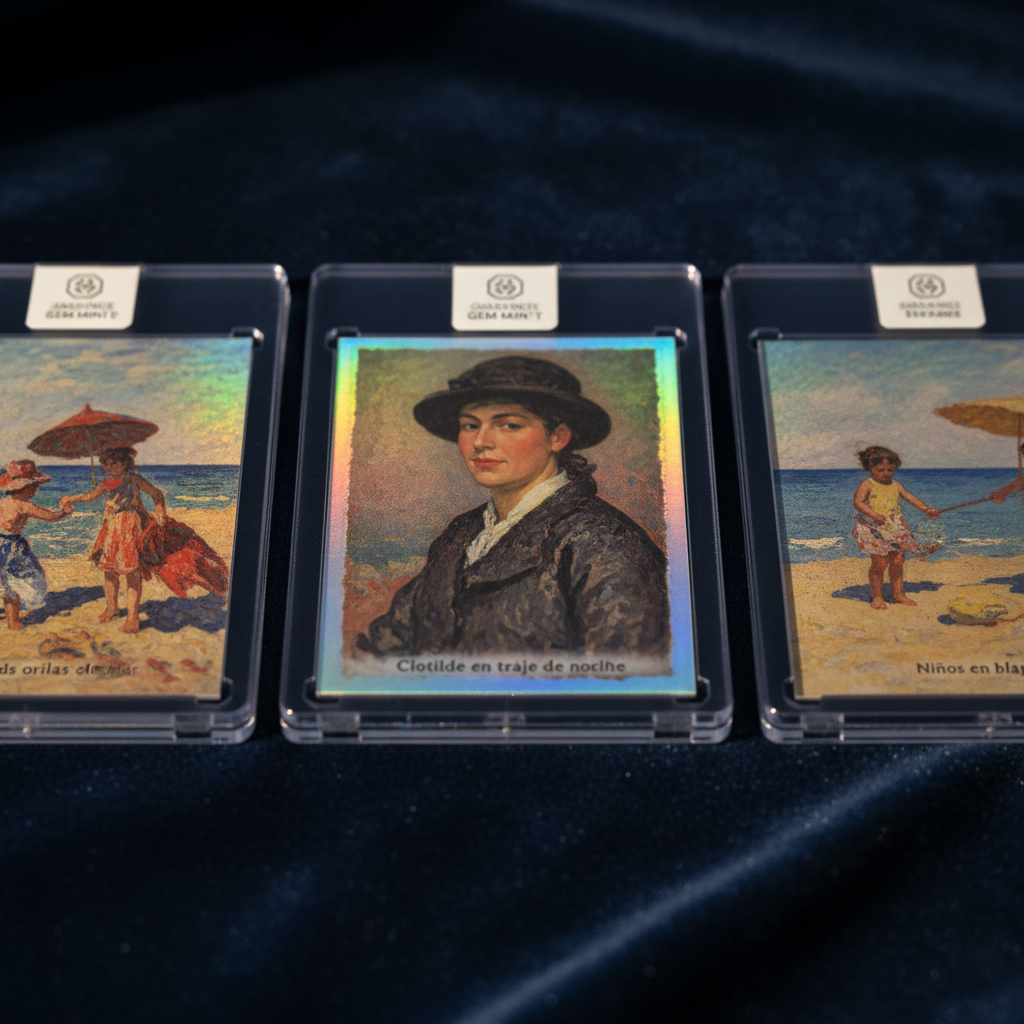
Three paintings by Joaquín Sorolla — the Spanish luminist whose sun-drenched canvases have been quietly undervalued by the international auction market for decades — are leaving their permanent home at the Hispanic Society Museum & Library in New York for a rare public showcase at Sotheby's. The collaboration, billed as an In Residence event, marks the first time the two institutions have partnered in this format, and it puts some of the most significant Sorolla works in North American hands directly in front of serious buyers and collectors.
This isn't a sale. It's a viewing — a deliberate, curated placement of museum-grade material inside one of the world's most commercially powerful auction environments. That distinction matters enormously for what it signals about where Sorolla's market is heading.
The Hispanic Society's Sorolla Holdings
The Hispanic Society holds one of the most important Sorolla collections outside of Spain, anchored by the monumental Vision of Spain mural cycle — fourteen large-scale paintings commissioned in 1911 that stretch across an entire gallery. The three works selected for the Sotheby's showcase represent a different register of the artist's output, though the specific titles haven't been broadly disclosed in advance of the event.
Sorolla's relationship with the Hispanic Society dates to Archer Milton Huntington, the institution's founder, who commissioned the Vision of Spain cycle directly and maintained a close personal relationship with the artist. That provenance thread — Huntington to Hispanic Society, unbroken for over a century — is precisely the kind of institutional lineage that serious collectors and museum acquisition committees pay a premium for.
Sorolla died in 1923. His estate and foundation, based in Madrid, maintains the Museo Sorolla, which holds the densest concentration of his work globally. But the Hispanic Society's holdings represent the single most significant collection in the Western Hemisphere, and their decision to partner with Sotheby's for any kind of public engagement is not a casual one.
What the Market Is Actually Doing
Sorolla has been on a sustained upward trajectory at auction for the better part of fifteen years, but the pace has accelerated sharply since roughly 2018. His beach scenes and garden interiors — the works most accessible to general collectors — regularly clear seven figures at Christie's, Sotheby's, and Bonhams. A major figurative work, Paseo a orillas del mar, brought over $7 million at Sotheby's London in a recent cycle, a figure that would have seemed aggressive a decade ago.
The comps tell a clear story. Sorolla's auction records have been broken multiple times in the past decade, with top-tier works now competing in the same breath as contemporaries like John Singer Sargent and Anders Zorn — two painters whose market Sorolla has historically trailed despite comparable critical regard. That gap is closing. Some analysts tracking the Impressionist and Post-Impressionist adjacents would argue it has already closed at the high end.
For collectors who haven't been tracking this space, the window for acquiring secondary Sorolla material — works on paper, smaller studies, authenticated sketches — at anything resembling accessible prices is narrowing fast. The institutional attention generated by events like the Sotheby's In Residence showcase tends to have a downstream effect on the broader market, lifting awareness and comps across all tiers of the artist's output.
Why This Format Is Significant
The In Residence model Sotheby's has been developing places museum-quality works inside its gallery spaces not to sell them, but to contextualize the broader market around them. It's a smart play. Anchoring a commercial environment with institutional-grade material elevates the perceived ceiling for everything adjacent to it.
For the Hispanic Society, the calculus is different. The institution has faced well-documented financial pressures over the years — its Washington Heights building has undergone extended renovation and closure periods — and increasing the visibility of its collection, particularly with a high-net-worth audience, serves both fundraising and long-term institutional positioning. Parking three Sorollas inside Sotheby's New York is one of the most efficient ways imaginable to reach exactly that audience.
None of this means the works are for sale. But in the fine art market, the line between visibility and availability is always thinner than institutions publicly acknowledge. Serious collectors watching this showcase will be watching the Hispanic Society's posture just as closely as the paintings themselves.
Sorolla's moment in the American market has been building for years. This is the loudest signal yet that it's arrived.