Steve Brooker has spent more than two decades pulling history out of the Thames riverbed — and now he's turning that lifetime of finds into a curated dealing operation. Sensible Man Antiques, Brooker's personal collection and trading business, represents one of the more compelling intersections in the current antiques market: television-driven visibility meeting genuine field expertise.
Brooker is best known as one of the central figures on the History Channel's Mud Men, the long-running series that brought mudlarking — the practice of searching tidal riverbanks for historical artifacts — to a mainstream audience. Unlike many TV personalities who license their name to a brand and step back, Brooker's operation is hands-on by design. Sensible Man Antiques is his personal dealing collection, sourced from years of active hunting.
Why Mudlarking Inventory Is Different
The antiques market is saturated with dealers. What separates Sensible Man Antiques from the average estate-sale picker operation is provenance depth. Mudlarking yields objects that have spent centuries in anaerobic riverbed conditions — a preservation environment that, paradoxically, can protect certain metals, ceramics, and clay pipes better than dry storage. Pieces recovered from the Thames foreshore carry a documented find location and, in many cases, a verifiable historical context that auction-sourced antiques simply cannot match.
That matters to serious collectors. Provenance has always been a value driver in antiques, but the market has sharpened its focus on it considerably over the past decade. Auction houses like Christie's and Bonhams increasingly require documented ownership histories for significant lots, and the broader collector base — particularly buyers under 45 — has grown more provenance-conscious than any prior generation. An object with a known find site on the Thames, recovered by a recognized figure in the mudlarking community, carries a story that translates directly into marketability.
Mudlarking in the UK also operates under a licensing framework administered by the Port of London Authority. Finds of significant historical value must be reported under the Treasure Act 1996. That regulatory layer means Brooker's inventory — the pieces he's legally able to sell — has already passed a form of institutional vetting. Not a grading label, but a real-world filter.
The Television Effect on Antiques Dealing
Television exposure does something specific to an antiques dealer's market position: it converts obscure expertise into accessible authority. Mud Men ran for multiple series and cultivated a dedicated audience that skews toward history enthusiasts, metal detectorists, and artifact collectors — precisely the demographic most likely to buy from Brooker directly.
The comparable here is instructive. Dealers who appeared on American Pickers or Antiques Roadshow consistently reported increased inquiry volume and stronger price realization in the years following their appearances. The mechanism isn't celebrity in the traditional sense — it's credibility signaling. A buyer who has watched Brooker identify and contextualize a Tudor-era artifact on screen approaches his dealing inventory with a pre-established trust that a cold website visit would never generate.
That trust has real monetary value. In a market where condition and authenticity are difficult for lay buyers to assess independently, the seller's reputation functions as an informal guarantee. Sensible Man Antiques is built on exactly that foundation.
The antiques market itself has been navigating a complicated few years. The broader decorative arts segment saw significant softening through 2022 and into 2023, with mid-tier Victorian and Edwardian pieces struggling at auction. But artifact-grade material — objects with genuine archaeological or historical significance — has held its value more stubbornly. Mudlarking finds, when properly documented, tend to sit in that more resilient category.
What Collectors Should Know
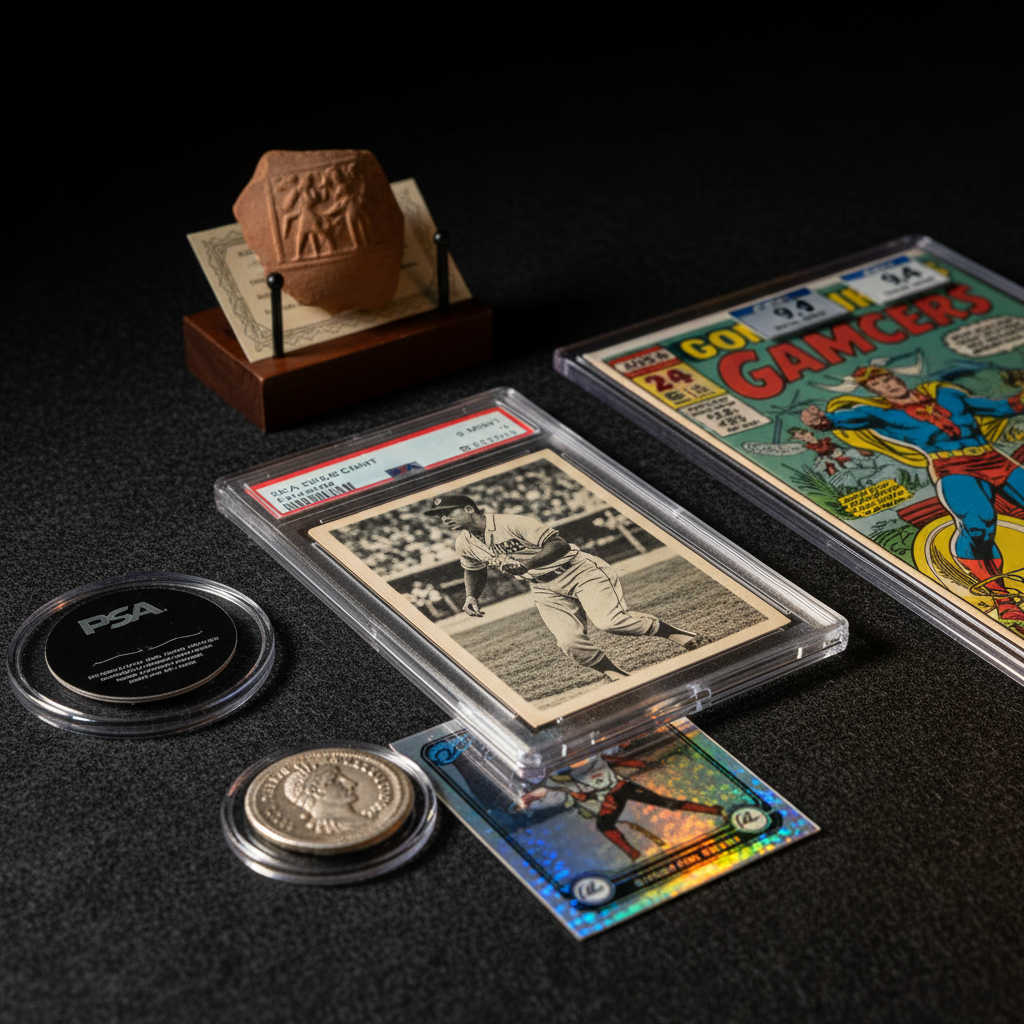
Buying from a personality-driven operation like Sensible Man Antiques is a different proposition than bidding through a major auction house. There's no standardized grading system for mudlarked artifacts — no PSA equivalent for a 17th-century clay pipe or a Roman-era brooch. Due diligence falls on the buyer: ask for find location documentation, check whether reportable items were properly disclosed under the Treasure Act, and understand that conservation condition varies significantly across riverbed recoveries.
That said, the floor for authenticity concerns is meaningfully lower when the dealer is a known, documented mudlarker with a public television record. Fakes and misattributed pieces are a real problem in the broader artifact market. Brooker's two-decade track record is not a guarantee, but it is a material data point.
For collectors drawn to objects with genuine historical weight — pieces that predate the modern antiques trade entirely — operations like Sensible Man Antiques occupy a niche that major auction houses rarely serve well. The lots are too idiosyncratic, the quantities too small, the stories too specific. That's precisely the point. And for the right buyer, it's enough.