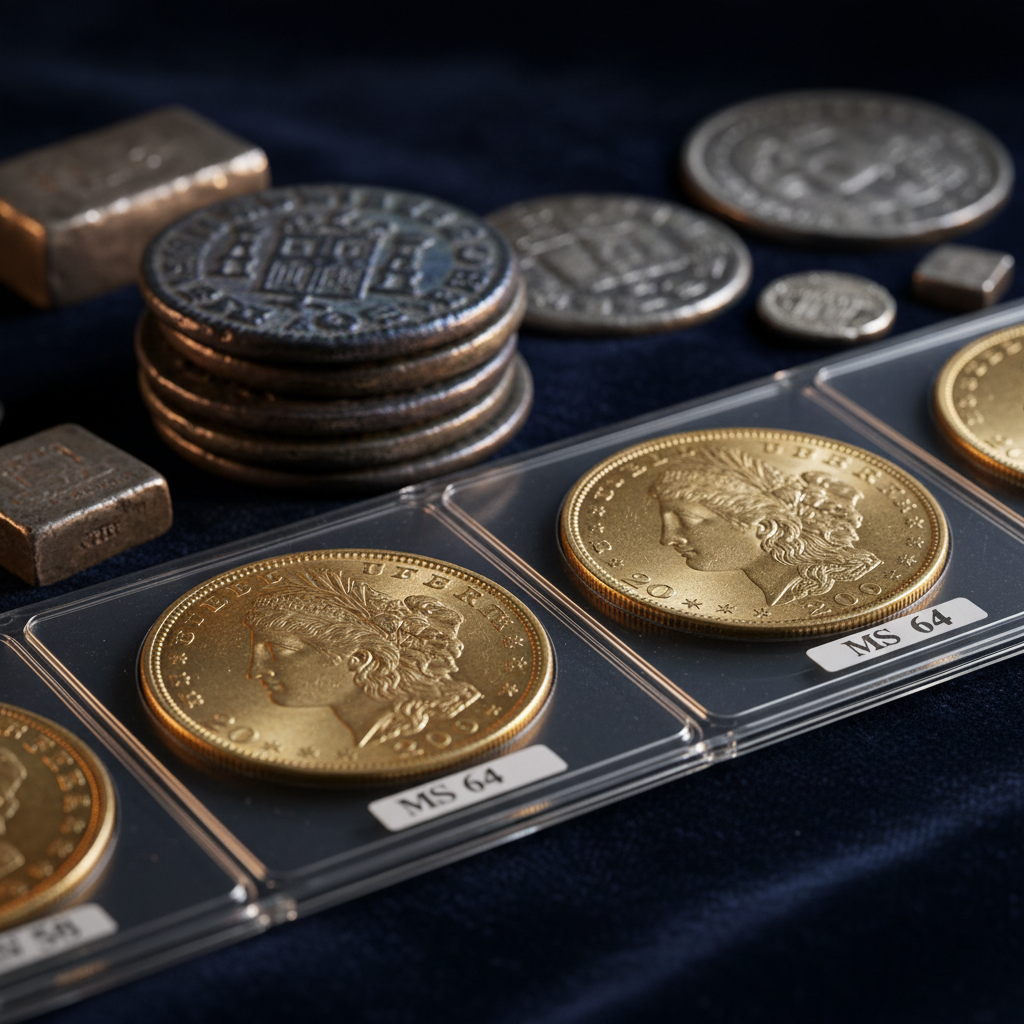
Silver rolls stacked in collector boxes. Neatly sleeved 2×2 flips organized by denomination. A $20 Liberty Head double eagle with what the consignor describes as hidden upside. The April Stevens Coin Auction isn't a headline-grabbing, nine-figure Heritage event — but for the working collector and the patient dealer, it may be exactly the kind of sale worth circling on the calendar.
Stevens has built a quiet reputation for moving estate-fresh material and bulk silver in a format that rewards buyers who do their homework. This sale appears to continue that tradition.
The Silver Rolls: Bulk Opportunity in a Tight Bullion Market
The auction opens with what amounts to a time capsule of mid-century American pocket change: rolls and groupings of silver dimes, quarters, and half dollars, offered in bulk quantities across multiple lots. For bullion-minded buyers, the math is straightforward — spot silver has traded in the $26–$32 range through early 2025, and pre-1965 U.S. 90% silver coins carry a melt premium that makes every roll a floor-priced asset.
But the real play here isn't melt. It's cherrypicking.
Bulk silver lots from estate collections routinely contain coins that have never been properly attributed. A 1916-D Mercury Dime slipping through in a circulated roll lot, a 1932-D Washington Quarter tucked among common dates, or a 1921 Walking Liberty Half with better-than-expected surfaces — these aren't fantasies. They're documented outcomes at exactly this type of regional auction, where lots move fast and attribution is light. Buyers willing to examine the material before bidding, or who understand the key dates cold, have a structural advantage over casual bidders chasing melt value.
The 2×2 flip organization suggests at least some of this material has been sorted by a collector rather than a dealer — which is often a better sign. Dealers pull the obvious winners. Collectors sometimes don't.
The $20 Liberty: Why This Coin Deserves a Second Look
The $20 Liberty Head double eagle is the centerpiece lot, and the framing around it — hidden upside — is either savvy marketing or a genuine attribution opportunity. Possibly both.
Context matters here. The Liberty Head double eagle series, struck from 1850 through 1907, encompasses some of the most historically significant U.S. gold coinage ever produced. Common dates in circulated grades have traded in the $2,100–$2,400 range tracking gold spot, but the series has meaningful variance. A Type I (1850–1866) example with no motto, or a scarce branch mint issue — San Francisco, Carson City, New Orleans — can command multiples of that figure even in lower grades.
Carson City double eagles in particular have demonstrated consistent collector demand. A CC-mint $20 Liberty in VF-20 routinely clears $3,000–$4,500 at major auction houses depending on the date, while premium dates like the 1870-CC — with a mintage under 3,800 — can push well into five figures in any gradable condition. PCGS and NGC population data on the rarer Carson City issues remains thin enough that a single high-grade example can move markets.
Whether this specific Stevens example is a common-date Philadelphia strike or something more interesting won't be known until the lot is examined closely. That ambiguity is precisely the point. Pre-auction due diligence — checking the date, mintmark, and surface quality against PCGS CoinFacts population reports — is the entire job here.
Regional Auctions as a Collector's Edge
There's a broader argument to be made about sales like this one. The collectibles market has bifurcated sharply. On one end: Goldin, Heritage, and Stack's Bowers commanding global audiences, institutional bidders, and prices that reflect maximum market efficiency. On the other: regional and mid-tier auctions where the audience is smaller, the competition thinner, and the occasional mispriced lot slips through.
Stevens sits firmly in that second category — and that's not a criticism. It's a structural feature.
For collectors building a type set on a budget, or dealers sourcing raw material for submission, bulk silver sales and ungraded gold from estate consignments represent the kind of inventory that simply doesn't appear at the major houses. The lots aren't glamorous. The catalog photography is rarely magazine-quality. But the margins can be real.
Gold at near-record spot prices — above $3,000 per troy ounce as of spring 2025 — means any double eagle with collector premium above melt is carrying an elevated floor. That's not a reason to overbid. It is a reason to pay attention.
The April Stevens Coin Auction is the kind of sale that rewards preparation over impulse. Show up knowing your key dates, understand the melt math, and pull the PCGS population reports before the hammer falls.