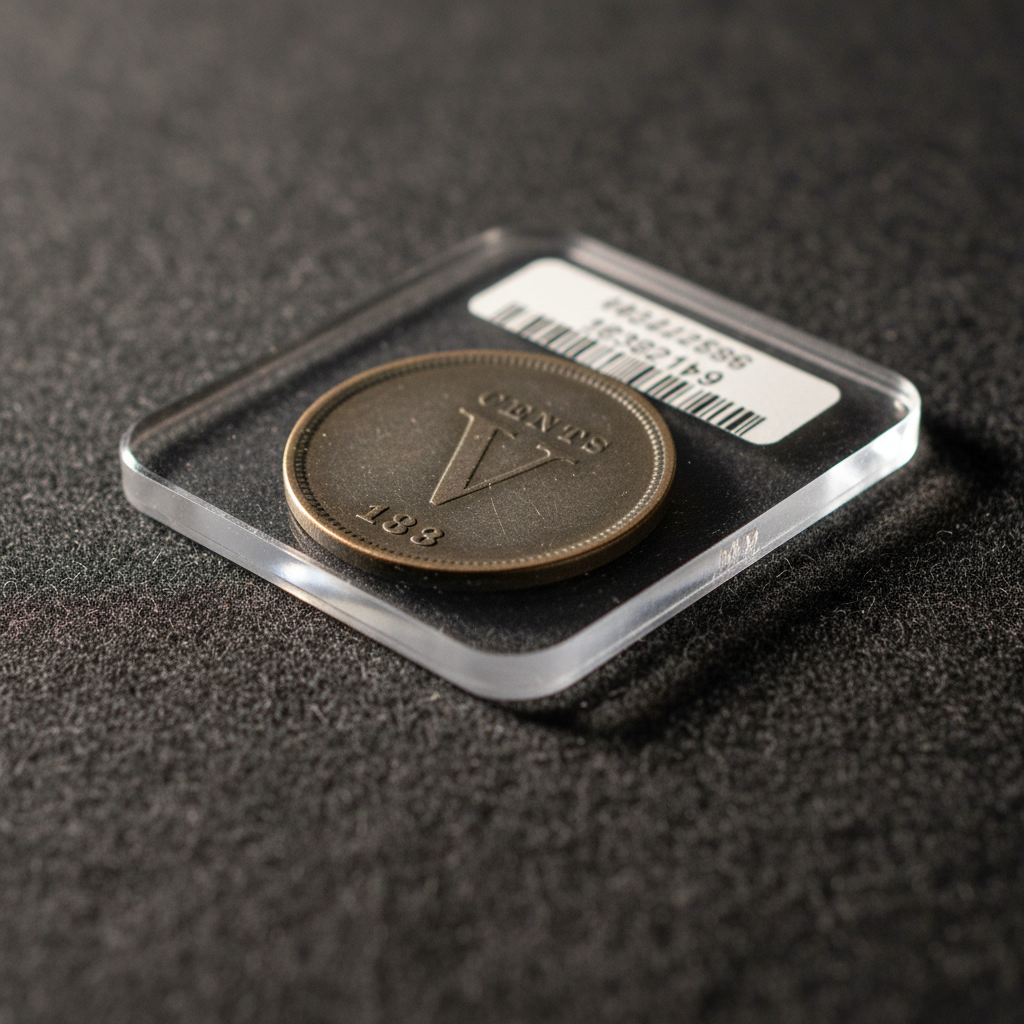
The story is almost too good to be true — and that, it turns out, is precisely the problem. According to numismatic legend, a deaf-mute con man named Josh Tatum gold-plated thousands of 1883 Liberty Head Nickels and passed them off as five-dollar gold pieces, exploiting an embarrassing design flaw in one of the U.S. Mint's most scrutinized coin releases. It's a tale that has been repeated in coin shops, auction catalogs, and collector forums for well over a century. The evidence for it, however, is considerably thinner than the coins themselves.
The Design Flaw That Started Everything
The 1883 Liberty Head Nickel — commonly called the V Nickel — debuted with a reverse that displayed a large Roman numeral V to denote five cents. The problem: the coin carried no denomination word. No CENTS. For a public accustomed to handling five-dollar gold half eagles, which were similar in size and color when gilded, the omission was an open invitation.
The U.S. Mint recognized the error quickly. Mid-year, it revised the design to include the word CENTS beneath the V, creating two distinct varieties for the same year. The no-CENTS version — mintage approximately 5,479,519 — was already in wide circulation by then. Collectors immediately began hoarding the original design, correctly anticipating it would become a one-year type coin. The no-CENTS 1883 nickel is, to this day, one of the most collected 19th-century U.S. coins. In circulated grades, examples trade for $20 to $80. In MS-65 or better, NGC and PCGS-certified specimens regularly bring $400 to over $1,000 at auction, with gem proofs commanding multiples of that.
The gold-plated versions — the so-called Racketeer Nickels — exist in abundance. Gilding the coin was a popular novelty practice of the era, and many survive today. PCGS and NGC both encapsulate them, typically noting the alteration on the label. They carry modest premiums over unaltered circulated examples, largely on the strength of the story attached to them rather than any intrinsic rarity.
Josh Tatum: The Legend Under the Microscope
The Tatum narrative, as traditionally told, goes like this: a deaf-mute man named Josh Tatum gold-plated the no-CENTS nickels to resemble $5 gold pieces, then spent them at shops across the country. When merchants handed back $4.95 in change, Tatum pocketed the difference. When arrested, he was acquitted because he never verbally claimed the coins were anything other than what they were — he simply handed them over and accepted whatever change he received. The punchline, repeated endlessly, is that he never said a word.
It's a perfect story. Legally clever, morally ambiguous, historically colorful. Almost certainly embellished beyond recognition, if not invented wholesale.
Contemporary newspaper archives from 1883 show scattered reports of the gold-plating scheme, and there are passing references to individuals being charged in connection with it. But the specific figure of Josh Tatum — the deaf-mute, the acquittal, the punchline — does not hold up to rigorous primary source scrutiny. Numismatic historian and CoinWeek contributor Lianna Spurrier has examined the documentary record and found the Tatum story to be, at best, a composite legend built around a real but far more mundane episode of coin fraud.
That doesn't make the coins any less interesting. It makes them more interesting, because the legend itself became part of the numismatic record — a rare case where the mythology surrounding a coin has outlasted the facts and become a collectible narrative in its own right.
What the Market Actually Values
From a collecting standpoint, the Racketeer Nickel occupies a peculiar niche. The gold-plated examples are altered coins — technically damaged in the grading world's hierarchy — yet they command a storytelling premium that unaltered circulated examples simply don't. A raw, gold-plated 1883 no-CENTS nickel in decent shape sells for $30 to $75 on the secondary market, occasionally more when accompanied by provenance or display materials that lean into the legend.
The smarter play for serious collectors has always been the unaltered no-CENTS variety in high mint state. Population data from PCGS shows the coin is genuinely scarce above MS-66, and registry-quality examples in MS-67 have brought prices north of $5,000 at Heritage and Stack's Bowers sales. The with-CENTS 1883 nickel, by contrast, is common in all grades and rarely excites the room.
The broader lesson here applies well beyond this one coin: numismatic folklore has real market power. The Racketeer Nickel commands attention in auction descriptions, drives clicks in online listings, and fills pages in reference books — all because of a story that may be more fiction than fact. Whether Josh Tatum was real, embellished, or invented, he has been extraordinarily good for the 1883 Liberty Head Nickel's profile. In collectibles, sometimes the myth is the asset.