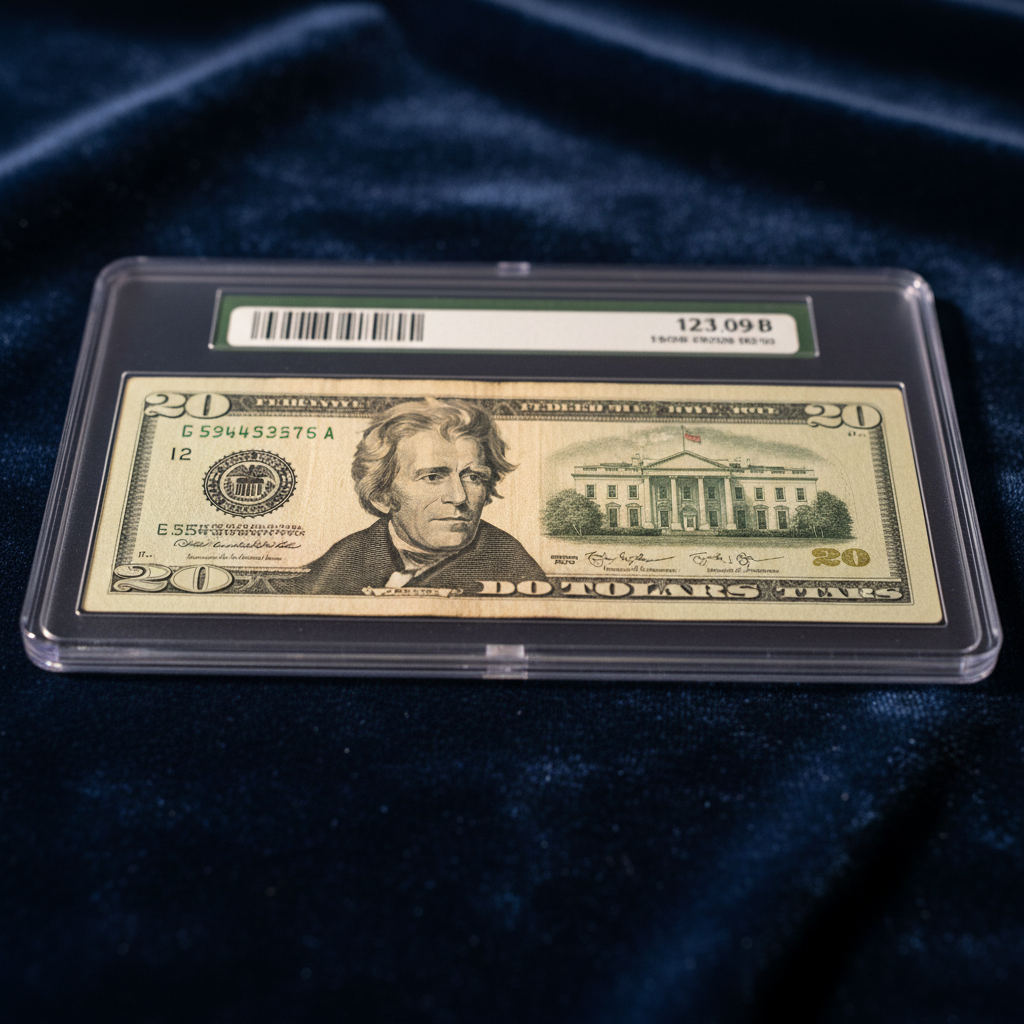
Small-size U.S. currency has always played second fiddle. Collectors chase the Watermelon, the Bison, the Black Eagle — large-format notes with outsized personalities and price tags to match. But dismissing small-size Federal Reserve Notes as mere pocket change is a mistake that serious paper money collectors stopped making years ago. The 1934-B $20 Federal Reserve Note is a case study in why.
Philip Thomas's ongoing Noteworthy Notes series for PCGS has been quietly building the case for small-size currency as a legitimate collector category — not a consolation prize for collectors priced out of the classics. The 1934-B $20 is one of the more instructive examples in that argument.
What Makes the 1934-B Different
The Series 1934-B $20 Federal Reserve Note was issued during the post-war period, bearing the signatures of Treasurer William A. Julian and Secretary Fred M. Vinson. That signature combination alone narrows the window of production considerably. Vinson served as Treasury Secretary for just over two years, from July 1945 to June 1946, before being appointed Chief Justice of the Supreme Court — which means every 1934-B note exists within a tight chronological band.
That matters for rarity. Notes tied to short-tenure Treasury officials often carry lower print runs relative to other series in the same denomination, and the market has historically rewarded that scarcity — though not always consistently, which is part of what makes this series worth watching.
The Federal Reserve district of issue adds another layer of complexity. The 1934-B $20 was produced across multiple Federal Reserve Banks, and survival rates vary significantly by district. Notes from certain banks — particularly those with smaller original print runs or higher circulation rates — command meaningful premiums over their more common counterparts. A well-preserved example from a low-print district can trade at multiples of a comparable note from a high-volume bank.
Grading and the Small-Size Premium
PCGS Currency has become a primary grading authority for small-size notes, and their population data tells a revealing story about the 1934-B $20. Gem examples — notes grading 65 EPQ or better — are genuinely scarce. The EPQ designation (Exceptional Paper Quality) is not a cosmetic label; it signals that a note retains original paper integrity without evidence of pressing, washing, or artificial enhancement. In a series that circulated heavily during the mid-1940s, finding examples that never saw a wallet is a real challenge.
At auction, raw 1934-B $20s in circulated condition move routinely for modest premiums over face — sometimes $30 to $75 depending on grade and district. But certified Gem examples with EPQ designations from desirable Federal Reserve districts have cleared $300 to $800 at major currency auction platforms, with condition rarities pushing higher. Heritage Auctions and Stack's Bowers both handle small-size currency with regularity, and their realized prices for high-grade 1934-B material reflect a collector base that understands the supply constraints.
The broader small-size market has shown steady appreciation over the past decade, driven partly by a generational shift in collector focus. As large-size type notes have become prohibitively expensive for new entrants — a choice Watermelon note can easily exceed $100,000 — small-size Federal Reserve Notes offer a more accessible on-ramp without sacrificing the intellectual depth that serious collectors crave.
The Case for Small-Size Currency as a Collector Category
The 1934-B $20 is not a headline-grabbing rarity. It won't anchor a Heritage session or generate breathless social media coverage. What it represents is something arguably more durable: a collectible with genuine historical context, meaningful condition sensitivity, and a price structure that still rewards patient, knowledgeable collectors.
The signature combination, the district variations, the EPQ scarcity — these are the kinds of details that separate informed collectors from casual accumulators. Small-size currency punishes ignorance and rewards research, which is precisely the dynamic that sustains long-term collector markets.
Large-size notes will always carry more visual drama. But the 1934-B $20 Federal Reserve Note makes its argument quietly, in the details — which, for a certain kind of collector, is the most compelling argument of all.