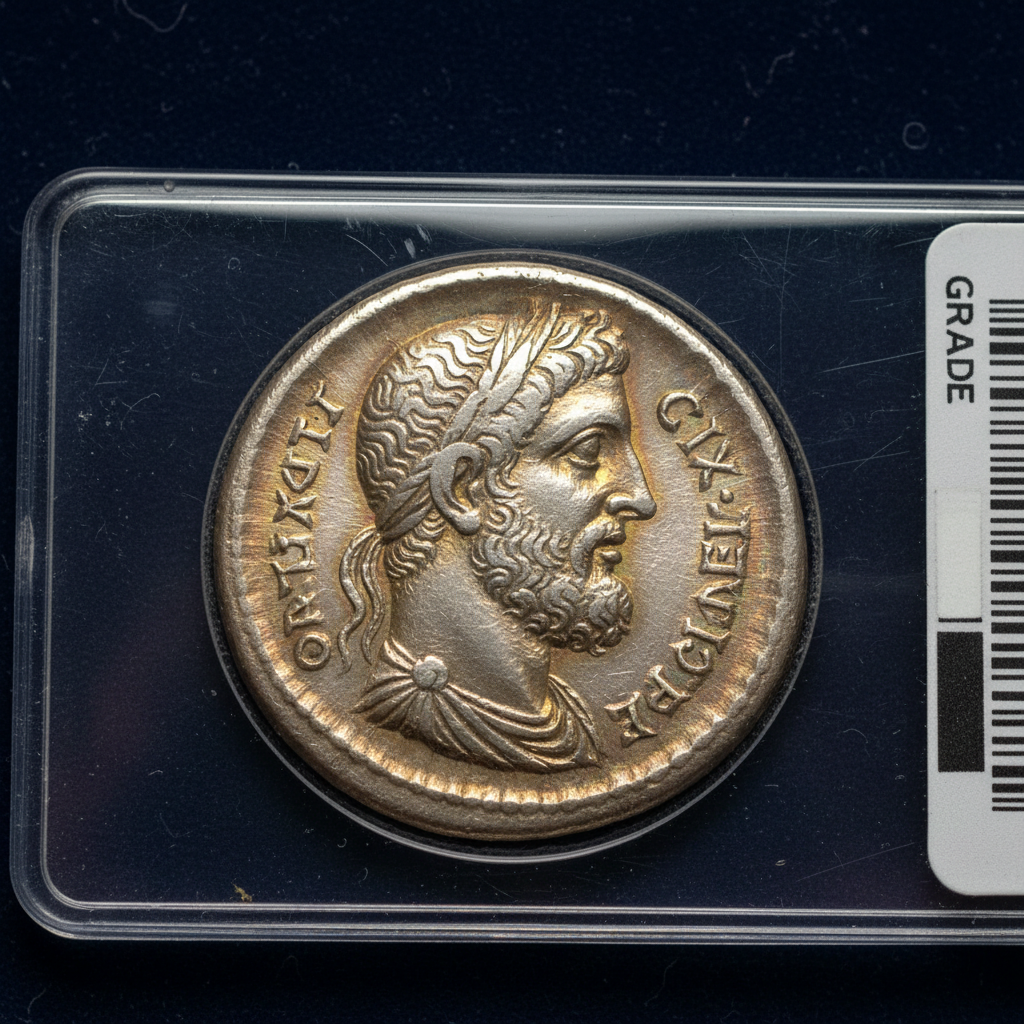
Few ancient Greek coin series confound specialists quite like the didrachms of Oinoanda — a mountain city in southwestern Turkey's Lycian highlands that left behind more questions than answers. A new research paper by Russell A. Augustin of AU Capital Management, LLC, published through CoinWeek, takes a serious run at one of numismatics' more stubborn enigmas, and the findings underscore just how much the ancient coin market rewards deep provenance research.
Oinoanda sat high above the upper valley of the Xanthus River, perched in terrain that would have made it strategically formidable and administratively isolated. Archaeologists have surveyed the site, but the city's monetary history remains poorly documented compared to its more famous Lycian neighbors — Xanthos, Patara, Myra. That obscurity is precisely what makes its didrachms so compelling to the specialist collector.
What Makes These Coins So Difficult to Attribute
The core problem with Oinoanda's coinage is attribution. Ancient Lycia operated as a loose confederation of city-states, each with its own mint activity, and the region's coins frequently share iconographic conventions — dynastic portraits, Lycian script legends, and reverse types that echo across multiple cities. Pinning a specific didrachm to Oinoanda rather than a neighboring mint requires painstaking die analysis and, ideally, find-spot data that rarely survives the antiquities trade intact.
Didrachms — two-drachm silver pieces — were workhorse denominations in the Greek world, substantial enough for significant transactions but not as rare as the large dekadrachms that dominate auction headlines. For Lycia specifically, the silver coinage of the fifth and fourth centuries BC represents a distinct regional tradition, blending Greek monetary conventions with indigenous Lycian artistic sensibilities. That hybrid character is part of the appeal.
The population of certified Oinoanda didrachms across the major grading services — NGC Ancients being the dominant certifier in this space — is thin enough that individual specimens carry outsized research significance. Unlike, say, Athenian owls or Syracusan decadrachms, where hundreds of certified examples allow for robust population comparisons, Oinoanda material surfaces rarely. When a genuine example comes to auction through Heritage Auctions, Stack's Bowers, or the major European houses like Numismatica Ars Classica, it draws immediate attention from a small but intensely focused collector base.
The Market for Obscure Lycian Silver
Ancient coin collecting has bifurcated sharply over the past decade. On one end, trophy coins — the Dekadrachms of Syracuse, the Naxos tetradrachms, the great Hellenistic portrait coins — have seen price appreciation that rivals blue-chip numismatics anywhere. A Choice EF Syracusan dekadrachm can clear $500,000 at auction without blinking. On the other end, the deep specialist market for regional and civic coinage — Lycian dynastic silver, Pamphylian bronzes, Pisidian rarities — operates on entirely different logic. Rarity matters enormously, but so does scholarly documentation.
That's where Augustin's research fits into the collector ecosystem. Papers like this one don't just satisfy academic curiosity — they create market infrastructure. A well-documented Oinoanda didrachm with die links established in published literature is a fundamentally different asset than an undocumented piece with a vague old-collection provenance. The former has a scholarly anchor. The latter is just a pretty silver coin with a complicated story.
For dealers and auction specialists, attribution research on obscure civic issues is the unglamorous work that underpins long-term market confidence. The coins don't get more valuable because a paper was written about them — but the paper makes it possible to know what you actually have.
Why Oinoanda Deserves More Attention
Lycia as a collecting category is underappreciated relative to its historical significance. The region was one of the earliest adopters of coinage in the Greek world, minting silver as far back as the late sixth century BC under local dynasts whose names — Kuprlli, Kherei, Erbbina — appear in Lycian script on the coins themselves. The Lycian language, an Indo-European tongue unrelated to Greek, was still being used on coinage well into the fourth century BC, giving these pieces a linguistic rarity that complements their numismatic interest.
Oinoanda specifically is known to modern scholars largely through its extraordinary philosophical inscriptions — the Epicurean inscription of Diogenes of Oinoanda, carved into a stoa wall in the second century AD, is one of the longest ancient inscriptions ever discovered. A city that went to the trouble of inscribing Epicurean philosophy on stone for public consumption was clearly not a provincial backwater. Its coinage deserves commensurate scrutiny.
Augustin's paper is a reminder that the most interesting work in ancient numismatics isn't happening around the famous series. It's happening in the margins — in the mountain cities, the dynastic mints, the civic issues that most auction catalogs relegate to footnotes. For collectors with the patience to develop genuine expertise in a narrow area, that's where the real opportunity lives. The Oinoanda didrachm won't headline a Heritage session anytime soon. But the collector who understands exactly what one is — and what it isn't — will always have the edge.