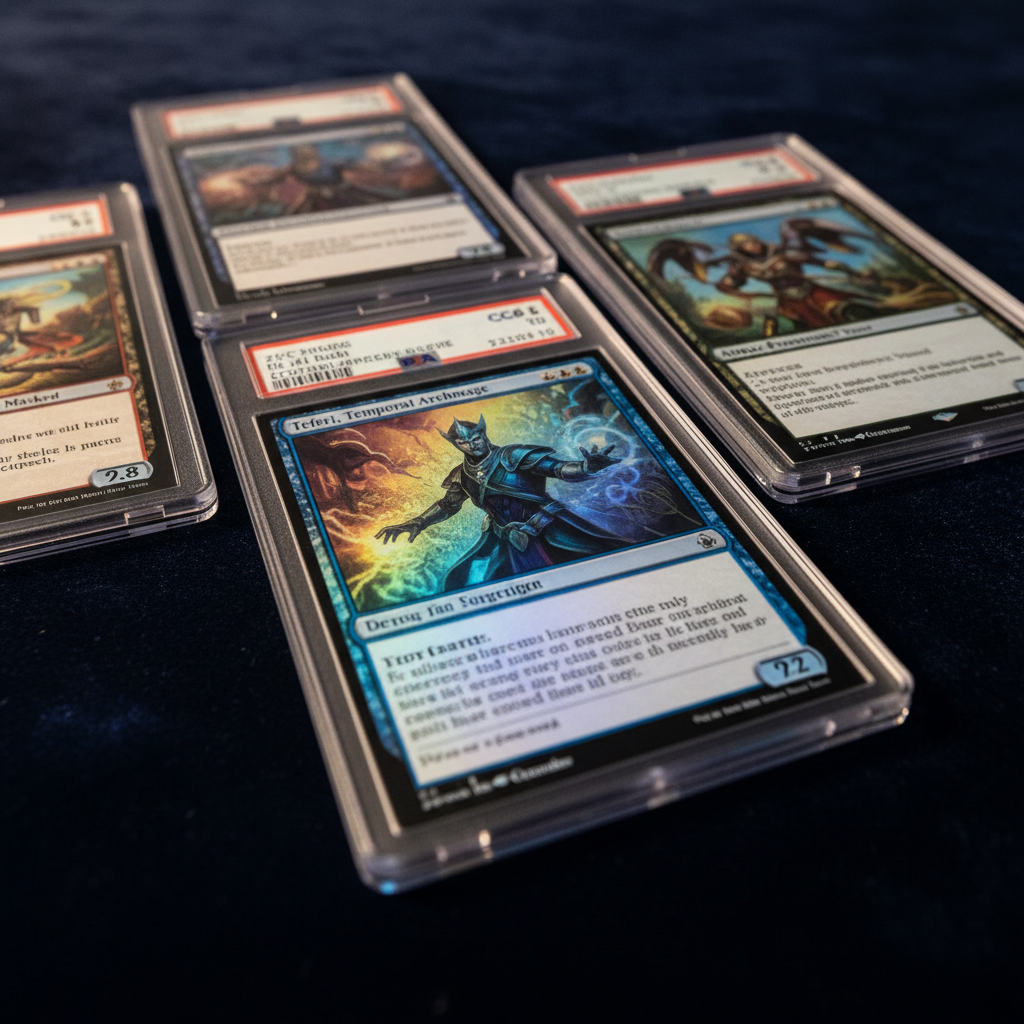
Atraxa, Praetors' Voice still runs the table. Nearly a decade after her debut, she remains the default answer when someone asks which commander anchors a Superfriends build — and the secondary market agrees. Near-mint copies of the original Commander 2016 printing regularly clear $18–$24 on TCGPlayer, while the Double Masters 2022 borderless treatment has settled around $30–$40 depending on condition. That kind of sustained demand doesn't happen by accident. It happens because the card is genuinely, stubbornly correct.
But the 2026 Commander metagame is more crowded than it's ever been. Three sets — Tarkir: Dragonstorm, Aetherdrift, and Lorwyn Eclipsed — have introduced new planeswalker synergies, new proliferate enablers, and new commanders that are forcing serious deckbuilders to revisit assumptions they've held for years. The Superfriends archetype, which wins by stacking planeswalker ultimates and controlling the board through loyalty-ability attrition, has never had more viable options at the helm.
Why Commander Selection Is the Whole Ballgame
In a planeswalker-heavy build, your commander isn't just a backup threat. It's the engine. The best Superfriends commanders do one of three things: they generate resources that keep your walkers alive longer, they accelerate loyalty counters so ultimates arrive ahead of schedule, or they provide blanket protection that makes your board state genuinely difficult to dismantle.
Atraxa does all three, which is why she's never been dethroned. Proliferate triggers at the end of every turn cycle. In a deck with six or eight planeswalkers on the board, that's not incremental — it's geometric. A planeswalker that would normally ultimate in five turns arrives in three. That compression is worth every dollar of her price tag.
The competition, though, is real. Atraxa, Grand Unifier — the Phyrexia: All Will Be One variant — offers a different angle, trading the proliferate engine for a massive card-advantage trigger on entry. At $12–$18 in raw form, she's the budget-conscious path into five-color Superfriends, and her raw power level is legitimately close to the original. The market hasn't fully caught up to how good she is in this archetype specifically.
The Contenders Reshaping the Format
Lorwyn Eclipsed, released earlier this year, quietly introduced a commander that the Superfriends community has been dissecting for months. Without overstating it: the set added meaningful proliferate redundancy in colors that previously lacked it, which opens up new two- and three-color configurations that were previously unplayable at a competitive table. Dimir Superfriends — something that would have been a fringe experiment two years ago — is now a real conversation.
Aetherdrift contributed on the protection side. Several new enchantments and creatures from that set provide the kind of passive loyalty shielding that lets your walkers survive an extra turn cycle, which in a proliferate deck is often the difference between ultimating and getting picked off. Savvy builders are already treating these cards as near-staples in the 99.
Tarkir: Dragonstorm is the most interesting case. Its contributions to Superfriends are less obvious — the set skews toward combat-centric strategies — but a handful of its modal spells have found homes in Superfriends sideboards as flexible answers that don't dilute the planeswalker density. The best Superfriends decks in 2026 are leaner and more resilient than their predecessors, and Tarkir cards are part of why.
From a collectibility standpoint, the cards driving these new configurations are still early in their pricing cycles. Lorwyn Eclipsed in particular launched with a robust collector booster lineup, and the premium treatments on its planeswalker-adjacent rares haven't stabilized yet. That's either an opportunity or a warning, depending on how the metagame settles over the next two quarters.
The Five Commanders Worth Building Around
- Atraxa, Praetors' Voice — The undisputed benchmark. Proliferate every turn, four colors of access, and a decade of proven results. No other commander in this archetype has her floor.
- Atraxa, Grand Unifier — The value-oriented alternative. Draws an absurd number of cards on entry and curves naturally into a five-color shell. Underpriced relative to her power level.
- Jodah, the Unifier — The legendary-matters angle doubles as a Superfriends enabler in five colors. His cascade-adjacent trigger generates tempo that planeswalker decks desperately need in the early turns.
- Sisay, Weatherlight Captain — Tutors directly for legendary permanents, which in a Superfriends deck means fetching the exact planeswalker your board state requires. Slower than Atraxa but more surgical.
- The new Lorwyn Eclipsed commander — Still being stress-tested at high-level pods, but early results suggest genuine viability in a Dimir shell. Watch the price trajectory on the showcase treatment over the next 60 days.
The Superfriends archetype has survived format changes, power-level debates, and years of table politics that make planeswalker-heavy decks a lightning rod for early aggression. It survives because the core loop — protect your walkers, proliferate your way to ultimates, win through inevitability — is fundamentally sound. The 2026 card pool has made that loop faster, more resilient, and more interesting to build around than at any point in the format's history. The only question is which commander you trust to run it.