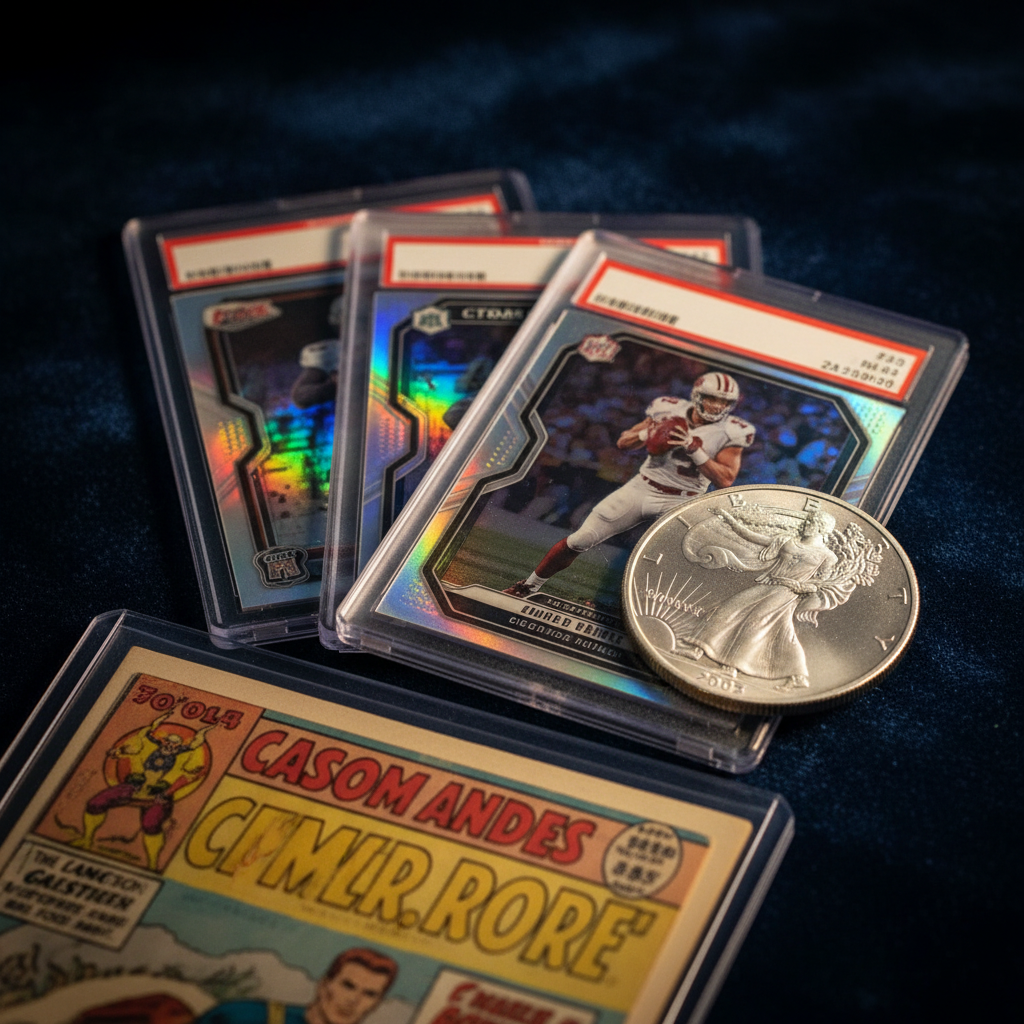
Topps is bringing its Chrome MVP Buyback Program to the NFL for the 2025 season — a meaningful expansion of a concept that debuted in baseball two years ago and quietly became one of the more collector-friendly redemption mechanics in the modern hobby.
The program works by pulling authentic vintage Topps cards from the secondary market, having them stamped or certified as buybacks, and reinserting them into new product packs. For football collectors, that's a significant development. The NFL card market has been dominated by Panini for years, and Topps — which reclaimed its NFL license ahead of the 2023 season after a decade away — is still rebuilding its footprint with serious collectors. This program is a direct play for that audience.
What the Baseball Version Established
When Topps launched the Chrome MVP Buyback Program in baseball in 2023, the concept was straightforward but the execution had real teeth. Vintage cards — often from the 1980s and 1990s — were sourced, authenticated, and stamped with foil buyback designations before being seeded into hobby boxes. The appeal wasn't just nostalgia. A buyback of a 1989 Topps Ken Griffey Jr. rookie, for example, carries different weight than a reprint insert. It's the actual card, with actual age and actual history.
The baseball version generated genuine secondary market activity. Buyback copies of key rookies and star cards traded at premiums over their unstamped counterparts in some cases — particularly for high-grade examples where the buyback stamp didn't meaningfully impact the surface. Grading services including PSA and BGS have accepted buyback cards for submission, though population data on NFL buybacks won't exist until product hits the market.
The Chrome branding matters here too. Chrome MVP isn't a base-level product. Positioning the buyback program under the Chrome umbrella signals that Topps intends to treat this as a premium mechanic, not a filler insert. Chrome's refractor technology and collector recognition give the program a higher ceiling than it would have under a generic flagship release.
The NFL Angle — and Why the Timing Is Deliberate
Topps lost its NFL license to Panini in 2016 and spent the better part of seven years on the sidelines of football cards. The company's return for the 2023 season was a major story in the hobby, but re-establishing collector trust takes time. Panini built deep loyalty through products like Prizm, Select, and National Treasures, and its rookie card ecosystem became the de facto standard for NFL player investment.
Topps has been methodical in its NFL comeback — leaning into its Chrome heritage and differentiating through design and program innovation rather than trying to out-Prizm Prizm. The buyback program fits that strategy. It gives Topps something Panini structurally cannot offer: access to pre-2016 Topps NFL cards with genuine vintage provenance. A 1984 Topps Dan Marino rookie or a 1976 Topps Walter Payton rookie as a buyback insert would be a legitimate pull. No Panini product can compete with that specific history.
The collector base most likely to engage with this program skews older — collectors who grew up with Topps football cards and have nostalgia for that era. But the buyback format also appeals to investors who understand that scarcity and authenticity drive long-term value. If Topps seeds these carefully and keeps population numbers tight, the secondary market could respond accordingly.
What Collectors Should Watch For
A few variables will determine whether this program delivers or disappoints. First is card selection — which vintage Topps NFL cards are being sourced, and from what eras. A buyback program built around 1990s commons won't move the needle. One that sources 1960s and 1970s Hall of Famer cards in collectible grades will.
Second is the stamp execution. Buyback stamps that obscure key card elements — the player image, the signature area on autograph cards — are a recurring criticism of the format across manufacturers. If Topps applies the foil tastefully, graders and collectors will accept it. If it's heavy-handed, it undermines the entire premise.
Third is seeding ratio. Scarcity is the engine of buyback value. If these cards are too common, they'll trade at modest premiums and fade from conversation. If they're genuinely rare — think one per case or rarer — they become genuine hits.
Topps has the vintage inventory and the brand equity to make this work. The football card market is paying attention.