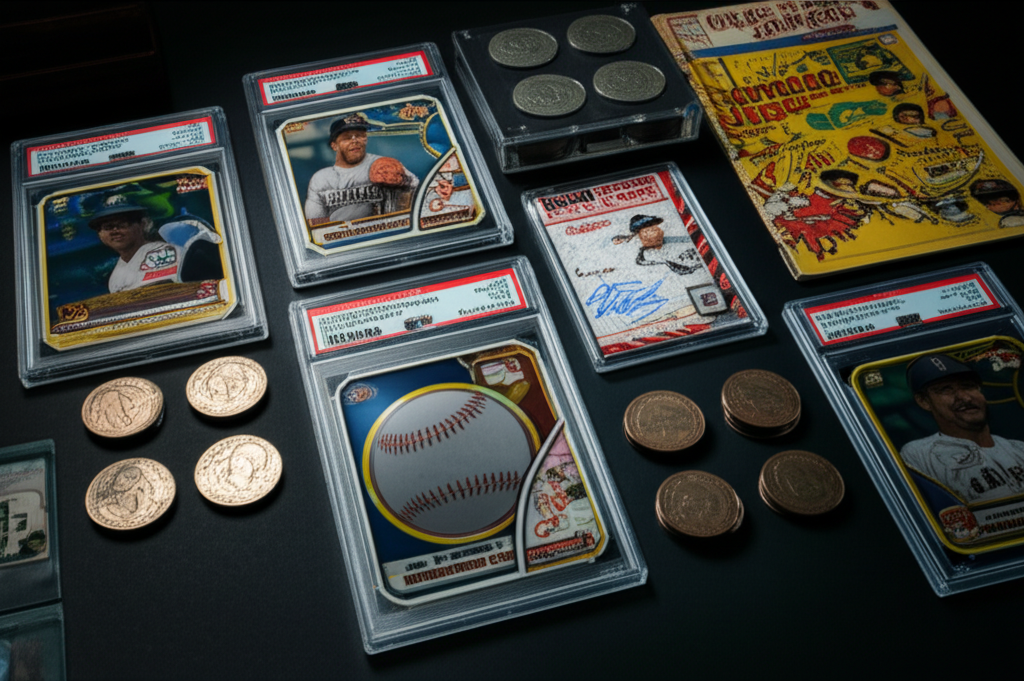
The World Baseball Classic is delivering more than international drama on the field — it's generating a legitimate collectibles market off it. With Topps dropping official WBC team sets, Fanatics rolling out a full autographed memorabilia line, and the tournament's official program already circulating among collectors, the WBC is shaping up as one of the more underrated collecting opportunities in the modern hobby calendar.
What's on the Market
Topps has released World Baseball Classic team sets covering the tournament's participating nations, giving collectors a rare opportunity to chase cards featuring international superstars in uniforms that rarely appear in the mainstream Topps flagship lineup. For players like Shohei Ohtani (Japan), Fernando Tatis Jr. (Dominican Republic), and Mike Trout (USA), WBC-specific cardboard represents a distinct uniform variant that simply doesn't exist anywhere else in the hobby — and that scarcity has historically driven long-term value. Topps' involvement lends the sets official licensing credibility, which matters enormously for grading eligibility and resale potential.
On the memorabilia side, Fanatics has launched a dedicated WBC autograph line, which includes signed jerseys, helmets, and photographs featuring players representing their home countries. Given Fanatics' exclusive agreements with major sports leagues and its growing grip on the licensed memorabilia space, the authentication infrastructure here is solid — items come with Fanatics Authentication, which has become increasingly recognized by third-party graders and auction houses. Meanwhile, the official WBC tournament program has also entered the collector market, offering a low-cost entry point with strong historical document appeal — particularly for raw collectors and vintage-minded hobbyists who know that today's programs become tomorrow's grail pieces.
Why This Matters for the Hobby
The WBC has historically been a slow burn for collectors. The 2006 and 2009 tournaments generated modest memorabilia markets at the time, but WBC-specific cards and signed items from those eras have appreciated meaningfully as the tournament's cultural cachet has grown. A 2009 Topps WBC autograph of Ichiro Suzuki, for example, now commands serious secondary market attention — a reminder that international tournament collectibles often lag the broader market before catching up sharply. The 2023 edition, featuring a roster of active MLB superstars playing under genuine competitive pressure, has the makings of the most collectible WBC to date.
The Topps-Fanatics relationship is also worth watching here. Following Fanatics' acquisition of Topps' sports trading card business and its broader consolidation of the licensed collectibles space, WBC product is now produced and distributed within a vertically integrated ecosystem. That means tighter print run controls, more consistent authentication chains, and — critically for investors — potentially lower population counts on high-grade examples than the hobby saw in earlier WBC releases. Low pop plus high-profile players in rare uniforms is a formula the market has rewarded repeatedly. PSA and BGS populations on WBC-specific Topps issues from prior years remain thin, and if 2023 follows that pattern, early acquisitions could look very smart in three to five years.
The program angle is equally compelling from a different collector demographic. Official tournament programs are physical artifacts of a specific historical moment — they don't get reprinted, they age, and the best-preserved copies become the standard-bearers for the item's grade ceiling. CGC Comics & Magazine and similar grading services have increasingly embraced sports programs as gradeable items, and a pristine, unread copy of the 2023 WBC official program could represent a sleeper pickup at current prices.
Collector Takeaway
If you're not paying attention to WBC collectibles, you're leaving a niche opportunity on the table. The play here is straightforward: prioritize Topps WBC cards featuring Ohtani, Trout, and Tatis Jr. in their national team uniforms — these are the players whose cards move markets, and the WBC uniform variant adds a scarcity premium that standard MLB releases can't replicate. For autographed Fanatics memorabilia, focus on signed items from players who had breakout tournament performances; those narratives drive value. And don't sleep on the program — pick up a clean, unhandled copy now, store it flat in a Mylar sleeve, and revisit grading options in 12 months.
The WBC isn't the Super Bowl of the hobby — yet. But the 2023 tournament's viewership numbers, combined with the star power on display and the Topps-Fanatics machine behind the product, suggest this wave is worth riding early rather than chasing after the market has already priced in the excitement.