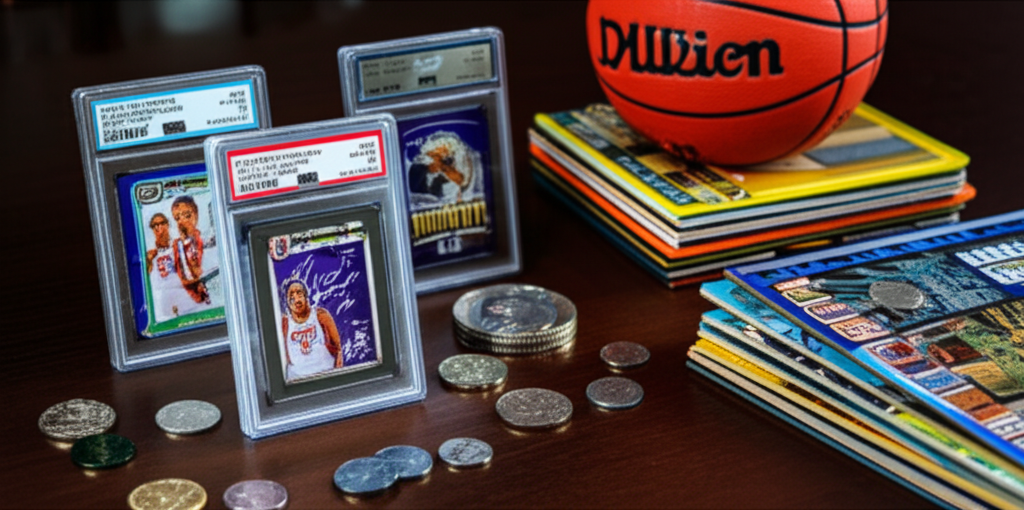
Topps Now is coming to the NBA. For the first time, the on-demand print model that reshaped how collectors engage with baseball and soccer cards is making its basketball debut with a 2025-26 Topps Now Basketball release — and the timing couldn't be more deliberate. Fanatics and Topps have been steadily expanding the Now platform across sports since Fanatics acquired the Topps brand in 2022, and basketball was always the highest-profile gap in that portfolio.
The format is straightforward for anyone who's followed Topps Now in other sports: cards are available for a limited window — typically 24 to 48 hours — tied to specific on-court moments, milestones, or weekly highlights. Final print runs are determined entirely by order volume during that window. No artificial scarcity, no pack odds. What you see is what you get, and the market prices cards accordingly once the window closes.
How the On-Demand Model Works in Practice
The print-run mechanic is the defining feature here, and it cuts both ways. Low-demand cards from role players or mid-market teams can close with print runs under 100, making them genuinely scarce. High-profile moments — a scoring record, a playoff clincher, a debut card for a top rookie — can generate thousands of orders, which compresses secondary market premiums significantly.
In baseball, Topps Now has produced some of its most valuable cards precisely when demand spiked unexpectedly. A Ronald Acuña Jr. Topps Now card from his 40-40 season milestone in 2023 closed with a relatively modest print run and has traded hands on eBay in graded PSA 10 condition for multiples of its original issue price. The inverse is equally true — high-profile but widely anticipated moments draw massive order volumes, and those cards rarely appreciate meaningfully on the secondary market.
Basketball introduces a wrinkle the baseball version doesn't face as acutely: the sheer density of marquee moments per week. The NBA calendar runs from October through June with nightly games, and stars like Nikola Jokić, Luka Dončić, and Victor Wembanyama generate highlight-worthy performances on a near-weekly basis. The editorial decisions about which moments get cards — and which don't — will matter enormously to both the platform's credibility and the secondary market value of individual issues.
Team Sets and Checklist Structure
The release includes team set lists alongside the moment-based individual cards, giving collectors a more structured entry point into the product. Team sets have been a consistent feature of Topps Now across other sports, and they tend to attract a different buyer profile — team collectors and prospectors who want broad roster coverage rather than chasing specific highlight cards.
Pricing on Topps Now cards has historically sat in the $9.99 to $14.99 range per card at the point of sale, with autograph and parallel variants commanding higher price points. Those parallels — typically gold, black, and printing plate versions — carry their own print run caps independent of the base card order volume, and they've consistently outperformed base cards on the secondary market across every sport the platform covers.
The autograph component will be the real test for the basketball edition. Topps Now auto cards in baseball have included some genuinely compelling signed inserts, but securing NBA player signatures at scale is a different negotiation entirely given the league's licensing structure and the competing demands from Panini — now rebranded under the Fanatics umbrella — which has historically dominated NBA licensed product.
What the Secondary Market Will Be Watching
Collectors who've tracked Topps Now across other sports know the playbook: the first cards in any new sport or season carry a novelty premium that fades quickly. The inaugural Topps Now baseball cards from 2016 trade at multiples of later-run equivalents purely on first-mover scarcity. Expect the same dynamic here — the first cards issued under the 2025-26 basketball program will likely carry outsized secondary market interest regardless of the player or moment depicted, simply because they're first.
Beyond the novelty premium, the long-term health of this product depends on Topps Now basketball becoming a reliable, editorially sharp chronicler of the NBA season. The baseball version earns its audience by moving fast — cards are typically available within 24 hours of the moment they commemorate. If the basketball version can match that cadence through a 30-team, 82-game regular season and into the playoffs, it has a legitimate audience waiting for it.
The on-demand model doesn't guarantee collectibility. It guarantees transparency. Whether that's enough to carve out meaningful shelf space in a basketball card market already crowded with Prizm, Select, and Hoops remains the open question — and the answer will be written one print run at a time.