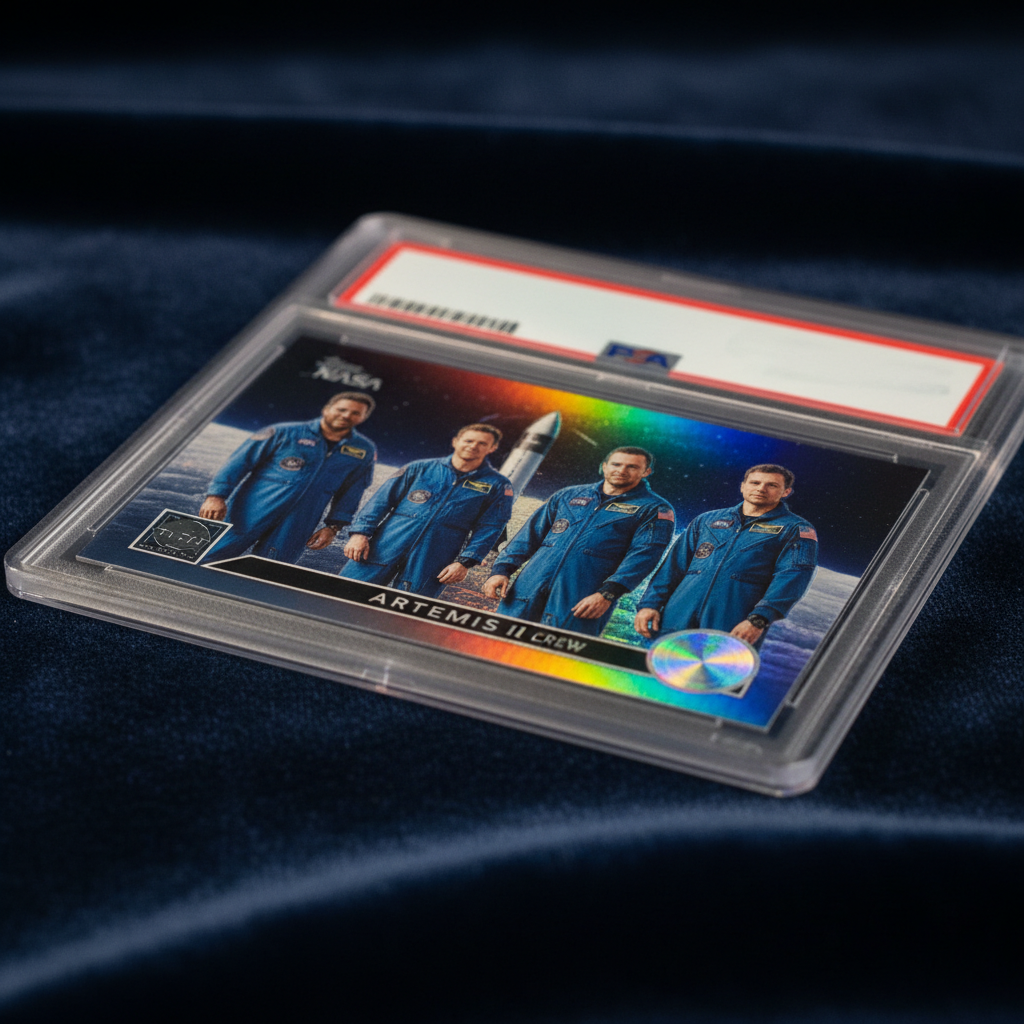
Topps is sending the Artemis II crew to the moon — and into binders. The trading card giant has released a Topps Now print-on-demand card commemorating NASA's upcoming Artemis II mission, the first crewed lunar flyby since Apollo 17 in 1972. It's a bold subject for a card brand better known for baseball diamonds than lunar orbit, and it raises a legitimate question: does space exploration have a real secondary market, or is this a novelty play?
The answer, based on how similar Topps Now drops have performed, is more complicated than the skeptics would have you believe.
The Card and What Topps Is Doing Here
Topps Now operates on a strict print-on-demand window — typically 24 to 72 hours — which means the final print run is determined entirely by orders placed during that window. No overproduction. No warehouse surplus. The model was built for timeliness, originally designed to capture same-day MLB highlights, and Topps has since stretched it to cover cultural moments ranging from championship parades to political milestones.
The Artemis II card features the four-person crew: Reid Wiseman, Victor Glover, Christina Koch, and Canadian astronaut Jeremy Hansen. The mission itself is historic on multiple fronts — Koch will become the first woman to travel to lunar distance, and Hansen the first Canadian. That kind of milestone tends to matter to collectors who think about long-term significance, not just short-term flips.
Pricing on standard Topps Now releases typically falls in the $9.99 to $14.99 range, keeping the entry point accessible. But accessible doesn't mean unimportant. The print-on-demand structure is precisely what gives these cards their secondary market legs — or kills them entirely. A run of 500 looks very different from a run of 8,000 three years down the road.
What the Space Card Market Actually Looks Like
Space-themed collectibles have a longer, stranger history than most collectors realize. NASA mission patches, signed photographs, and flown artifacts have traded through Heritage Auctions and RR Auction for years, with premium signed items from Apollo-era astronauts routinely clearing four figures. A signed Neil Armstrong photograph in strong condition can command $20,000 or more at auction. That's the ceiling of the category — and it's a ceiling built entirely on scarcity and historical weight.
Trading cards are a different animal. The 2021 Topps Space set — a standalone product covering NASA history — generated genuine collector interest at release but has largely flatlined on the secondary market. Raw copies of base cards trade for under a dollar. The autographed astronaut parallels are a different story, with signed cards of active NASA figures holding modest but real premiums.
The Topps Now format sidesteps some of those concerns by manufacturing scarcity from the jump. If the Artemis II card prints at under 1,000 copies, it enters a very different conversation than a base card from a mass-market set. PSA and BGS have both graded Topps Now cards, and gem-mint examples from low-population runs do carry meaningful premiums over raw copies — particularly when the underlying subject ages into genuine historical significance.
That last part is the bet Topps is making. Artemis II hasn't launched yet. If the mission succeeds and becomes a cultural touchstone — the kind of moment that gets referenced in textbooks — a card produced at the time of the announcement, with a verifiable low print run, becomes a genuine artifact. If the mission is delayed again or fades from public consciousness, these sit in dollar bins alongside every other well-intentioned commemorative release.
The Collector's Calculation
For the speculator, the math here is straightforward: low cost of entry, defined scarcity, subject matter with real historical upside. The risk is equally clear — space cards don't have the established collector base that baseball or basketball cards do, and cultural commemoratives are notoriously hard to predict.
For the enthusiast collector, the calculation is simpler. This is a card marking a mission that hasn't happened since 1972. The crew includes historic firsts. The Topps Now window means the print run will be finite and documented. Whether it's a $10 purchase for a binder or a submission to PSA for long-term storage, the card represents exactly the kind of moment-in-time snapshot that makes the hobby interesting beyond sports.
Topps has been aggressive about expanding the Topps Now brand into non-sports territory — entertainment, politics, cultural events — with mixed commercial results. The Artemis II card feels like one of the stronger conceptual fits. Space exploration is aspirational in a way that translates across demographics, and the Artemis program has a built-in audience of NASA enthusiasts who may not own a single sports card but would absolutely frame a commemorative piece of cardboard marking humanity's return to the moon.
Whether the market agrees is a question only the print run will answer.