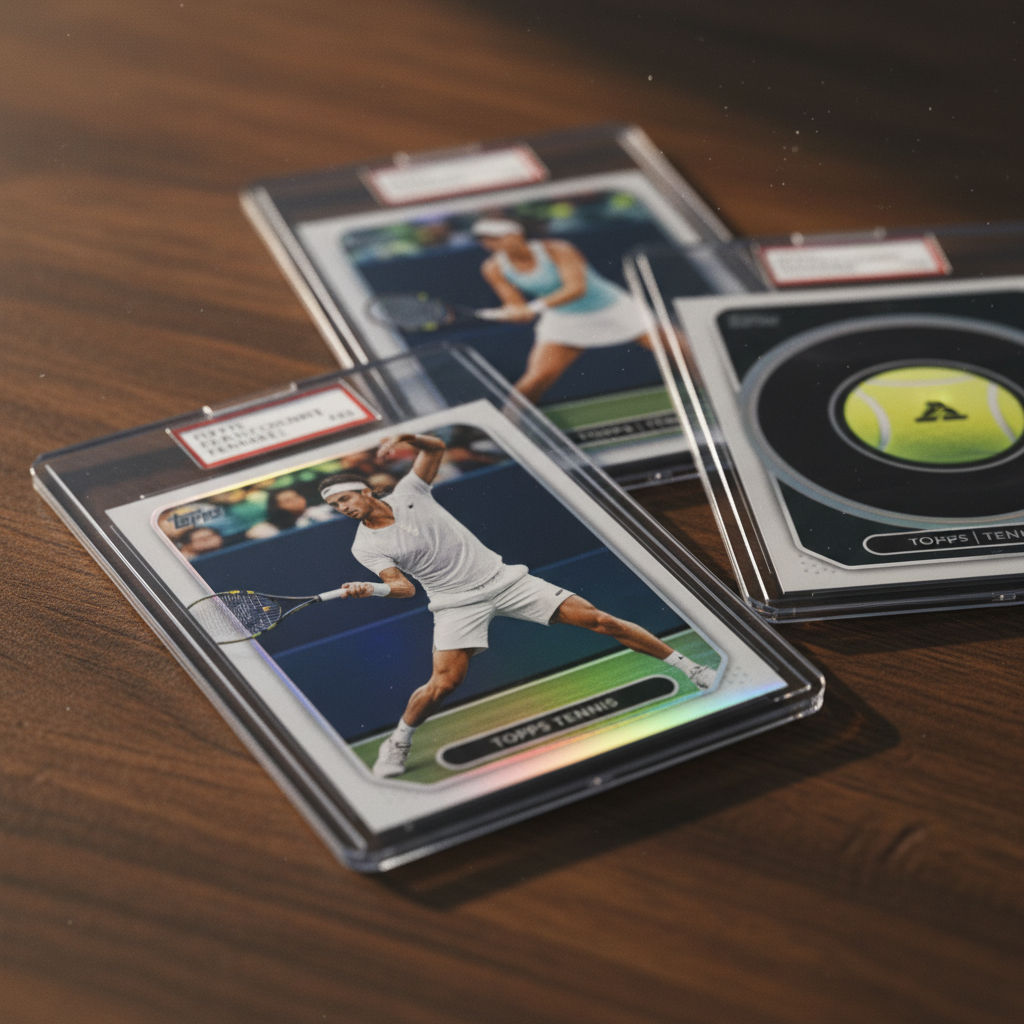
Topps Now Tennis is back for 2026, and the on-demand model that made the product a sleeper hit among tennis collectors is carrying forward with the same print-to-order structure that keeps supply genuinely scarce. No pack ripping, no case breaking — just a window, a checklist, and whatever the market demands.
For the uninitiated, Topps Now operates on a limited-time ordering window, typically 24 to 72 hours per card. Once the window closes, the print run is locked. That mechanism is everything in this hobby. It's the difference between a card that gets buried in a warehouse and one that trades at a premium because collectors know exactly how many exist.
What's on the Checklist
The 2026 release follows the established Topps Now tennis framework: base cards tied to live tournament moments, short prints for standout performances, and autograph variants for the marquee names. The on-demand nature means the checklist builds in real time alongside the tennis calendar — cards commemorating Grand Slam results, milestone wins, and ranking achievements get issued as the season unfolds rather than in a single pre-packaged set.
Short prints are the chase in this product. Topps has historically tiered its Topps Now SPs at significantly lower print runs than base cards — sometimes a fraction of the total. A base card from a popular ATP or WTA moment might close with a few hundred copies printed, while an SP variant of the same subject could land in the double digits. That gap is where secondary market premiums are born.
Autographs, when they appear, are the headline items. Tennis has historically been an underserved category in the trading card market, which cuts both ways — the collector base is smaller than basketball or baseball, but so is the supply of certified autos for top-tier players. A certified on-card signature from a current Grand Slam champion in a product with a verifiable, locked print run is a legitimate asset, not just a novelty.
The On-Demand Model and What It Means for Value
The Topps Now structure is one of the more collector-friendly formats in modern cards, and that's not a soft endorsement — it's a structural argument. Traditional hobby products flood the market with hundreds of thousands of base cards and rely on artificial scarcity through pack odds. Topps Now inverts that. Every card in the set has a print run determined by actual demand at the moment of release.
The catch is timing. Miss the window, and you're buying on the secondary market — often at a steep markup if the subject goes on to do something significant. A Topps Now card issued after a breakout tournament performance, ordered by a few hundred collectors in the moment, becomes a very different asset if that player wins a major six months later. The hobby has seen this play out repeatedly across Topps Now baseball and soccer releases.
Tennis is still finding its footing in the broader trading card market. Compared to the infrastructure around NBA or NFL cards — with PSA population reports running into the millions for flagship sets — certified tennis cards remain a relatively thin market. That's a risk and an opportunity depending on your thesis. Thin markets can move sharply in either direction on a single result.
Pricing on 2026 Topps Now Tennis base cards is expected to follow the standard Topps Now retail structure, with autograph variants commanding significant premiums. Collectors tracking the secondary market on previous Topps Now tennis releases know that short-window SPs from top-ranked players have traded at multiples of their original issue price — sometimes within days of the window closing.
How to Approach This Release
The strategic play with any Topps Now product is identifying the moments before they become obvious. A card issued after a quarterfinal upset isn't the story — the card issued before that player wins the title is. That requires following the tennis calendar closely: the Australian Open, Roland Garros, Wimbledon, and the US Open are the anchor events, but Topps Now has shown a willingness to issue cards around Masters 1000 events and WTA 1000 tournaments as well.
Grading Topps Now cards has become more common as the market matures. PSA and BGS both handle modern Topps stock, and a PSA 10 on a short-print auto with a print run under 25 copies is a genuinely compelling piece. The population on tennis-specific Topps Now cards remains low across the board — which means early graded examples carry real registry upside as the set ages.
Tennis may not be the loudest corner of the hobby right now. But Topps Now's model rewards collectors who pay attention before the rest of the market does. The 2026 checklist is being built in real time. The window, as always, won't stay open long.