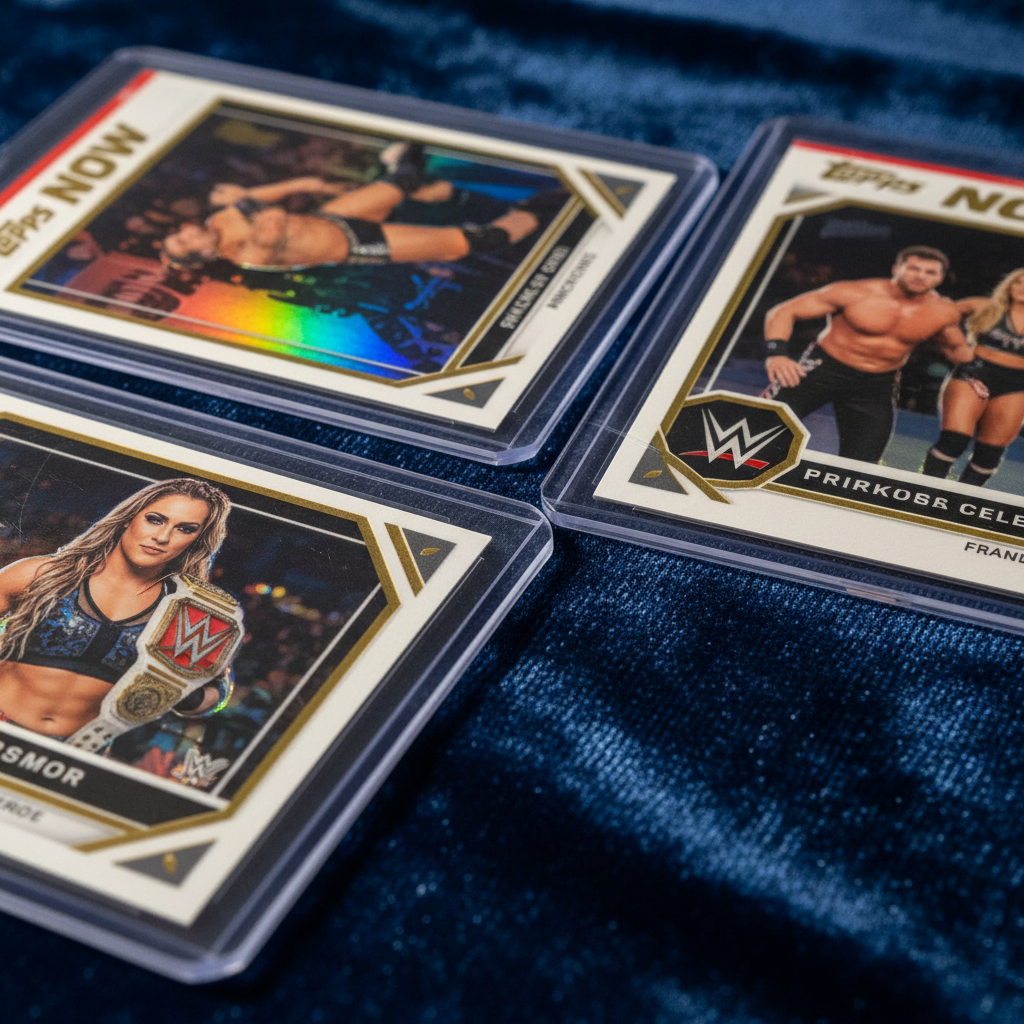
Topps Now WWE is back for 2026, and the on-demand model that made the product a cult favorite among wrestling card collectors is intact — print-to-order windows, short prints, and autograph variants included. For a product line that lives and dies by its roster timing and window management, the 2026 edition arrives with enough structural familiarity to reassure veterans while leaving room for the kind of surprise pulls that keep the format addictive.
The mechanics haven't changed dramatically from prior years, which is both a feature and a limitation. Each card is only available during a defined ordering window — typically tied to a specific WWE event or moment — and the final print run is determined entirely by how many orders come in during that window. No artificial scarcity, no warehouse overstock. What you see is what gets made.
How the Print-Run Model Shapes Value
This is where Topps Now WWE gets genuinely interesting from an investment standpoint. Because print runs are disclosed after windows close, collectors are essentially betting on demand before the number is known. A Roman Reigns card tied to a WrestleMania moment might print at 800–1,200 copies — respectable for the format. A mid-card talent on a throwaway episode of Raw might land under 100, creating instant short-print status by default rather than design.
That dynamic has produced some notable secondary market results. Early Topps Now WWE releases from 2020 and 2021 — particularly autographed versions of cards tied to championship moments — have traded on eBay and through PWCC at multiples of their original $9.99–$14.99 issue price when the print run came in low and the subject matter resonated. A Becky Lynch auto from a 2021 window with a sub-50 print run, for example, routinely clears $150–$200 raw, more in PSA 10.
The autograph tier is where the 2026 checklist will ultimately be judged. Topps has historically included a rotating cast of on-card autos — sticker autos are rare in this product — which gives even modest print-run cards genuine collector appeal. Whether the 2026 lineup leans into current titleholders or makes room for NXT callups and legends will define how aggressively the secondary market responds.
Short Prints and the Variant Ladder
Beyond the standard base cards, 2026 Topps Now WWE carries the same variant structure that collectors have come to expect: short print parallels, color variants, and in some cases, one-of-one superfractors. The short prints — typically seeded at a fraction of the base card's print run — don't follow a fixed ratio, which means a window that generates 500 base copies might yield only 25–50 SPs. Or fewer.
That unpredictability is a double-edged sword. It makes the product exciting in real time but difficult to evaluate on the secondary market until population data firms up. PSA and BGS both see steady submission volume from Topps Now WWE, though the product's relatively modest print runs mean population reports can shift meaningfully with a single bulk submission. A card sitting at PSA 10 pop 8 today could be at pop 22 by next quarter.
For grading purposes, the card stock on recent Topps Now WWE releases has been consistent enough to produce reasonable 10 rates — centering is the most common deduction, followed by surface issues on the foil variants. Collectors who order directly from Topps and sleeve immediately tend to fare better than those pulling from secondary market raw copies.
Timing the Windows
The 2026 calendar gives Topps Now WWE a loaded event slate to work with. WrestleMania, SummerSlam, and the Royal Rumble are the obvious anchors, but the product's real sweet spot has always been the unexpected — a title change on a random Monday, a surprise return, a retirement announcement. Those are the windows that close fast and print low.
Collectors who've worked the Topps Now model for a few years know the rhythm: order during the window on anything with legitimate star power or moment significance, be selective on mid-tier releases, and don't sleep on NXT-tied cards if a talent is clearly being positioned for a main roster push. The lead time between an NXT card printing at 75 copies and that same talent headlining a pay-per-view can be surprisingly short in today's WWE.
The 2026 product is live now. Windows are moving. The print runs will tell the real story — they always do.