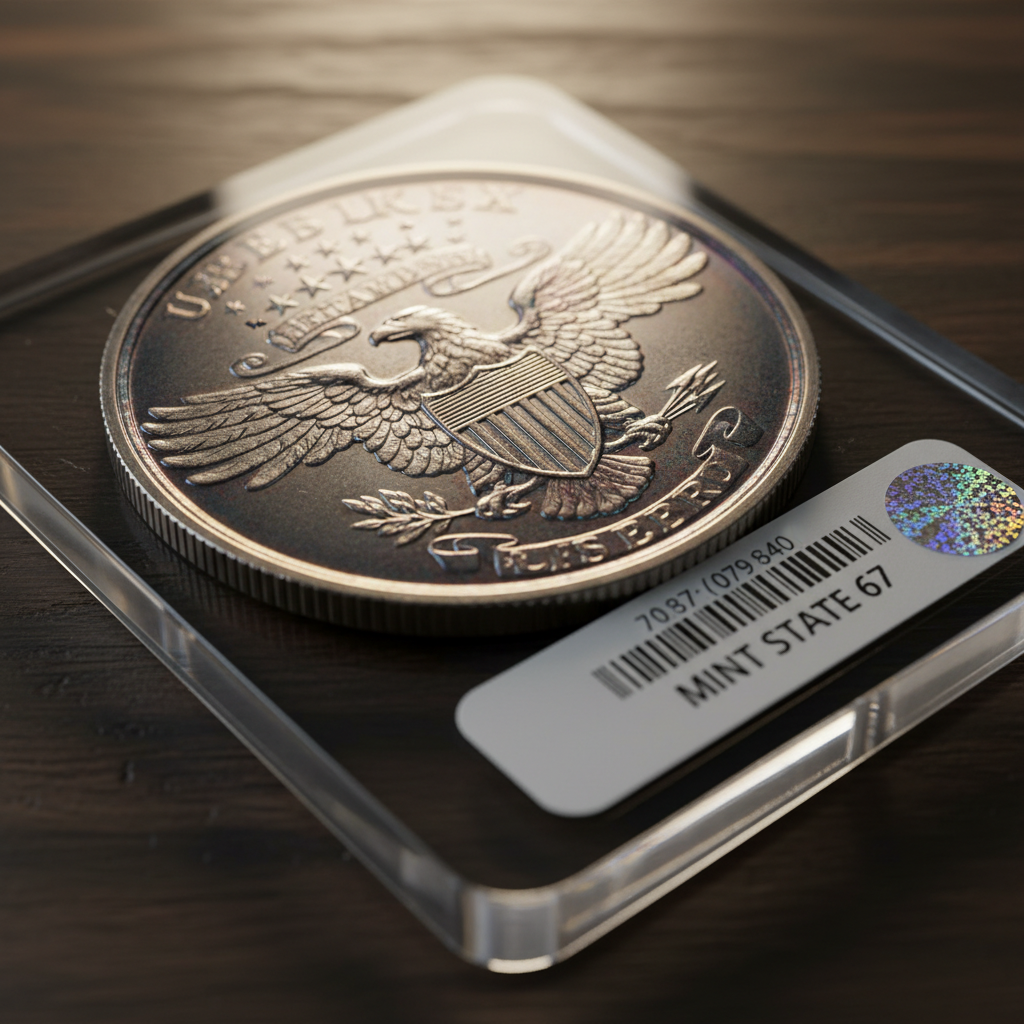
Sometime between 2008 and 2022, a foundational element of American coin production may have quietly exited the die-making process — and nobody said a word. No press release. No Federal Register notice. No numismatic outcry. The Master Hub, the upstream origin point from which every working die in the U.S. Mint's production chain theoretically descends, appears to have been sidelined without acknowledgment, and the implications for how collectors and graders have understood modern coinage are more significant than the silence suggests.
The story, first reported by Pete Apple for CoinWeek, frames the disappearance not as confirmed theft or loss but as a procedural vanishing — a shift in manufacturing methodology that effectively rendered the Master Hub obsolete without anyone formally retiring it. If accurate, it means the die genealogy that numismatists have used to attribute varieties, classify die marriages, and establish rarity hierarchies for modern U.S. coinage may rest on a foundation that no longer exists in the way the field assumed.
What the Master Hub Actually Does — and Why Losing It Changes Everything
To understand the stakes, you have to understand the hierarchy. In traditional U.S. Mint die production, the Master Hub sits at the top of a generational chain: Master Hub produces Master Dies, Master Dies produce Working Hubs, Working Hubs produce Working Dies, and Working Dies strike the coins that end up in circulation, proof sets, and collector hands. Each step down the chain introduces the possibility of minute variation, and it is precisely those variations — doubled dies, repunched mintmarks, misaligned design elements — that form the backbone of variety collecting.
The entire attribution system for modern varieties assumes that chain is intact. If the Mint transitioned to direct digital modeling and CNC machining to produce working dies without routing through a physical Master Hub, then the concept of hub doubling, as traditionally defined, becomes structurally impossible for coins produced under the new method. Varieties attributed as hub-doubled on post-2008 issues would need to be reconsidered. That is not a minor footnote — it touches every major variety registry, every PCGS and NGC population report for modern issues, and potentially the premiums collectors have paid for those attributions.
PCGS and NGC both maintain variety attribution services, and both rely on the established understanding of Mint production methodology to validate those attributions. Neither has publicly addressed the implications of a potential Master Hub retirement.
The Market Exposure Is Real
Modern variety coins have built a legitimate collector base. A 2005-P Minnesota Doubled Die Quarter in MS-65 can fetch multiples of face value through dealers and auction platforms. Doubled die Lincolns from the post-2000 era appear regularly in Heritage and GreatCollections auctions with premiums that reflect their attributed status. If the mechanical precondition for hub doubling was eliminated at some point in the 2008–2022 window, the question of what those coins actually are — and whether their premiums are justified — becomes uncomfortable fast.
This is not an argument that those coins lack value. Collector demand is real regardless of mechanism. But the grading and attribution infrastructure that supports those premiums is built on technical claims, and technical claims require accurate manufacturing history to hold up.
The deeper problem is the documentation gap. The U.S. Mint does not publish its internal die production methodology in any form accessible to researchers or the public. Apple's reporting suggests the transition may have happened incrementally, possibly tied to the Mint's adoption of advanced digital design tools and precision machining — technologies that were being integrated into federal manufacturing operations broadly during that period. Without internal records, the numismatic community is left to reverse-engineer the answer from the coins themselves, which is exactly what variety researchers have always done, just rarely under these circumstances.
What Comes Next for Variety Collectors
The numismatic community has navigated manufacturing revelations before. The discovery that the Mint had been using multiple master dies simultaneously — rather than a single authoritative source — reshaped how researchers approached variety attribution in earlier eras. This would be a larger disruption, but not an unprecedented category of problem.
What is needed is a systematic review of modern variety attributions cross-referenced against whatever production records can be obtained through FOIA requests or Mint communications. The Professional Numismatists Guild and the American Numismatic Association have the institutional standing to formally request that documentation. Whether they will is another question.
For collectors holding modern doubled-die attributions, the practical advice is straightforward: the coins are not going anywhere, and collector interest in them is not contingent on a single production theory. But anyone paying significant premiums for post-2008 variety attributions should be aware that the technical basis for those attributions is now an open question — and open questions in numismatics have a way of eventually closing at someone's expense.
The Master Hub may be gone. What remains is the obligation to figure out what that actually means.