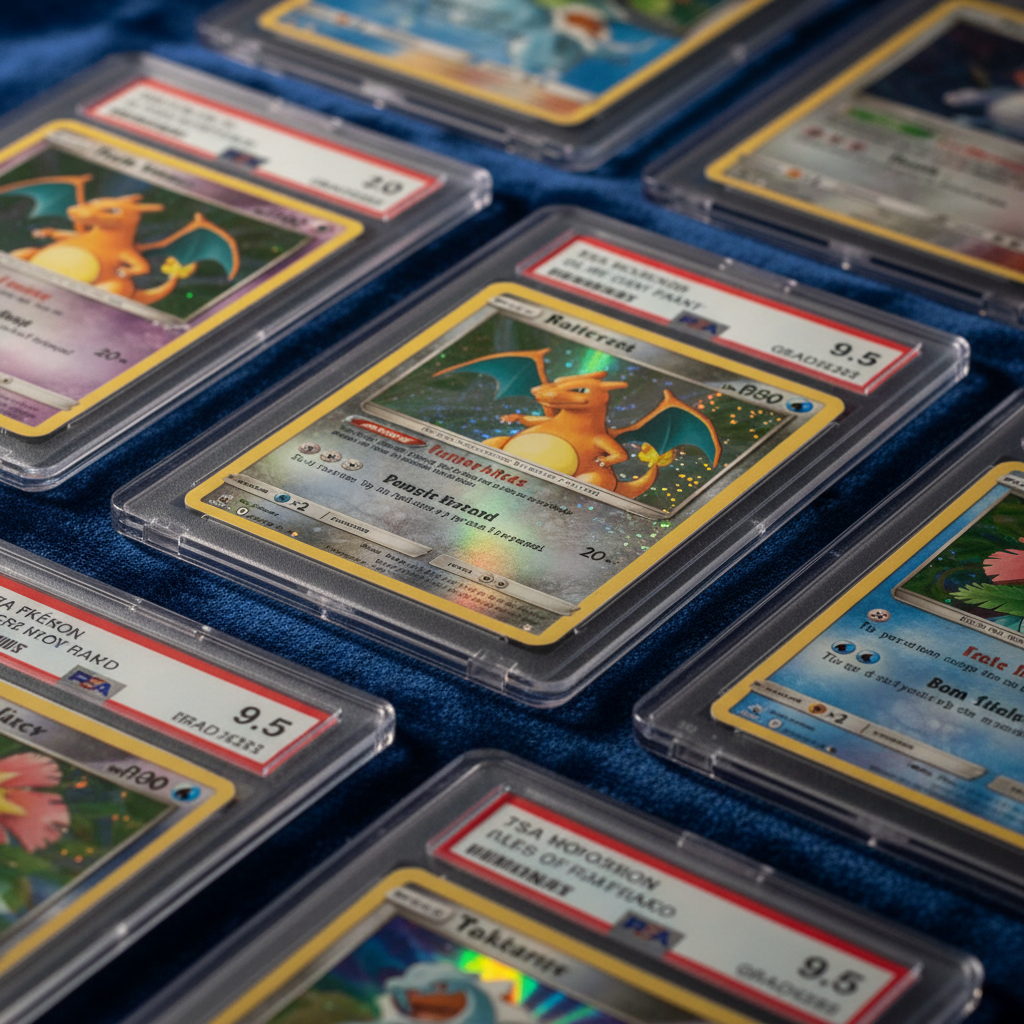
A British schoolteacher just turned a shoebox full of nostalgia into a wedding fund. His childhood Pokémon card collection — kept intact through decades of moves, storage, and the constant temptation to sell — fetched thousands of pounds at auction, enough to make a meaningful dent in one of life's most expensive milestones.
The story is charming. It's also a data point in a much larger trend that serious collectors have been watching for years.
What the Market Made Possible
Pokémon cards from the late 1990s and early 2000s — particularly Base Set, Jungle, and Fossil era cards — have undergone one of the most dramatic reappraisals in the modern collectibles market. A PSA 10 Shadowless Charizard from the 1999 Base Set has traded as high as $420,000 at Goldin. Even mid-tier PSA 9 examples of the same card routinely clear $10,000 to $20,000 depending on population and timing. The floor has risen so substantially that even common holofoils in strong condition can surprise their owners.
The UK teacher's haul almost certainly included a mix of holofoils, first-edition candidates, and Unlimited print run cards — the bread and butter of any collection assembled by a kid in the late '90s. Without graded values or a full inventory, precise comps are impossible. But the fact that the collection sold for enough to contribute to a wedding — conservatively, that's several thousand pounds — suggests at minimum a handful of high-grade holofoils or a first-edition card that graded well.
Condition is everything here. A PSA 7 Base Set Charizard might fetch £800 to £1,200 in the current UK market. A PSA 9 can push £4,000 to £6,000. And if even one card in the collection carried a first-edition stamp and graded an 8 or above, the math gets interesting fast.
The Preservation Premium
What separates this story from the thousands of childhood collections that turned out to be worth nothing is simple: the cards survived. Not in a binder with penny sleeves. Not rubber-banded together in a drawer. Apparently in good enough condition to command real money.
This is the part collectors and investors should actually pay attention to. The Pokémon market rewards preservation with a multiplier that almost no other category matches. The difference between a PSA 6 and a PSA 9 on a 1999 Charizard isn't incremental — it's often a 10x price gap. That's not hyperbole. PSA's population report shows fewer than 130 PSA 10 Shadowless Charizards in existence, against thousands of lower-grade copies. Scarcity at the top of the grading scale is structural, not manufactured.
Parents who threw out their kids' cards in the '90s — and there were millions of them — effectively destroyed assets that have since appreciated faster than most equity indices over the same period. The teacher who held on didn't just get lucky. He benefited from a discipline, even an unconscious one, that most people didn't exercise.
The broader Pokémon card market has cooled from its 2020–2021 pandemic peak, when speculation drove prices to levels that even die-hard collectors found hard to justify. A PSA 10 Base Set Charizard that traded above $400,000 in 2021 has since settled into a more rational $200,000 to $300,000 range — still extraordinary, but reflective of genuine demand rather than stimulus-check fever. The correction was healthy. It shook out the flippers and left behind the collectors and long-term holders.
Vintage Pokémon as an Asset Class
The wedding-fund story will get passed around social media as a feel-good human interest piece. That's fine. But underneath it is a legitimate investment thesis that Heritage Auctions, Goldin, and PWCC have been building infrastructure around for the better part of a decade.
Vintage Pokémon — specifically English Base Set through Neo Genesis, with Japanese Base Set and Topsun cards commanding their own premium — has demonstrated the three characteristics that define a durable collectibles market:
- Finite supply: No new 1999 Base Set cards are being printed. The population of high-grade copies shrinks as cards are lost, damaged, or remain unsubmitted.
- Generational demand: The kids who collected in 1999 are now in their 30s with disposable income and a powerful nostalgia driver.
- Institutional liquidity: Major auction houses now run dedicated Pokémon sales. The bid-ask spread has tightened. Price discovery is real.
None of that guarantees appreciation. Markets correct. Trends fade. But the structural case for vintage Pokémon holding value over the next decade is stronger than most casual observers realize.
For the teacher in question, the timing was good and the preservation was better. He didn't need to understand PSA population reports or auction house buyer's premiums. He just needed to not throw the cards away. Turns out that was enough.