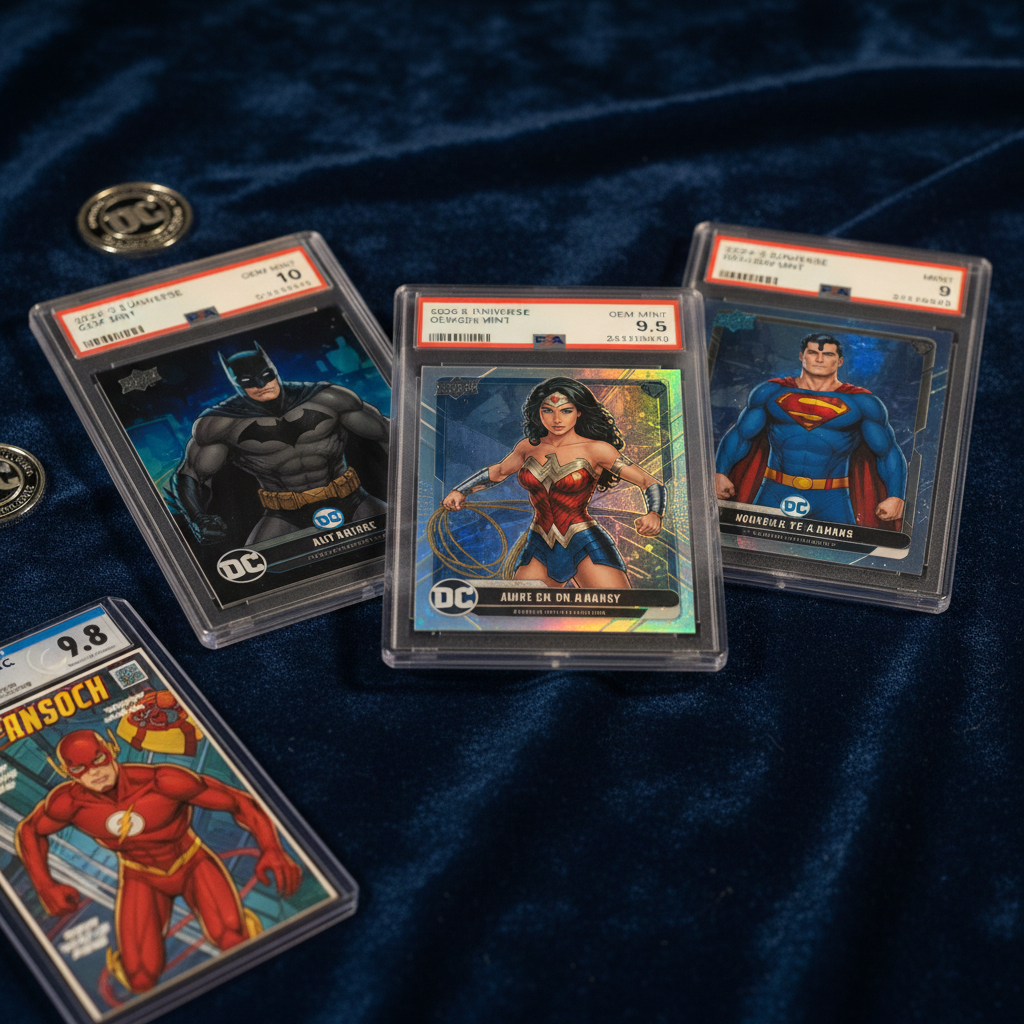
Upper Deck is expanding its entertainment card portfolio with the 2024-25 DC Annual, a set that pulls from one of comics' most enduring intellectual properties and packages it in a hobby-friendly box configuration designed to reward both set builders and hit hunters. With DC's cinematic and streaming presence in active transition under James Gunn's rebooted DC Studios, the timing of a premium trading card release is calculated — and the checklist reflects that ambition.
Box Configuration and What Collectors Are Paying For
Each hobby box delivers a structured hit configuration, with autographs and memorabilia cards anchoring the value proposition. Upper Deck has built its entertainment lines around the promise of on-card signatures where possible, and the DC Annual continues that approach. The base set covers the breadth of the DC universe — expect representation from Batman, Superman, Wonder Woman, The Flash, and deeper-cut characters that give the set its annual-release identity.
Parallels are tiered by color and numbered accordingly, with the lowest-print runs reserved for 1-of-1 printing plates and superfractors. This is standard Upper Deck architecture, but it works — the scarcity ladder gives the secondary market clear pricing anchors, and numbered parallels of key characters tend to move quickly on release week.
Inserts add thematic depth beyond the base. Upper Deck has historically used its entertainment licenses to build insert programs around specific story arcs, team groupings, or villain rosters, and the DC Annual appears to follow that playbook. For a property with 85-plus years of source material, the curation decisions here matter more than in a typical sports release — a well-chosen insert set can become a collector cornerstone; a lazy one gets pulled for base and discarded.
The Autograph Tier Is the Real Story
Autographs in DC entertainment sets draw from two talent pools: actors who have portrayed these characters on screen, and occasionally comic artists and creators. The former drives the bulk of secondary market value. A certified auto from a marquee actor attached to a recognizable role — think the actors behind the Arrowverse, the DCEU, or legacy animated series — can command serious premiums in graded form.
For context, Upper Deck's Marvel and DC entertainment autos have historically graded well with BGS and PSA, with on-card signatures from lead actors in high-demand roles regularly fetching $150–$400 raw at auction, and graded PSA 10 examples of key pulls pushing past $600–$800 depending on the subject. Population counts on entertainment autos tend to stay low — these aren't mass-market products — which supports sustained secondary value for the right names.
The caveat: entertainment card values are more volatile than sports. An actor's market can move dramatically based on a film's reception, a casting announcement, or cultural moment entirely outside the hobby. DC is in a particularly fluid state right now, with the Gunn era still establishing its cast and tone. That's either a risk or an opportunity, depending on your read of where the franchise lands in the next 24 months.
Where This Fits in the Entertainment Card Market
Upper Deck holds the DC license in a competitive entertainment card landscape. Panini has historically dominated Marvel and Star Wars through its Topps relationship, while Upper Deck has carved out space with DC, NHL, and niche entertainment properties. The annual release cadence — as opposed to a one-time product drop — signals Upper Deck's intent to build a sustained collector base around this IP rather than treat it as a single-run opportunity.
That strategy has worked for the company in hockey, where annual flagship releases anchor the hobby calendar. Translating it to entertainment cards is harder. The audience is different, the content refresh cycle depends on DC's production schedule, and set fatigue is real when the checklist overlaps too heavily with prior years.
The sets that have held value longest in the entertainment card space — 1992 SkyBox Marvel Masterpieces, early Topps Star Wars chrome releases, Upper Deck's own Marvel Cinematic Universe inserts — succeeded because they captured a specific cultural moment with distinctive design. Whether the 2024-25 DC Annual achieves that is a question the secondary market will answer within 60 days of release.
DC's roster is iconic enough that the raw material is there. The execution will determine everything.