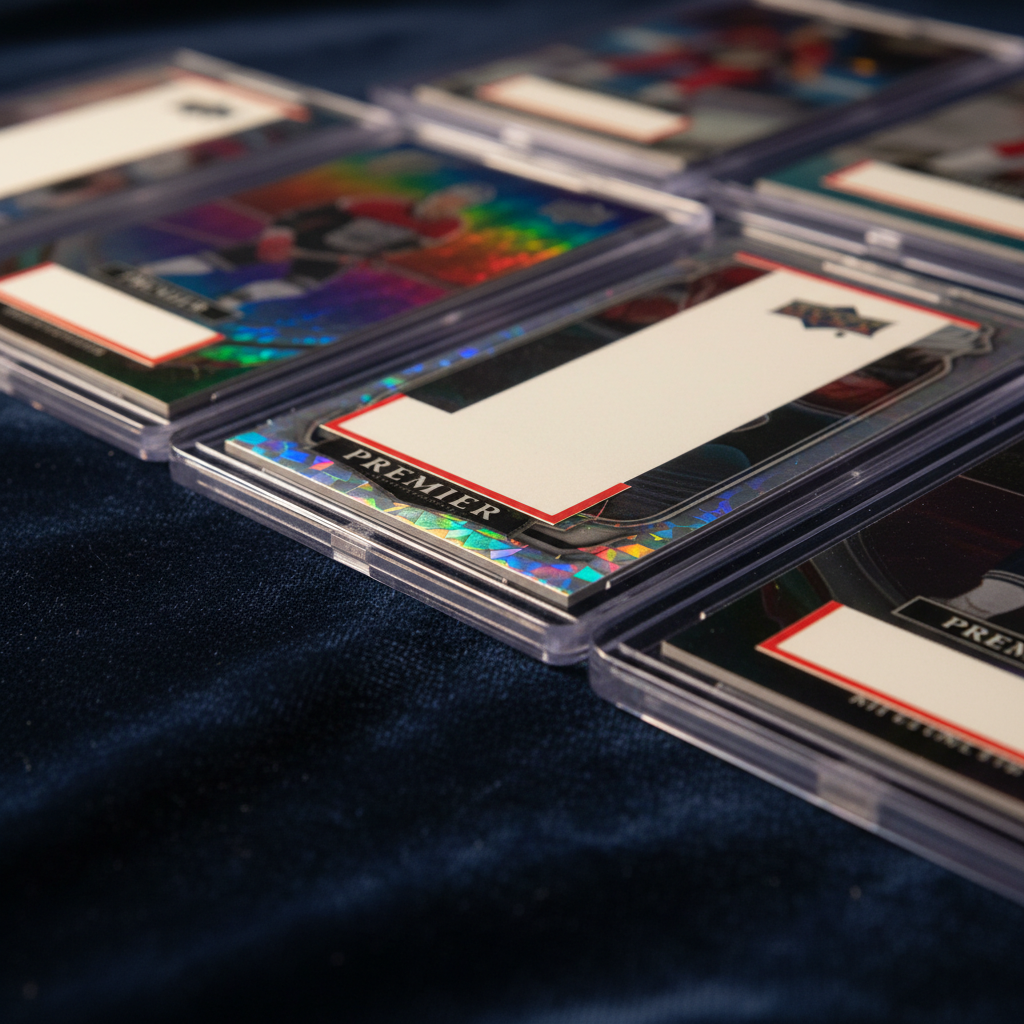
Upper Deck is bringing back one of hockey's most prestigious annual releases, and the 2025-26 Premier Hockey configuration keeps the product firmly in its lane: high-end, low-volume, autograph-heavy. This is a set built for the collector who wants fewer cards per box and more meaningful pulls — and the hobby box breakdown reflects exactly that philosophy.
Each hobby box delivers three cards, with every single one guaranteed to be either an autograph or a memorabilia card. No filler. No base card padding. That's the Premier promise, and it's held up across the product's run as one of Upper Deck's marquee annual hockey releases.
What's Inside the Box
The checklist architecture for 2025-26 Premier leans into the multi-relic and patch-auto combinations that have defined the product's reputation. Collectors can expect on-card signatures from current NHL stars and rookies alongside retired legends — a dual-audience approach that keeps both player-collector communities engaged at the case-break table.
Key hit categories include:
- Premier Autographs — base signed cards, typically numbered to 99 or lower
- Premier Rookie Autographs — the most speculative and highest-ceiling pulls, depending on the 2025-26 rookie class performance
- Premier Patch Autographs — multi-color or logo patches paired with on-card signatures, often numbered to 25 or fewer
- Premier Dual and Triple Autographs — multi-player signed cards that carry significant secondary market premiums when the name combinations land right
- Memorabilia Cards — jersey and equipment relics for players who don't have autograph inclusions
Exact print runs and full checklist depth haven't been finalized publicly, but based on prior Premier releases, expect the deepest numbered parallels — think /10 and 1/1 Printing Plates — to anchor the top of the pull hierarchy.
The Premier Market: Where It Sits in 2025
Premier has always occupied a specific tier in the hockey card ecosystem — above mid-range products like Series One and O-Pee-Chee Platinum, but below the true ultra-premium ceiling of The Cup, which routinely commands $500–$800+ per box at hobby retail and significantly more on the secondary market. Premier typically lands in the $150–$250 per box range at release, making it the entry point for collectors who want a genuine high-end experience without committing Cup money.
That positioning matters in the current market. Hockey cards have shown resilience through the broader sports card correction that hit baseball and basketball harder between 2022 and 2024. Connor McDavid autos from Premier releases have held auction value well — a PSA 10 Premier auto from the 2022-23 release moved through private sales in the $800–$1,200 range depending on the specific card and patch quality. For a product at this price point, that's a credible return profile.
The 2025-26 rookie class is a meaningful variable. Premier's secondary market ceiling is almost entirely dependent on which prospects break through in their first NHL season. A true franchise-level rookie — the kind of player who earns Calder Trophy consideration — can turn a Premier Rookie Patch Auto into a four-figure card by mid-season. That's the speculative upside that keeps this product relevant to the investor side of the hobby.
On-Card vs. Sticker: Still the Deciding Factor
Premier's enduring appeal with serious collectors comes down to one thing: on-card authentication. In an era where sticker autos have become the norm across most mid-range and even some premium releases, Premier's commitment to having players sign directly on the card stock is a genuine differentiator. The tactile difference is real. The resale difference is measurable — comparable on-card autos consistently outperform sticker equivalents by 20–40% at auction across major platforms including Heritage Auctions and Goldin.
Upper Deck has maintained that standard with Premier across multiple seasons, and it's the single biggest reason the product commands a loyalty that's disproportionate to its box price relative to The Cup. Collectors know what they're getting.
A release date hasn't been officially confirmed, but Premier historically ships in the late fall to early winter window — typically November through January — timed to capitalize on the early NHL season buzz and the holiday buying surge. Dealers and breakers should plan inventory accordingly. If the rookie class delivers even one legitimate star, Premier 2025-26 boxes won't sit on shelves for long.