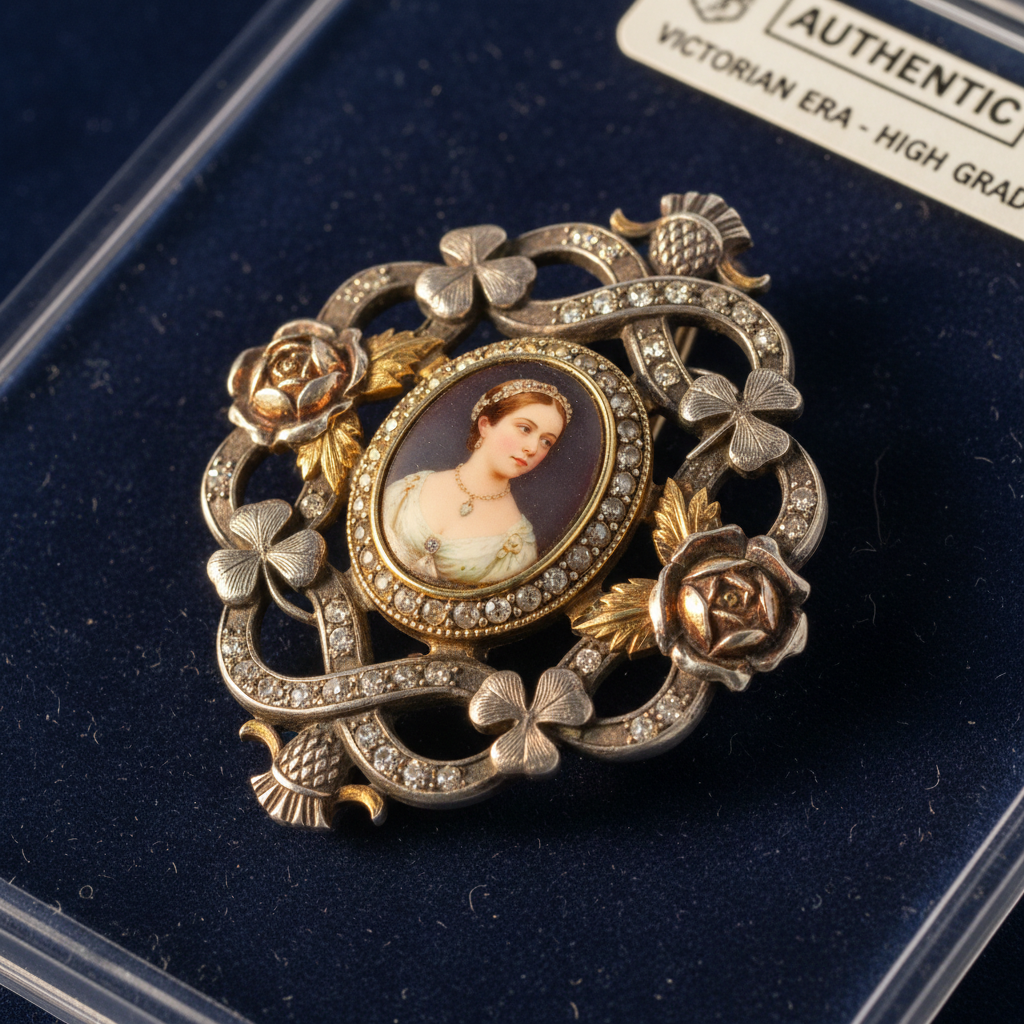
Before the modern lapel pin, before the campaign button, there was the Victorian sash pin — a piece of wearable history that sat at the intersection of royal pageantry, industrial craftsmanship, and everyday fashion. Today, serious antique collectors are paying close attention to a category that the broader market has largely underestimated.
Sash pins emerged prominently during the mid-to-late 1800s, shaped in no small part by Queen Victoria's influence over fashion and ceremonial dress. The Queen's fondness for elaborate jewelry and decorative accessories filtered down through the social hierarchy with remarkable speed — what adorned royalty one decade was being adapted for the middle classes the next. Sash pins were part of that trickle-down aesthetic, worn to fasten sashes at the waist or shoulder, and increasingly used as decorative statements in their own right.
Design, Materials, and What Separates the Good from the Great
Not all Victorian sash pins are created equal, and the spread in collector value reflects that sharply. The most desirable examples feature gold or gold-filled construction, often set with seed pearls, garnets, turquoise, or paste stones. Scottish examples — frequently incorporating cairngorm stones and silver — command a premium among specialists. Enamel work, particularly champlevé or guilloche, adds significant value when the finish remains intact and unfaded.
Condition is everything in this category. Unlike graded trading cards or slabbed coins, Victorian jewelry has no standardized third-party grading system, which means buyers depend heavily on provenance documentation, maker's marks, and the reputation of the selling house. Hallmarks are critical. British pieces bearing assay office marks from Birmingham, Chester, or London are far more traceable — and therefore more trustworthy — than unmarked Continental examples.
Pin mechanisms tell their own story. Early Victorian examples often feature c-catch or simple rolled-wire clasps, while later pieces transition to the trombone and later the safety-roll mechanisms that became standard by the Edwardian era. A pin's hardware can help authenticate its period almost as reliably as its style.
At auction, strong Victorian sash pins in documented condition have sold in the $150 to $800 range through regional houses and established platforms like Heritage Auctions and Invaluable. Exceptional pieces — particularly those with royal provenance, signed maker's marks from known London jewelers, or unusually large format designs — can push well past $1,500. The ceiling on truly rare examples with documented ownership history is essentially undefined.
A Market Still Finding Its Floor
Here's the honest assessment: Victorian sash pins occupy a curious middle ground in the antique jewelry market. They're not yet commanding the institutional attention that Georgian mourning jewelry or Art Nouveau pieces receive, but the collector base is growing — and it's growing among buyers who know what they're looking at.
Several factors are converging to push this category forward. First, the broader Victorian antiques market has seen renewed interest as Millennial collectors age into serious buying power. This generation has demonstrated a clear preference for objects with narrative weight — pieces that connect to specific historical moments or cultural figures. Victorian sash pins, with their direct ties to royal fashion culture, deliver exactly that.
Second, the wearable antiques segment has outperformed expectations over the past three years. Collectors who might have purchased a decorative object for display are increasingly seeking items they can actually wear — a behavioral shift that benefits functional jewelry categories like sash pins, chatelaines, and bar brooches.
Third, social media has done real work here. Pinterest boards and Instagram accounts dedicated to Victorian fashion have introduced sash pins to audiences who had never encountered them in a traditional antique shop context. Awareness is the precursor to demand.
- Best entry points: Silver or silver-fill examples with intact stones, $75–$200 at regional auction
- Mid-tier targets: Gold-fill with seed pearls or garnets, documented hallmarks, $300–$600
- High-end plays: Signed maker's marks, royal or aristocratic provenance, enamel work, $800+
- Avoid: Unmarked base-metal examples with replaced pin mechanisms and no provenance trail
The lack of a grading standard cuts both ways. It keeps institutional money on the sidelines — which means prices remain accessible for individual collectors — but it also means due diligence falls entirely on the buyer. Auction house condition notes vary wildly in reliability. Buying from dealers who specialize in Victorian jewelry, rather than generalist antique shops, reduces that risk considerably.
Victorian sash pins are, at their core, a category that rewards knowledge. The collector who understands hallmarks, construction periods, and regional design traditions will consistently outperform the buyer who's simply chasing aesthetics. In a market segment this underdocumented, that expertise gap is still wide enough to be a genuine edge.