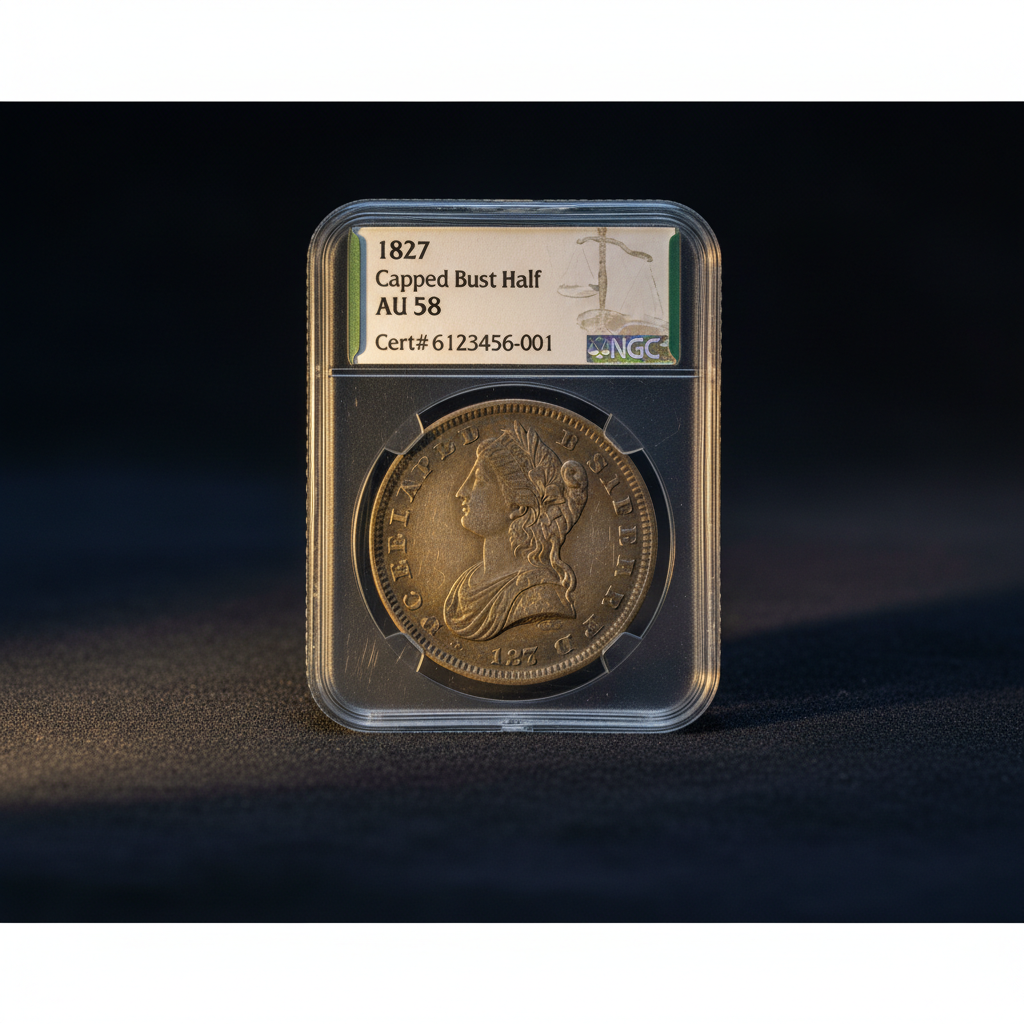
The most authoritative reference in early American coinage just found a permanent home. Whitman Brands announced on April 2, 2026, in Virginia Beach, Virginia, that it has secured the definitive rights to the works of Al C. Overton and Donald L. Parsley — the scholars behind Early Half Dollar Die Varieties 1794–1836, the canonical reference for Capped Bust Half Dollar attribution. For a specialized corner of numismatics that has operated for decades on photocopied pages and passed-down expertise, this is a legitimizing moment.
Capped Bust Half collectors — a passionate, exacting community — have long relied on the Overton-Parsley system to identify and value die varieties across the series. Every coin in the 1794–1836 run carries an O-number designation. An O-101 is not the same coin as an O-101a, and the price difference between a common die marriage and a rare one in MS-63 can run into the tens of thousands of dollars. The Overton numbers are not supplementary information. They are the market.
Why the Rights Question Mattered
For years, the long-term stewardship of the Overton-Parsley research existed in a kind of institutional limbo. Parsley updated and expanded Overton's original work, and the resulting reference became the standard — but without a major publisher holding the rights, the future of updated editions, digital versions, and broader accessibility was uncertain. Dealers at major shows like the ANA World's Fair of Money and the FUN Convention would routinely cite Overton numbers in lot descriptions without any centralized, commercially available edition to point buyers toward. That gap created friction for new collectors entering the series.
Whitman, the publisher behind the iconic Red Book — formally, A Guide Book of United States Coins — is the logical custodian. The company has spent decades as the entry point for American coin collecting, and its distribution infrastructure reaches every major coin dealer, book retailer, and numismatic club in the country. Placing the Overton-Parsley reference under that umbrella doesn't just preserve the work. It scales it.
What This Means for the Early Half Dollar Market
The Capped Bust Half Dollar series is one of the most actively variety-collected segments of early American coinage. PCGS and NGC both attribute Overton varieties on holders for coins that meet the criteria, and a certified, attributed example commands a meaningful premium over an unattributed one of identical technical grade. An O-109 in EF-45 with a PCGS attribution is a different auction lot than the same coin without it — full stop.
Heritage Auctions and Stack's Bowers regularly feature Overton-attributed Capped Bust Halves in their major sales. Rare die marriages in high grades — think a top-pop MS-65 example of a low-mintage variety — have cleared six figures at auction. The 2023 Heritage FUN sale included several attributed examples that demonstrated sustained collector demand even in a tighter overall market for early type coins.
Wider availability of the reference text has a compounding effect on that market. More accessible attribution resources mean more collectors can confidently enter the series, more dealers can accurately describe their inventory, and more buyers understand what they're bidding on. Liquidity follows literacy.
There's also a grading service angle here. Both PCGS and NGC have variety attribution programs that depend on a stable, widely accepted reference standard. A commercially published, regularly updated Overton-Parsley reference — backed by Whitman's editorial infrastructure — gives those programs a cleaner foundation to work from, and potentially opens the door to more granular attribution on certified holders.
Whitman has not yet announced a publication timeline for a new or revised edition, but the acquisition itself signals intent. The company didn't secure these rights to let them sit. For collectors who have been working from aging personal copies or digital scans of uncertain provenance, a fresh, authoritative edition — potentially with updated population data and auction records folded in — would be the most significant development in Capped Bust Half scholarship in a generation.
The Overton number was already the lingua franca of this series. Now it has a publisher with the reach to make sure everyone speaks the language.