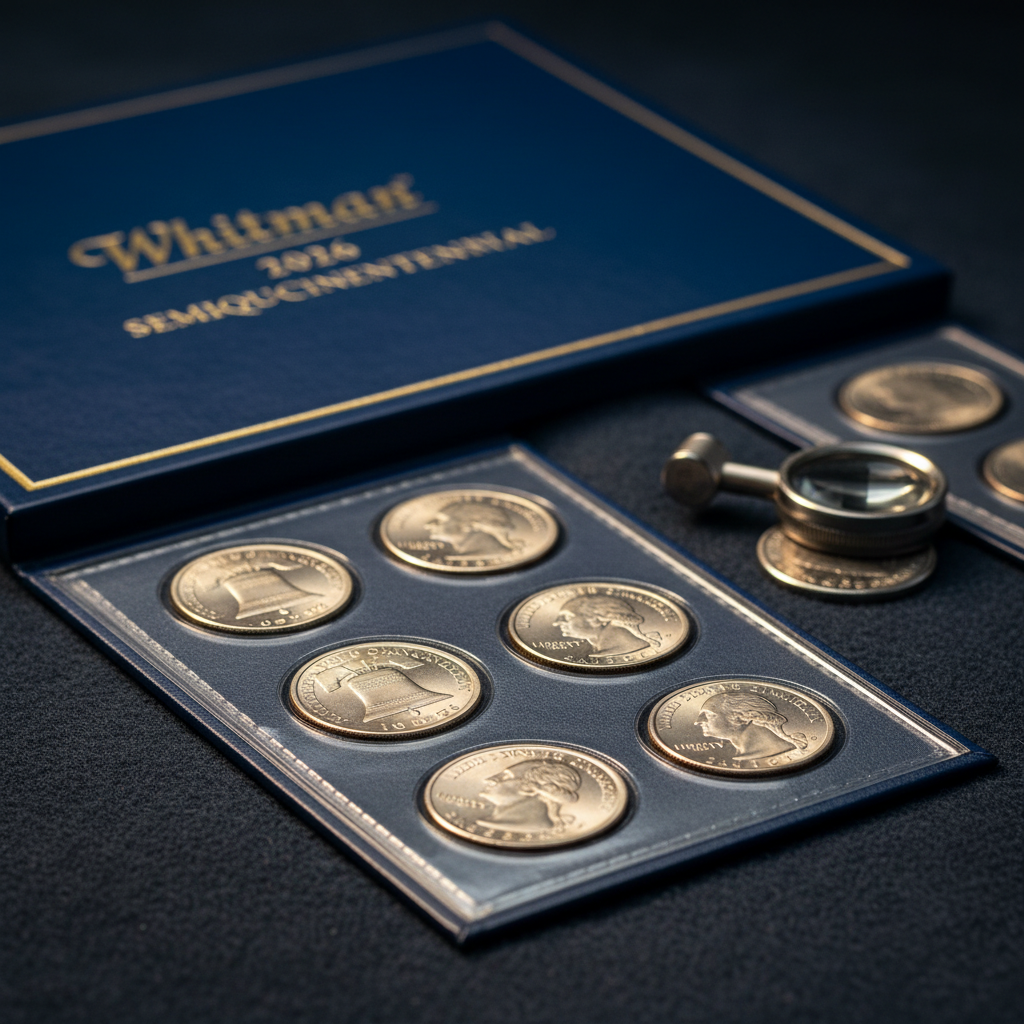
America's 250th birthday is shaping up to be one of the most significant numismatic events in a generation — and Whitman Brands is making sure collectors have somewhere to put the coins. The company has unveiled a dedicated line of albums and folders engineered specifically for the Semiquincentennial coinage the U.S. Mint will release throughout 2026, positioning itself at the center of what could be a massive surge in entry-level and serious collecting alike.
Timing matters here. Whitman didn't wait for the coins to hit circulation. By launching the storage and display products now, the company is seeding the collector market ahead of demand — a smart play given how these anniversary cycles tend to unfold. The 1976 Bicentennial coinage, which featured special reverse designs on the quarter, half dollar, and dollar, generated collector interest that persists today. Circulated Bicentennial Eisenhower dollars in problem-free condition routinely trade in the $5–$15 range at shows, while NGC-graded MS-65 examples have sold north of $100 at Heritage auctions. The 250th is a bigger milestone, and the Mint's design program appears to reflect that ambition.
What Whitman Is Actually Releasing
The new product line spans both traditional folder-style albums — the kind that have introduced generations of Americans to coin collecting — and more robust binder-format albums suited for serious date-and-mintmark sets. Whitman has built its entire brand identity around accessibility, and these products follow that philosophy. The folders are inexpensive enough to hand to a child or a curious newcomer; the albums are structured enough to satisfy a collector who wants archival-quality housing for uncirculated and proof issues.
Specific SKUs and retail price points weren't fully disclosed in initial release materials, but Whitman's standard folder line historically retails between $3 and $8, while premium album pages and binders sit in the $15–$40 range depending on configuration. Given the scope of the Semiquincentennial program — which is expected to touch multiple denominations and span both circulating and commemorative issues — a complete Whitman storage solution for the full series could represent a meaningful retail investment for dedicated collectors.
The product line also arrives as the hobby grapples with a broader question about physical storage. Graded slabs dominate the high end of the market, but raw coins — especially for thematic or date sets — still live in albums. Whitman's continued investment in the format is a quiet vote of confidence that album collecting isn't going anywhere.
The Semiquincentennial Market Opportunity
Anniversary coinage has a complicated track record as a collector asset. The 2016 centennial gold coins — the Mercury Dime, Standing Liberty Quarter, and Walking Liberty Half Dollar restruck in .9999 gold at original size — were a genuine hit, with the Mercury Dime centennial issue selling out quickly and secondary market premiums running 20–40% above issue price in the months after release. That program rewarded early buyers who moved decisively.
The 1986 Statue of Liberty commemoratives, by contrast, flooded the market and spent decades trading at or below issue price. Mintage discipline and design quality are the variables that separate a commemorative program that ages well from one that doesn't.
The 2026 program has the scale advantage — a 250th anniversary happens exactly once — but scale also brings risk. If the Mint issues too broadly or prices aggressively, the secondary market could soften quickly. Collectors who've been through a few of these cycles know to watch first-year sellout rates and population report growth carefully before committing serious capital to raw or graded examples.
For Whitman, none of that uncertainty is really the point. Albums and folders are consumable infrastructure. Whether the coins become blue-chip collectibles or end up in junk boxes at coin shows, collectors need somewhere to put them first. That's a durable business regardless of how the numismatic market shakes out.
Why Dealers Should Pay Attention Now
Coin dealers and shop owners have a narrow window to get ahead of this. Whitman's albums are perennial impulse purchases at the point of sale — a customer buying a few Semiquincentennial quarters is a natural upsell for the matching folder. Shops that stock the full Whitman line before the coins hit circulation in earnest will be better positioned than those scrambling to reorder in late 2026.
The broader opportunity is generational. Every major anniversary coinage program pulls lapsed collectors back into the hobby and introduces new ones. The 2004–2008 Statehood Quarter program famously drove a wave of casual collecting that coin dealers are still mining for new customers. The 250th has similar potential — arguably greater, given the cultural weight of the milestone and the Mint's apparent commitment to ambitious design work.
Whitman has been publishing coin books and producing albums since 1942. They've seen every anniversary cycle, every boom, every contraction. Launching this line now isn't a gamble. It's institutional memory in product form.