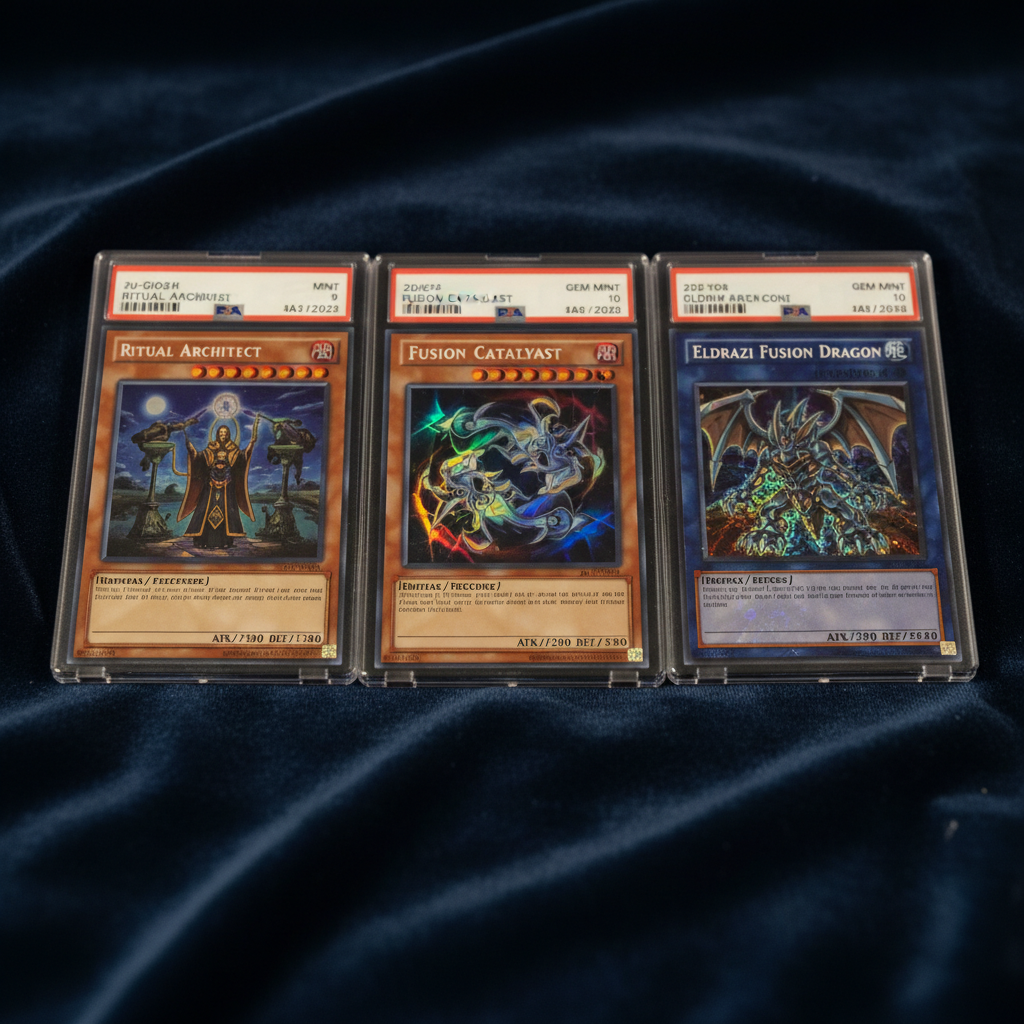
The Yu-Gi-Oh! competitive scene doesn't pause for anyone, and March 2026 is arriving with the kind of structural overhaul that reshapes card values overnight. The simultaneous release of The Drastic Storm booster set and the enforcement of the February 2026 Forbidden and Limited List has triggered a full metagame reset — and for collectors and investors tracking the secondary market, the timing matters as much as the cards themselves.
Two forces are driving the new format: ultra-efficient Fusion summoning engines and resurgent Ritual strategies. These aren't marginal shifts. They represent a top-tier restructuring, the kind that historically sends key staples spiking 40–60% on TCGPlayer within the first two weeks of a list going live, while formerly dominant archetypes crater just as fast.
Dracotail, Mitsurugi, and the New Power Ceiling
The early competitive consensus is coalescing around Dracotail and Mitsurugi as the format's defining strategies. Dracotail's Fusion engine operates with the kind of resource efficiency that makes older combo decks look bloated by comparison — minimal normal summon investment, high ceiling on board development, and resilience to common disruption packages. Mitsurugi, meanwhile, has positioned itself as the premier Ritual strategy of the format, leveraging new support from The Drastic Storm to push consistency levels that Ritual decks have historically struggled to achieve.
For the secondary market, this is the inflection point collectors need to identify early. Key Dracotail and Mitsurugi staples from The Drastic Storm are still in their initial pricing window — the period before tournament results cement their status and drive retail and single prices to a new floor. Secret Rares from a freshly released set that anchor a tier-one strategy rarely stay at pack-opening prices for long.
The February 2026 list's impact compounds this. Forbidden and Limited List updates in Yu-Gi-Oh! function similarly to a rotation in other TCGs, but with sharper price consequences — a single card moving from three copies to one can slash its market value by 60–70% in days, while newly unrestricted cards can double or triple. Collectors who track list changes as a primary market signal, rather than an afterthought, consistently outperform those who react after the fact.
Hand Traps Are Being Rewritten in Real Time
Beyond the top archetypes, the broader metagame story of March is the hand trap ecosystem. A new generation of hand traps introduced in The Drastic Storm is actively displacing staples that have defined Yu-Gi-Oh! side decks and main decks for years. This is a rarer event than it sounds — the hand trap market is notoriously sticky, with cards like Ash Blossom & Joyous Spring and Nibiru, the Primal Being maintaining value through multiple format cycles precisely because their utility transcends any single meta.
When a new hand trap genuinely threatens that incumbency, the market reacts. Cards that answer the dominant Fusion and Ritual strategies of a given format command premium prices during that window, then either sustain value if they prove format-agnostic or depreciate sharply when the meta rotates again. The collectors who win here are those who distinguish between a hand trap that answers this format and one that answers every format.
The Drastic Storm hand traps are still being stress-tested in regional and local competitive play. Tournament results from the first two weeks of March will be the clearest signal — if one or two of these new cards appear in four or more copies across the top eight of major events, their single prices will reflect that consolidation quickly.
What This Format Cycle Means for the Yu-Gi-Oh! Collectibles Market
Yu-Gi-Oh! occupies a unique position in the broader trading card collectibles space. Unlike Pokémon, where vintage sealed product and graded cards dominate investment conversation, Yu-Gi-Oh!'s market is split between competitive singles, tournament-legal staples, and a growing vintage segment anchored by 1st Edition LOB and early-era tournament staples. PSA and BGS have seen increasing Yu-Gi-Oh! submission volume over the past three years, with high-grade copies of key cards from the 2002–2005 era now clearing four and five figures at Heritage and Goldin.
The current meta cycle doesn't directly move those vintage prices — Blue-Eyes White Dragon's graded market isn't correlated to whether Dracotail is tier one in March 2026. But it does drive engagement, player acquisition, and the kind of renewed interest in the game that historically feeds back into vintage demand over a 12–18 month lag. New competitive players become collectors. That pipeline is real, and The Drastic Storm launch is feeding it.
For those focused purely on the competitive singles market, the window on Drastic Storm's key cards is open now. Format-defining strategies identified in March rarely stay underpriced past the first major tournament series. The data from previous list cycles is unambiguous on that point.