Best Rookie Cards to Invest In 2026: NBA, NFL & MLB Picks at Every Budget
Every year, the collector community goes in circles about which rookie cards are worth buying. Every year, the same mistake repeats: people buy based on fan enthusiasm instead of investment logic.
This is not a fan guide. It’s a framework.
The 2026 draft class — across the NBA, NFL, and MLB — is loaded with legitimate investment targets. But “legitimate” means something specific here: low population, grade-sensitive pricing, and a player whose career trajectory justifies the risk. Not just a good player. An investable card.
Here’s what we’re watching.
What Makes a Rookie Card a Good Investment?
Before the picks, the framework. Because buying the wrong card of the right player is still a loss.
Print run and population control
The secondary market rewards scarcity. Panini Prizm, Select, and Topps Chrome are the investment-grade products because they have lower print runs and controlled parallel structures. Base Donruss or Hoops may be cheaper, but the population is enormous — there’s no scarcity premium.
For NBA, the Panini Prizm base RC is the standard starting point. For NFL, Panini Prizm Football and Topps Chrome are the benchmarks. For MLB, Bowman Chrome (specifically Bowman Chrome Prospects, BCP cards) and Topps Chrome are where serious collectors focus.
Grade dependency
“A PSA 9 and a PSA 10 of the same card can be separated by 3–5x in price. Sometimes more. If you’re buying raw and planning to grade, your cost structure has to account for a realistic hit rate.”
A Cooper Flagg Prizm base in PSA 9 condition might fetch $80. The same card in PSA 10 can run $300–400+. If you’re buying raw and planning to grade, your cost structure has to account for a realistic hit rate — most raw cards don’t grade 10.
If you’re buying slabs, buy PSA 10 or BGS 9.5 (which is effectively the gem-mint equivalent in some markets). Anything below that is a comfort buy, not an investment.
The rookie year buying window
Rookie card values peak during two windows: the draft itself (anticipation buying) and the first half of a player’s rookie season (performance validates the hype). After that, prices stabilize or decline unless the player keeps dramatically outperforming.
The sophisticated play: buy before the second spike, not after. Draft-day euphoria is expensive. The window 6–8 weeks into the season — when a player has proven themselves but before every casual buyer is in — is often the best entry point.
Sophomore slump risk
The market prices in expectations. Year 1 stars who plateau or regress in Year 2 often see their RC values drop 30–50%. This isn’t failure — it’s the market recalibrating. Factor it into your hold strategy.
Best NBA Rookie Cards to Invest In 2026
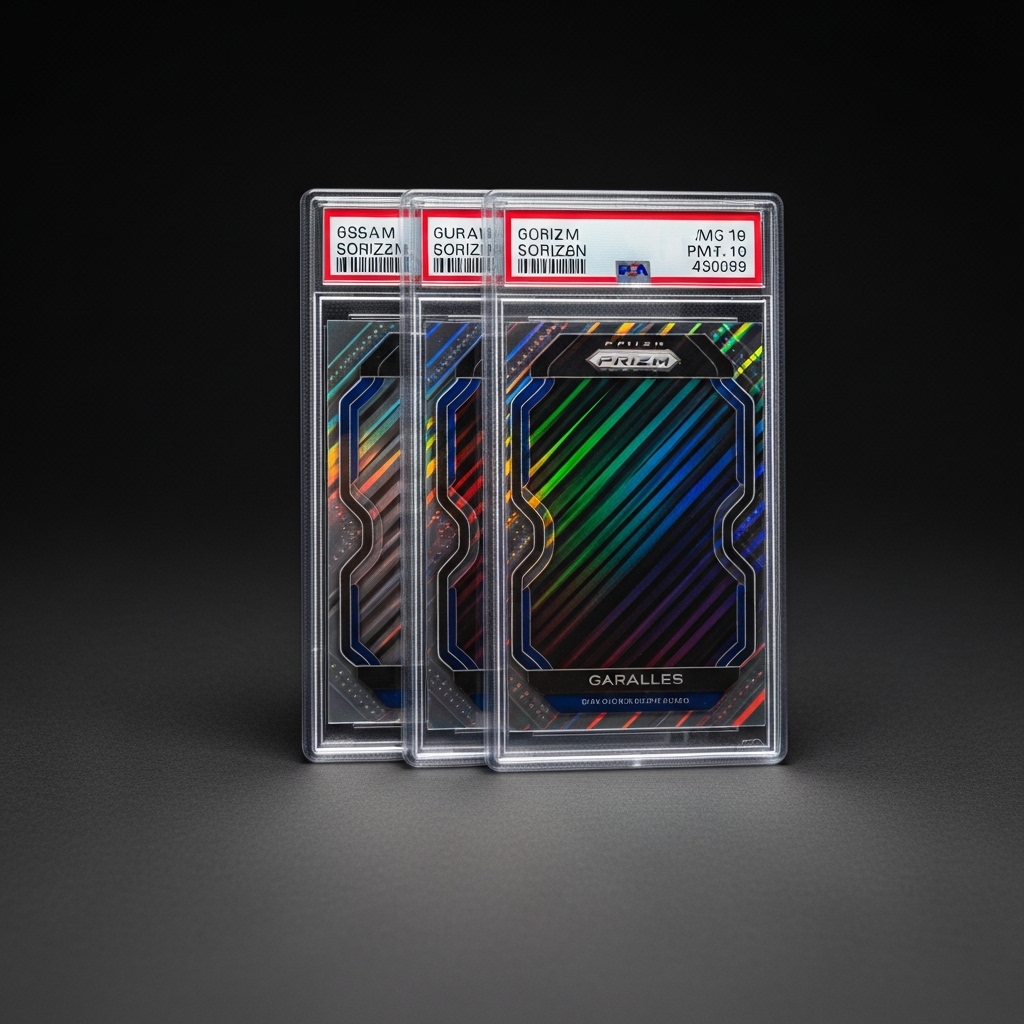
1. Cooper Flagg — Panini Prizm Base RC (Target: PSA 10)
The number-one pick in the 2026 NBA Draft is the conversation. A 6’9” forward out of Duke with a defensive engine and shot-creation ability that scouts have been calling generational, Flagg has the profile that creates long-term card demand: a superstar at a marquee position on a team (Sacramento, holding the top lottery odds) that could become relevant quickly.
Bull case: Rookie of the Year caliber debut, franchise cornerstone narrative, Prizm base pops above 500 at PSA 10. Long-term comparisons to players with cards that have held or appreciated over a decade.
Bear case: Sacramento has had lottery picks before. Development timelines vary. If Flagg struggles through the learning curve of Year 1, the euphoria premium deflates fast.
Card to target: Panini Prizm base RC. Raw copies in Near Mint to Mint condition are running $60–120 as of early 2026. PSA 10 copies, once graded, have been changing hands in the $350–500 range depending on timing. Panini Gold Standard auto RCs carry significantly higher ceilings but require substantially higher buy-in.
2. Dylan Harper — Panini Prizm Base RC (Target: PSA 10)
Flagg’s Duke teammate and the projected second pick brings a different investment profile. Less spotlight on Harper means less demand — which means lower buy-in for similar upside.
Harper is a 6’6” guard who averaged 19 points per game in his lone college season. If he’s taken by Brooklyn (second-best lottery odds), he lands on a young team without playoff expectations, which limits the immediate narrative — but creates a patient investor’s opportunity.
Bull case: High-usage guard on a rebuilding team gets real development reps. Year 2–3 breakout after showing flashes as a rookie. Prizm base PSA 10 moves from $80–120 today to $250+ on the back of a second-year breakout.
Bear case: In Flagg’s shadow all season. Media narrative stays on #1 pick. Harper’s card trades at a persistent discount to Flagg’s regardless of performance.
Card to target: Panini Prizm base RC, raw copies currently trading $25–50. The discount to Flagg makes it the more patient value play. If you can’t afford Flagg, Harper is the asymmetric bet.
3. Ace Bailey — Panini Prizm Base RC (Budget play)
The 6’10” wing out of Rutgers with off-the-charts athleticism and legitimate three-level scoring upside. Bailey is the most volatile pick in this class — high ceiling, rough edges, destination-dependent.
If he lands in a market that amplifies his visibility (New York, Los Angeles), his cards will carry a media premium that may not be earned by performance for years. If he lands in Indiana, Washington, or a small market, expect a quieter price trajectory.
Bull case: Bailey’s physical tools compare to wings who became perennial All-Stars. PSA 10 Prizm base under $100 is entry point pricing on a potential superstar.
Bear case: Rutgers-level competition may have masked developmental gaps. Shooting mechanics are a legitimate question. Year 1 shooting struggles kill the narrative before it starts.
Card to target: Panini Prizm base RC, raw copies currently $20–45. The floor here is lower than Flagg or Harper. Treat as a lottery ticket portion of the portfolio, not the anchor.
4. NBA Sleeper: Tre Johnson — Panini Prizm Base RC
The Texas freshman is not getting the national media coverage of the top three, but draft boards have him solidly in the lottery range. A 6’5” combo guard with a quick release and above-average shooting grades — exactly the profile that allows smaller market players to build card value quietly.
Raw copies are largely uninflated pre-draft. If Johnson goes top-10 and gets real minutes for a playoff-caliber team, early buyers at $10–20 raw will have gotten in well ahead of the curve.
Best NFL Rookie Cards to Invest In 2026
Note: The 2026 NFL Draft takes place in late April. The players below represent the current consensus pre-draft prospect rankings as of March 2026. After draft day, update your target list based on confirmed selections — draft position matters enormously for rookie card values.
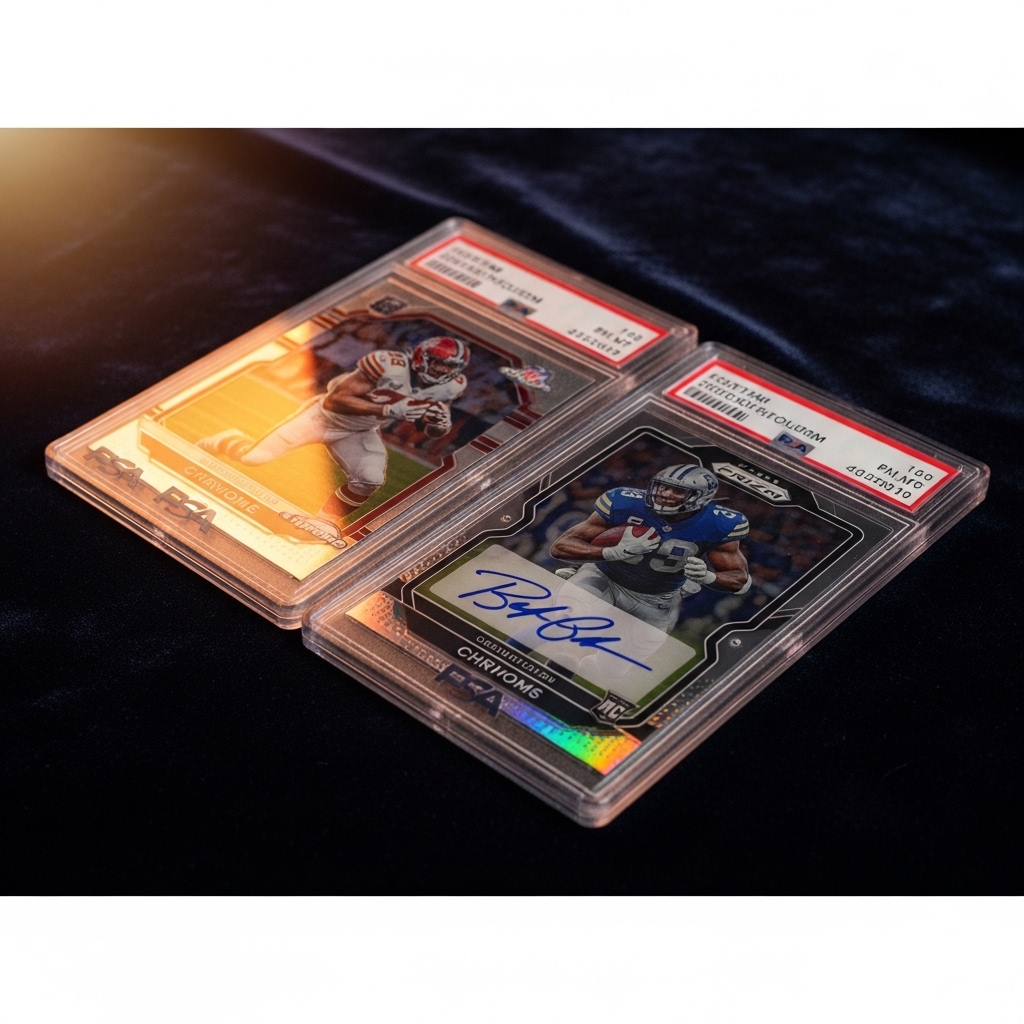
5. Top QB Prospect — Panini Prizm Football RC (Watch List)
The 2026 quarterback class is headlined by several prospects who have generated significant pre-draft buzz. Quarterbacks taken in the top 5 historically anchor the strongest rookie card values — the position scarcity and franchise-quarterback narrative creates sustained demand even through learning-curve years.
The smart play: wait for the first game action of Year 1 before buying heavily. The first-game euphoria spike is well-documented and often unsustainable.
What to target: Panini Prizm base RC (PSA 10), Topps Chrome RC auto. For QBs with franchise upside, auto RCs at realistic prices ($150–400 for pre-proof autos) are the investment-grade format.
The risk: QBs have the highest variance outcome of any position. A generational talent drafted to a poorly built team can spend three years producing mediocre stats behind a bad offensive line. The card reflects the narrative, not just the talent.
6. Top WR/RB Prospect — Topps Chrome RC (Target: PSA 10)
Wide receivers and running backs taken in the top 20 — especially by contenders — often outperform QB cards in Year 1 because they accumulate highlights faster. A rookie receiver catching touchdowns in a winning offense generates card demand before the quarterback who threw the ball.
Target: a skill position player taken in the top 15 by a playoff-caliber team with an established QB. The combination of immediate opportunity and narrative is the value driver.
Card to target: Topps Chrome RC is the standard for NFL skill positions. Raw copies of confirmed lottery picks trade $30–80 pre-grade. PSA 10 copies of strong performers move to $200–500+ mid-season.
The risk: Running backs have historically depreciated fastest once Year 2–3 workloads pile up. WRs are safer long-term holds, but team fit and target share are the variables that matter most.
Best MLB Rookie Cards to Invest In 2026
7. Jackson Holliday — Bowman Chrome Prospects (Already in market)
The son of a Hall of Famer and the #1 overall pick in the 2022 draft, Holliday has already made his MLB debut with Baltimore and is emerging as one of the most anticipated breakout players of 2026. His Bowman Chrome Prospects cards (BCP designation) have been in circulation since his minor league days — meaning early adopters have had the entry point for years.
For collectors entering now: PSA 10 Bowman Chrome Prospect auto copies are pricing in the $200–500 range depending on the specific parallel. If Holliday lives up to his pre-draft billing in 2026, these cards appreciate on performance.
Bull case: Baltimore is a contending team. Holliday gets real at-bats in a high-profile market. His father’s Hall of Fame profile creates intergenerational collector demand.
Bear case: The expectations premium is already baked in. Injury risk for infielders is real. A slow start or a trip back to the minors resets the market quickly.
8. MLB Sleeper: Top 2026 Call-Up (Watch List)
Every MLB season surfaces a September call-up or midseason debut that generates outsized card demand. The key is buying Bowman Chrome Prospect cards (which carry “rookie card” eligibility) before the breakout, not after the highlight reel.
Watch for: high-ceiling pitchers from contending organizations and position players with strong AAA numbers heading into Spring Training. The Bowman Chrome ecosystem prices these in before most casual collectors notice.
Note: For pitchers specifically — the injury risk is significant enough that we’d weight a position player’s card more heavily than a starting pitcher at equal price points, all else being equal.
Multi-Sport Sleeper: International Prospect Cards
One category that consistently outperforms expectations: international stars entering the U.S. market for the first time. The NBA’s Eurozone and the MLB’s Latin American pipeline both produce collector darlings with outsized demand in their home markets — which can create global bidding dynamics that domestic collectors underestimate.
For basketball: European prospects entering the draft with existing professional careers often have card histories from overseas sets that U.S. collectors haven’t priced in yet. A strong NBA debut creates a dual-market premium.
How to Buy Rookie Cards: The Practical Framework
Singles, not packs. For investment purposes, buying singles off eBay or established marketplace platforms (PWCC, StarStock) gives you price transparency and specific card targeting. Pack ripping is entertainment — singles are investing.
Know your card hierarchy:
- Base RC → short print → refractor → colored refractor parallel → auto RC → 1/1 superfractor
- Investment grade generally starts at refractor and above; base RCs are accessible entry points with lower upside ceilings
“The grading calculus matters: the PSA 9-to-10 jump can be 3–5x the price — but you need to evaluate your raw card’s realistic grade ceiling honestly. Overconfident grading submissions are expensive mistakes.”
Before you submit any of these cards for grading, understand the full cost. For the complete breakdown, see what grading will actually cost you in 2026.
Timing the market:
- Draft-day euphoria spike: overpriced, avoid
- 6–8 weeks into Season 1: performance validation window, best risk-adjusted entry
- Mid-Season 1 after first All-Star selection: narrative premium starts, move carefully
- Sophomore year begins: reassess based on Year 1 actual data
FAQ: Rookie Cards 2026
What rookie cards are worth money in 2026?
The highest-value rookie cards in 2026 are graded (PSA 10 or BGS 9.5+) parallels and autos of top draft picks across NBA, NFL, and MLB. Cooper Flagg Prizm base PSA 10 copies are the most discussed NBA target. NFL values depend heavily on draft outcomes in April 2026 — confirm picks before buying heavily. In MLB, Bowman Chrome Prospect autos of top prospects in the pre-2026 pipeline have established markets already.
Is it worth buying rookie cards?
Rookie cards can be a viable investment with discipline: buy the right product format (Prizm, Chrome over base brands), target grade-sensitive cards where PSA 10 carries a meaningful premium, and have a defined hold strategy before you buy. Buying rookie cards as a fan is fine — buying them expecting guaranteed appreciation without a framework is how collectors lose money.
What makes a rookie card valuable?
The combination of scarcity (low population at high grades), player trajectory (star potential at a marquee position), and product format (investment-grade brands like Prizm and Chrome). All three have to align. A scarce card of a bust is worthless. A popular player on a high-population card has limited upside.
What’s the best sports card to invest in right now?
For 2026, the Cooper Flagg Panini Prizm base RC is the most discussed investment-grade NBA target. For NFL, hold for draft outcomes (April 2026) before committing heavily. For MLB, Jackson Holliday Bowman Chrome Prospect autos remain an established market with upside tied to 2026 breakout performance.
Should I buy graded or raw rookie cards?
For investment purposes, either works — but with different risk profiles. Buying raw and grading yourself offers upside (if the card grades well) and risk (if it doesn’t). Buying already-graded PSA 10 copies removes grading uncertainty but costs a premium. For budget investors, buying near-mint raw copies of confirmed top picks and submitting in bulk to PSA is a common strategy to manage per-card grading costs.
Subscribe for Rookie Card Market Alerts
The rookie card market moves fast. The day a top prospect gets traded, has a breakout game, or makes an All-Star roster, prices shift within hours — not days.
VaultCollect’s market alerts go out when we see significant movement on the cards we’re tracking. Subscribe at VaultCollect.XYZ to get notified before the eBay listings reprice.
VaultCollect.XYZ covers cards, coins, comics, sneakers, and more. We cover all collectibles niches because serious collectors rarely stop at one.
Loading articles...