Sports Card Grading Costs 2026: How Much Does It Cost to Grade a Card?
You've decided to grade your card. Good. Now comes the question every new collector hits immediately: how much is this going to cost me?
The short answer: anywhere from $10 to $300+ per card, depending on how fast you need it back and which company you trust.
The longer answer is more useful. Grading fees are only part of what you'll spend. Shipping, insurance, and the opportunity cost of waiting months for your card to return — those are real numbers that collectors routinely forget to calculate.
This guide breaks down current 2026 pricing for PSA, BGS (Beckett), and SGC, then gives you a framework to decide whether grading is worth it for your card before you ever mail it in.
(New to grading? Start with How to Grade Sports Cards: The Complete Guide (2026) first — this article picks up where that one ends.)
What You're Actually Paying For
Card grading fees cover professional evaluation, encapsulation in a tamper-evident slab, and entry into that company's population report database. But the sticker price on a grading tier is never the full number. By the time you've paid for shipping both ways, insured the package, and bought proper submission supplies, the real cost per card can be 30–50% higher than the base fee.
Understanding the full picture matters because grading is an investment decision. Every dollar spent on grading is a dollar that needs to come back — with a return — when you sell or insure that card.
Most collectors ask “how much does grading cost?” The better question is: “What will this card be worth graded versus raw?”
PSA Grading Costs 2026
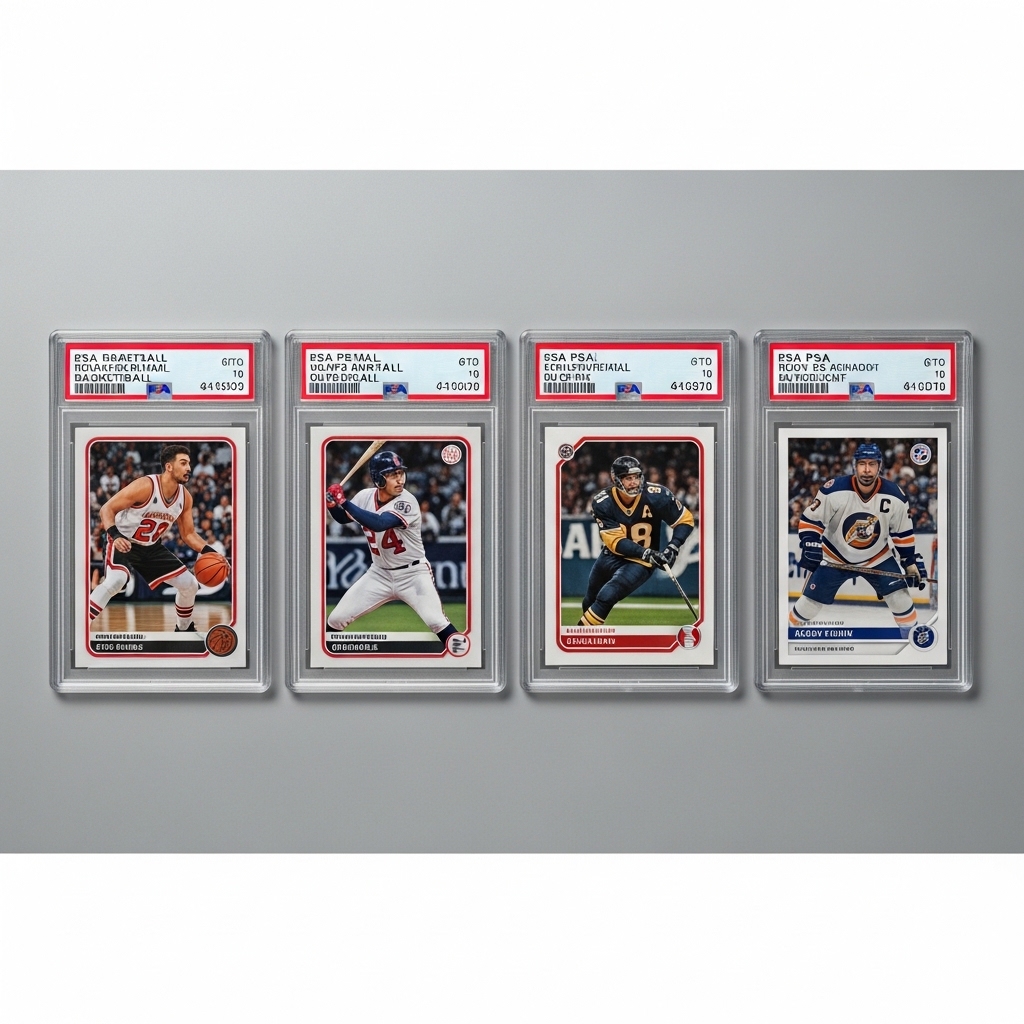
PSA (Professional Sports Authenticator) is the largest grading company in the world by volume. Their slabs carry the most liquid secondary market — a PSA 10 sells faster and at a higher premium than almost any equivalent grade from another service.
Current PSA Service Tiers
| Service Level | Price Per Card | Est. Turnaround |
|---|---|---|
| Economy | $20 | 6+ months |
| Regular | $50 | 90 business days |
| Express | $100 | 45 business days |
| Super Express | $200 | 20 business days |
| Walk-Through | $300 | 5 business days |
What to know:
- Economy is the default choice for bulk submissions on lower-value cards. The catch: 6 months is a genuine commitment. Cards tied up in that queue can't be flipped, can't be used as proof of condition for a sale, and can't capture a market run that happens in the interim.
- Regular ($50) is the sweet spot for mid-tier cards you're not in a rush to sell. 90 business days is roughly 4–5 months in practice.
- Express and above are for cards worth grading now — high-profile player moments, sets that are hot in the market, or cards where you want to sell into current demand rather than wait for the cycle to cool.
- Walk-Through at $300 is for when turnaround matters more than the fee. Common for LCS (local card shop) owners, show vendors, or collectors who found something significant and need it slabbed for an active sale.
PSA's edge: PSA 10s command the strongest market premium across most major sports and sets. Pop reports (population reports showing how many of a given card have received each grade) are public, widely referenced, and actively used by buyers to assess scarcity. That transparency is worth something.
BGS (Beckett) Grading Costs 2026
Beckett Grading Services (BGS) is the second-largest grader and PSA's oldest rival. Their key differentiator: subgrades. BGS doesn't just give you a number — they give you four: centering, corners, edges, and surface, each scored separately and shown on the label. That granularity appeals to high-end collectors who want to know why a card is a 9 vs a 9.5.
Current BGS Service Tiers
| Service Level | Price Per Card | Est. Turnaround |
|---|---|---|
| Base | $14.95 | 75+ business days |
| Standard | $34.95 | 45 business days |
| Express | $79.95 | 15 business days |
| Priority | $124.95 | 5 business days |
Important: BGS charges a $3 upcharge per card on any submission that receives a 10, because subgrades are automatically added to 10s. So your Base submission that comes back a BGS 10 actually costs $17.95.
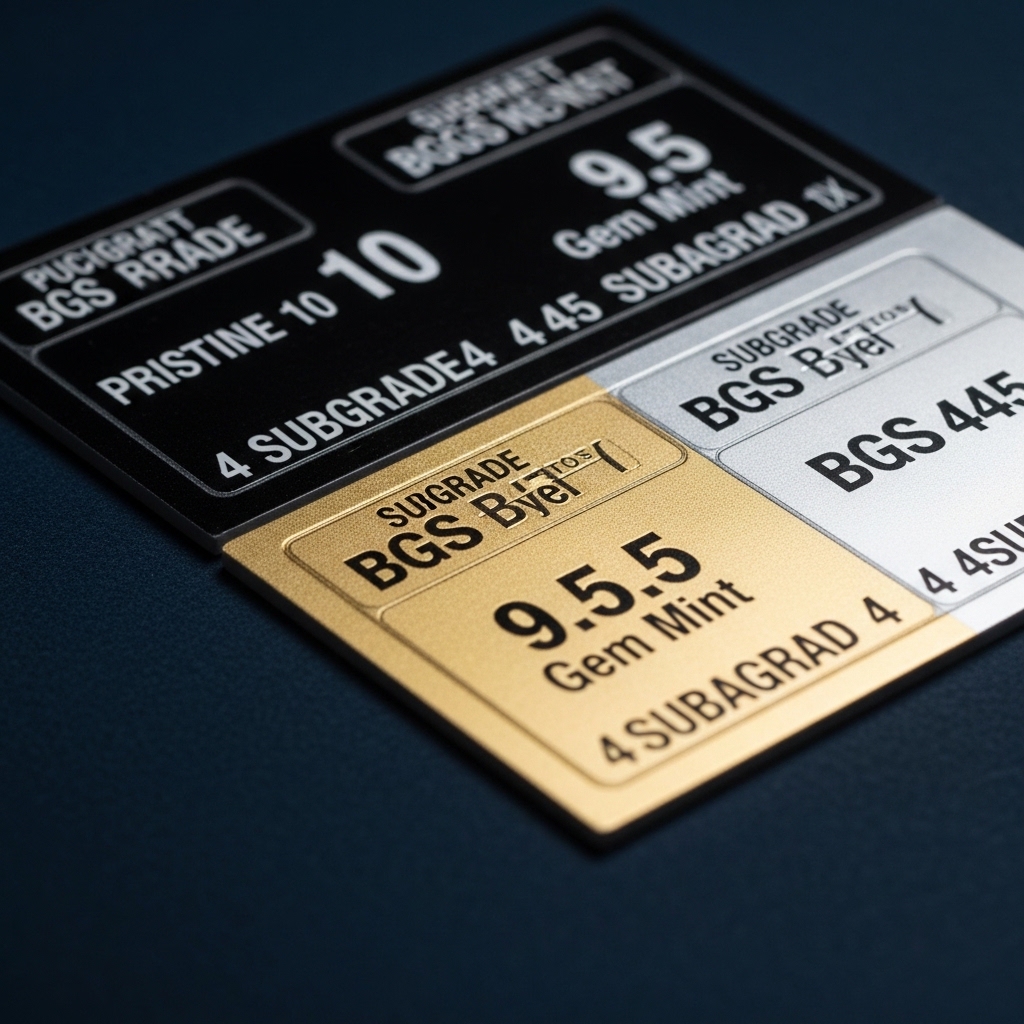
That's not a penalty — it's worth every dollar. A BGS 10 (Black Label, all four subgrades at 10) is one of the rarest and most valuable grades in the hobby. They trade at multiples of a BGS 9.5 Gem Mint, which itself trades at a strong premium over raw.
BGS actually charges you MORE if your card gets a 10. It's a $3 upcharge — and it's 100% worth it.
BGS label tiers:
- Black Label (Pristine 10) — all four subgrades at 10. Extremely rare. Carries the highest premium.
- Gold Label (Pristine/Gem Mint) — overall 10 with subgrades of 9.5+, or overall 9.5 Gem Mint
- Silver Label — all other grades
BGS's edge: Subgrades make BGS the preferred service for modern ultra-premium cards where centering and surface are the key variables. Collectors who want full transparency on condition pay up for BGS. Their slab is also widely regarded as the most visually appealing and well-engineered in the market.
SGC Grading Costs 2026
SGC (Sportscard Guaranty Corporation) is the third major player and has carved out a strong niche with vintage cards, fast turnaround, and a loyal collector base that values their aesthetic — clean half-labels with no holder obstruction on card faces.
Current SGC Service Tiers
| Service Level | Price Per Card | Est. Turnaround |
|---|---|---|
| Standard | $25 | 10–15 business days |
| Express | $50 | 5–7 business days |
| Superfast | $100 | 2–3 business days |
| Vault | $150 | 1–2 business days |
What to know:
- SGC's fastest turnaround times in the industry for mass-market services make them popular for time-sensitive submissions.
- Strong secondary market for vintage cards (pre-1980 baseball, in particular). Many vintage collectors prefer SGC slabs for their clean aesthetic.
- SGC doesn't carry the same liquidity premium as PSA for modern cards, but the gap has narrowed as the service has grown in reputation.
The Full Cost Picture (Beyond the Grading Fee)
Here's where most first-time submitters underestimate the real number.
Shipping (Both Ways)
- Outbound: Budget $10–$20 for USPS Priority Mail or UPS, padded, tracked
- Return: Grading companies typically ship back via USPS Priority or equivalent — usually included or nominal; confirm with each service at submission
Insurance
- PSA and BGS both offer declared value insurance. For any card worth more than $100, insure it. Standard rates run roughly $1–$2 per $100 of declared value for the outbound leg.
- Don't skip this. Cards get lost. It's rare but it happens.
Supplies
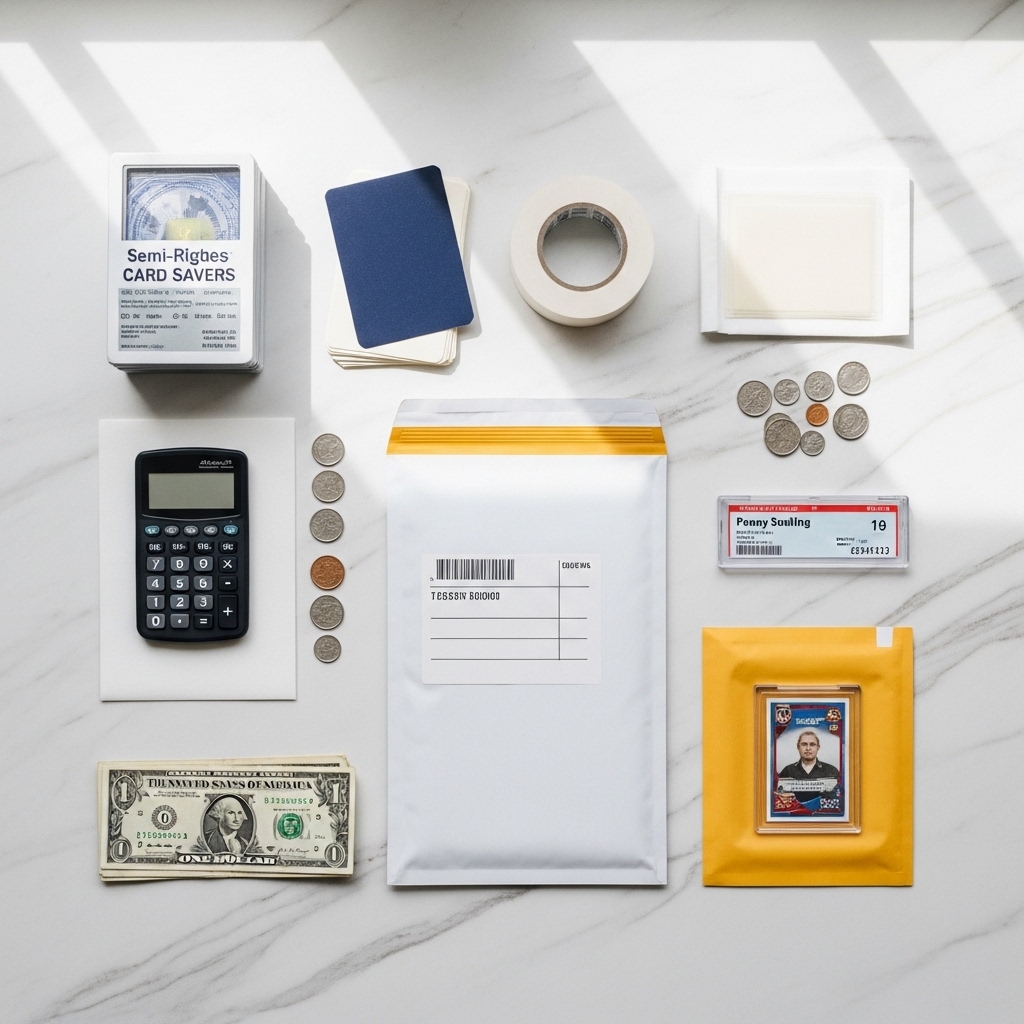
Card savers (not toploaders — card savers are the correct sleeve for submission), team bags, bubble mailers: $5–$15 per submission batch.
Real Cost Example — 5 Cards at PSA Regular
- Grading fees: 5 × $50 = $250
- Shipping out: $15
- Insurance: ~$10 (for a $500 total declared value)
- Supplies: $10
- Total: ~$285 for 5 cards — or about $57 per card all-in
That changes the math on whether each card clears the profitability bar.
The math is brutal: submit a $15 card at PSA Economy, wait 6 months, and you've already lost money before the grade comes back.
Is Grading Worth It? The 10x Rule
The most useful heuristic in this space: your card should be worth at least 10x the total grading cost in its expected graded condition before you submit.
At $57 all-in per card (PSA Regular, example above), that means the card needs to realistically grade out at $570+ as a PSA 9 or 10 for the economics to make clear sense.
A $40 raw card that might grade PSA 8 for $70 slabbed? You're underwater before accounting for time.
A $200 raw card where a PSA 10 version sells for $2,000? Submit immediately.
The Decision Matrix
| Card Value Raw | Likely Grade | Expected Value Graded | Submit? |
|---|---|---|---|
| Under $30 | 8–9 | $30–$80 | ✗ Usually not |
| $30–$75 | 9–10 | $150–$400 | ⚠ Depends on the card |
| $75–$200 | 8–9 | $200–$600 | ✓ If condition is strong |
| $200+ | Any | Varies | ✓ Yes — protect your investment |
Exception: sentimental or personal collection cards. Grading a childhood card for display is a valid reason that has nothing to do with ROI. That's fine. Just don't confuse it with an investment decision.
Which Service Should You Use?
A direct answer, because you deserve one:
Submit to PSA when:
- You're grading modern cards (2000–present) where PSA slabs carry the highest secondary market premium
- Long-term holding strategy — you can absorb Economy tier wait times
- You're submitting cards where PSA 10 premium is documented and significant
Submit to BGS when:
- You want subgrades on your label (centering obsessives, high-end modern)
- You're grading Prizm, Chrome, or other modern parallels where subgrade transparency matters to buyers
- You want the most visually premium slab on the market
Submit to SGC when:
- You're grading vintage cards (pre-1980 especially)
- You need fast turnaround and SGC's Express/Superfast tiers work for your timeline
- You prefer SGC's slab aesthetic and have buyers in that corner of the market
The Bottom Line
Grading isn't cheap, and for the wrong card, it's a money-losing proposition. But for the right card — strong condition, significant pop report scarcity, active secondary market demand — grading is the single best way to establish authenticated value and sell at a premium.
Run the 10x rule before every submission. Include shipping and insurance in your cost basis. And choose your service based on the card type, market conditions, and how long you're willing to wait.
The grading companies will always have your money from the moment you drop the envelope. Make sure the math works before you do.
Loading articles...